

The Taliban’s top environment official wants the UN to include Afghanistan in climate talks
Advertisement
Read this article for free:
or
Already have an account? Log in here »
To continue reading, please subscribe:
Monthly Digital Subscription
$1 per week for 24 weeks*
- Enjoy unlimited reading on winnipegfreepress.com
- Read the E-Edition, our digital replica newspaper
- Access News Break, our award-winning app
- Play interactive puzzles
*Billed as $4.00 plus GST every four weeks. After 24 weeks, price increases to the regular rate of $19.95 plus GST every four weeks. Offer available to new and qualified returning subscribers only. Cancel any time.
Monthly Digital Subscription
$4.99/week*
- Enjoy unlimited reading on winnipegfreepress.com
- Read the E-Edition, our digital replica newspaper
- Access News Break, our award-winning app
- Play interactive puzzles
*Billed as $19.95 plus GST every four weeks. Cancel any time.
To continue reading, please subscribe:
Add Free Press access to your Brandon Sun subscription for only an additional
$1 for the first 4 weeks*
*Your next subscription payment will increase by $1.00 and you will be charged $16.99 plus GST for four weeks. After four weeks, your payment will increase to $23.99 plus GST every four weeks.
Read unlimited articles for free today:
or
Already have an account? Log in here »
Hey there, time traveller!
This article was published 28/07/2025 (242 days ago), so information in it may no longer be current.
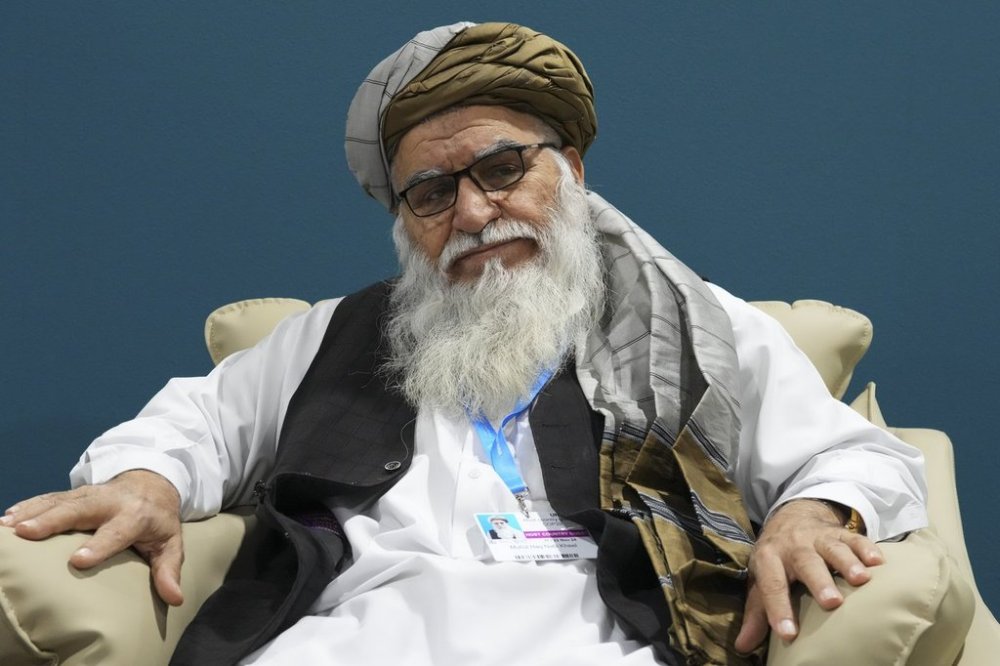
ISLAMABAD (AP) — The Taliban’s top environment official on Monday called for Afghanistan’s inclusion in U.N. climate talks, saying extreme weather and water scarcity are having a “profound impact” on people’s lives and the economy.
A Taliban delegation attended last year’s COP29 climate talks in Azerbaijan, but as observers.
Matiul Haq Khalis, the head of the National Environmental Protection Agency, said the suspension of environmental protection projects after the Taliban takeover in 2021 had resulted in widespread harm to Afghans. Khalis said he wanted inclusion at COP30, which is being held in Brazil later this year.
Russia is the only country to recognize the Taliban’s government.
“Afghanistan is severely affected by climate change,” Khalis told a conference in Kabul. “ Drought, water shortages, declining arable land, flash floods, and threats to food security are having a profound impact on people’s lives and the economy.
“Although Afghanistan’s contribution to global climate change is almost nonexistent, it suffers greatly from its consequences.. As a victim of climate change, Afghanistan has the right to be present at global platforms, especially at COP30, to voice the damages it has endured.”
Earlier this month, the U.N. published a report that said June was marked by below-average precipitation and higher-than-average temperatures across Afghanistan.
By the end of May, the significant decline in soil moisture had already negatively affected the yield and productivity of rainfed wheat, according to the report from the U.N. Office for the Coordination of Humanitarian Affairs.
“The current monsoon season has started earlier than usual, beginning in May instead of the typical June or July, and is more intense than in recent years. Forecasts indicate above-average rainfall in many regions.”
In Baku last November, Khalis told The Associated Press that authorities had prepared national action plans to deal with climate change and would be updating their climate goals.
He said the country had great potential for wind and solar power, but needed international support to develop it.