Co-ordinated plan needed to save ‘alarmingly low’ monarch butterfly population: study
Advertisement
Read this article for free:
or
Already have an account? Log in here »
To continue reading, please subscribe:

Digital Subscription
One year of digital access for only $205*
- Enjoy unlimited reading on winnipegfreepress.com
- Read the E-Edition, our digital replica newspaper
- Access News Break, our award-winning app
- Play interactive puzzles
*First annual payment billed as $205.00 + GST for one year. This annual subscription will automatically renew at $233.00 + GST every 52 weeks (10% off the regular annual price of $259.35). Offer available to new and qualified returning subscribers only. Cancel any time.
To continue reading, please subscribe:
Add Free Press access to your Brandon Sun subscription for only an additional
$1 for the first 4 weeks*
- Enjoy unlimited reading on winnipegfreepress.com
- Read the E-Edition, our digital replica newspaper
- Access News Break, our award-winning app
- Play interactive puzzles
*Your next Brandon Sun subscription payment will increase by $1.00 and you will be charged $17.95 plus GST for four weeks. After four weeks, your payment will increase to $24.95 plus GST every four weeks.
Read unlimited articles for free today:
or
Already have an account? Log in here »
Hey there, time traveller!
This article was published 29/08/2025 (395 days ago), so information in it may no longer be current.
Researchers are urging Canada, United States and Mexico to take immediate action to save the monarch butterfly as the migratory insect faces a growing risk of extinction amid habitat loss.
The iconic butterfly’s population has decreased by around 80 per cent in the past two decades, says the paper published in the journal Current Biology, with the loss of breeding habitat cited as the main reason behind the sharp decline.
Migrating monarch butterflies fly thousands of kilometres between Central Mexico, where they spend the winter, the United States and Canada every year. It’s a unique and miraculous journey for a creature that weighs less than a gram.
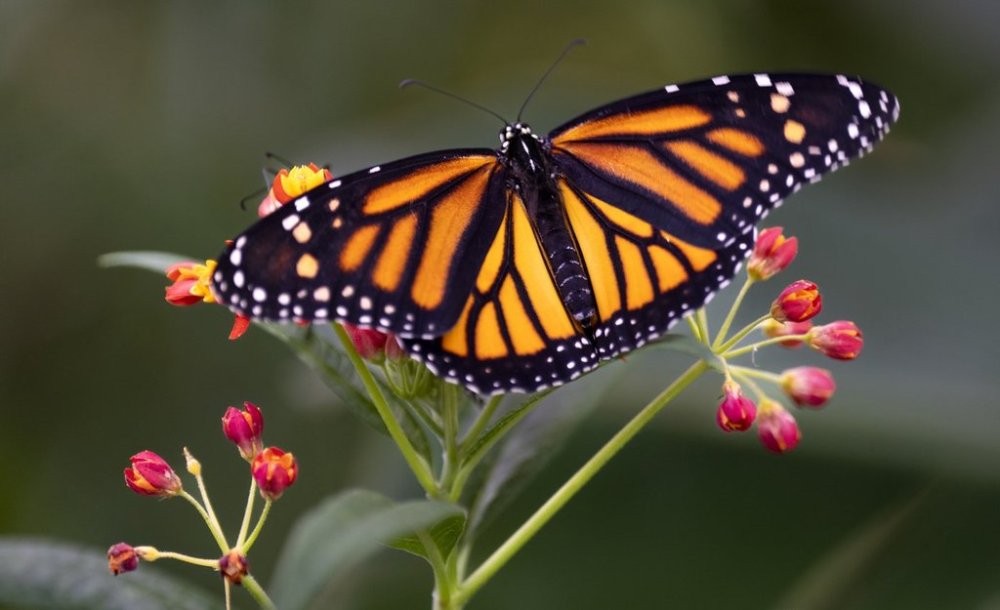
Experts estimate the population of the eastern North American monarch butterfly by measuring the area of forest they occupy in their overwintering period. The ideal conservation target for the species is around 132 million butterflies but the estimate from last winter shows there were fewer than 40 million butterflies — a big drop from the average of 300 million in the early 1990s, said one of the study’s co-authors.
Ryan Norris, a professor at the University of Guelph’s department of integrative biology, said that number is “alarmingly” low.
“These are pretty low numbers and the reason why we don’t want to be that low is because any kind of catastrophe in Mexico could threaten, could wipe out the whole eastern monarch North American population,” Norris said in a recent interview.
While the butterflies’ population is volatile as it naturally goes up and down each year, such a significant drop isn’t normal, he said. If conservation efforts are not taken seriously, it could “reach zero pretty quickly,” he added.
The butterfly with distinctive orange wings and white spots along their black border is listed as an endangered species in Canada and Mexico. The U.S. Fish and Wildlife Service has proposed to list the monarch butterfly as threatened.
The monarch butterfly lays its eggs on milkweed, which is the only source of food for its caterpillars, but Norris said more than a billion of the plant’s stems have been lost in the past few decades in North America.
Other factors in the population decline include the loss of overwintering habitat in Mexican highlands, extreme weather events and droughts caused by climate change and the widespread use of pesticides, experts say.
But “the best supported hypothesis, at least at the moment, is that it’s the loss of breeding habitat, particularly milkweed plants in the U.S. Midwest, that is leading the population decline for monarchs,” said Tyler Flockhart, a population ecologist and conservation biologist who is the lead author of the study.
The paper suggests an investment of $150 million over a five-year period to restore milkweed plants, which are often destroyed by agricultural practices, along the butterfly’s migration path. Flockhart, who runs an environmental consulting company in Saskatoon, said the bulk of that investment should go to the U.S. Midwest.
Efforts are underway in all three countries to restore the monarch butterfly population, said Norris. However, it’s “probably unlikely” the current efforts will reach a lasting population level, he said, and more needs to be done. That’s why the published study proposes a co-ordinated, tri-national conservation strategy to preserve the monarchs.
Environment and Climate Change Canada says it is closely working with the provinces and territories — as well as Mexico and the U.S. — to protect the butterflies and their habitat through different initiatives and programs.
The department said it has provided more than $10 million to fund 79 projects to benefit the monarch butterfly across the country since 2017. Those programs have helped secure more than 4,300 hectares of monarch habitat through legally binding protection measures, and improved more than 4,900 hectares of habitat through native species planting and other measures, it said.
Those efforts have yielded some positive results, Norris said, noting that more people in the U.S. and Canada are planting milkweeds in their backyards and on their land — and he hopes that continues.
“Everybody can do a little bit, and it would make a big difference,” he said. “This is such an iconic butterfly, an iconic animal, so many people know it, so many people have connected with it in different ways.”
He said if the U.S. classifies the monarch as endangered, it would be a great boost for the conservation efforts.
Monarch butterflies also have cultural significance in all three countries.
“If we lost them and we look back, there’d be millions and millions of people that would regret it and wishing that they could have done something,” Norris said.
Flockhart, who pitched the idea for the study as part of his PhD research over 15 years ago, said nearly two decades of researching the butterfly has left him fascinated.

Monarchs migrating north in the spring breed along the way and live for around a month. The ones flying south in the late summer enter a state of what’s called reproductive diapause and can live up to nine months.
“It is such an interesting species…I just can’t even get my head around the fact that a butterfly that weighs, you know, less than a gram can fly from southern Ontario to a place that (it) has never been in central Mexico,” he said. “I think that monarchs are one of the most amazing insects on the planet, easily.”
But he fears they may not be around for long if conservation efforts aren’t intensified.
“I would say that if we don’t take action, there’s a good chance that we could lose modern (monarch) butterflies in our lifetime,” he said.
This report by The Canadian Press was first published Aug. 29, 2025.