Mark Carney-launched Net-Zero Banking Alliance votes to shut down
Advertisement
Read this article for free:
or
Already have an account? Log in here »
To continue reading, please subscribe:

Digital Subscription
One year of digital access for only $205*
- Enjoy unlimited reading on winnipegfreepress.com
- Read the E-Edition, our digital replica newspaper
- Access News Break, our award-winning app
- Play interactive puzzles
*First annual payment billed as $205.00 + GST for one year. This annual subscription will automatically renew at $233.00 + GST every 52 weeks (10% off the regular annual price of $259.35). Offer available to new and qualified returning subscribers only. Cancel any time.
To continue reading, please subscribe:
Add Free Press access to your Brandon Sun subscription for only an additional
$1 for the first 4 weeks*
- Enjoy unlimited reading on winnipegfreepress.com
- Read the E-Edition, our digital replica newspaper
- Access News Break, our award-winning app
- Play interactive puzzles
*Your next Brandon Sun subscription payment will increase by $1.00 and you will be charged $17.95 plus GST for four weeks. After four weeks, your payment will increase to $24.95 plus GST every four weeks.
Read unlimited articles for free today:
or
Already have an account? Log in here »
Hey there, time traveller!
This article was published 03/10/2025 (333 days ago), so information in it may no longer be current.
TORONTO – A global banking group that Prime Minister Mark Carney helped launch in 2021 to fight climate change has voted to shut down.
A spokesperson for the UN-backed Net-Zero Banking Alliance says members voted to end the membership-based structure and instead use the climate guidance the group created as a reference.
As a result of the vote, the alliance is ending operations immediately.
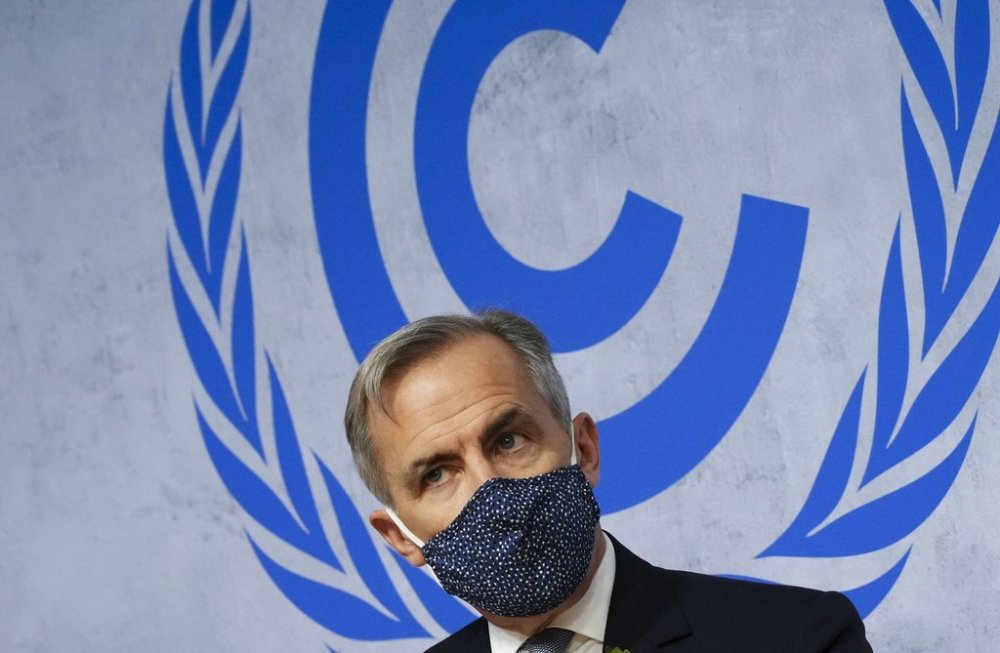
Carney helped establish the group in his role as UN Special Envoy for Climate Action and Finance in the lead-up to the UN climate conference in Glasgow, Scotland, in 2021.
Morningstar DBRS said in a commentary last month that banks’ ability to quantify climate risks is increasingly key to addressing challenges posed by more frequent extreme weather events.
“Although actions today are unlikely to affect the pattern of weather events for the next decade, recent developments underscore clear delays in achieving a net zero target by 2050 and the prospects of rising physical risks,” it reads.
The banking alliance was a key pillar in the broader Glasgow Financial Alliance for Net Zero that aimed to bring the financial sector on board with climate efforts.
At the time, Carney said the alliance would act as a strategic forum to ensure a broader, deeper and faster transition to a net zero economy.
The banking alliance had at its peak over 140 banks globally, including Canada’s Big Six banks, all committing to setting both shorter and longer-term decarbonization targets to help accelerate emissions reductions.
Sustained political pressure from U.S. Republicans led major U.S. banks to leave the alliance after the election of Donald Trump last November.

Canadian banks including RBC, TD, Scotiabank, BMO, CIBC and National Bank all left the group in January, saying they would continue climate efforts outside the group.
More banks left as the year went on, including HSBC in July.
The frameworks created by the alliance, including guidance on how banks should set climate targets, will remain available, and work remains underway on how to best carry the climate finance efforts forward, said the spokesperson.
This report by The Canadian Press was first published Oct. 3, 2025.
Companies in this story: (TSX:RY, TSX:TD, TSX:BMO, TSX:BNS, TSX:NA, TSX:CM)