

Thick, hazardous smog blankets New Delhi after Diwali fireworks
Advertisement
Read this article for free:
or
Already have an account? Log in here »
To continue reading, please subscribe:
Monthly Digital Subscription
$0 for the first 4 weeks*
- Enjoy unlimited reading on winnipegfreepress.com
- Read the E-Edition, our digital replica newspaper
- Access News Break, our award-winning app
- Play interactive puzzles
*No charge for 4 weeks then price increases to the regular rate of $19.00 plus GST every four weeks. Offer available to new and qualified returning subscribers only. Cancel any time.
Monthly Digital Subscription
$4.75/week*
- Enjoy unlimited reading on winnipegfreepress.com
- Read the E-Edition, our digital replica newspaper
- Access News Break, our award-winning app
- Play interactive puzzles
*Billed as $19 plus GST every four weeks. Cancel any time.
To continue reading, please subscribe:
Add Free Press access to your Brandon Sun subscription for only an additional
$1 for the first 4 weeks*
*Your next subscription payment will increase by $1.00 and you will be charged $16.99 plus GST for four weeks. After four weeks, your payment will increase to $23.99 plus GST every four weeks.
Read unlimited articles for free today:
or
Already have an account? Log in here »
NEW DELHI (AP) — Thick smog blanketed India’s capital Tuesday, a day after millions celebrated the Hindu festival of Diwali with fireworks that sent air pollution soaring to hazardous levels.
Revelers in New Delhi burst firecrackers late into Monday night, filling the air with smoke and fine particles that mixed with seasonal pollution and stagnant weather conditions. By Tuesday morning, the city’s Air Quality Index had climbed above 350 in several neighborhoods, a level considered “severe” and dangerous to breathe, according to the World Health Organization’s daily recommended maximum exposure.
Visibility also dropped in some parts of the city as a gray haze enveloped streets, high-rises and historical monuments.
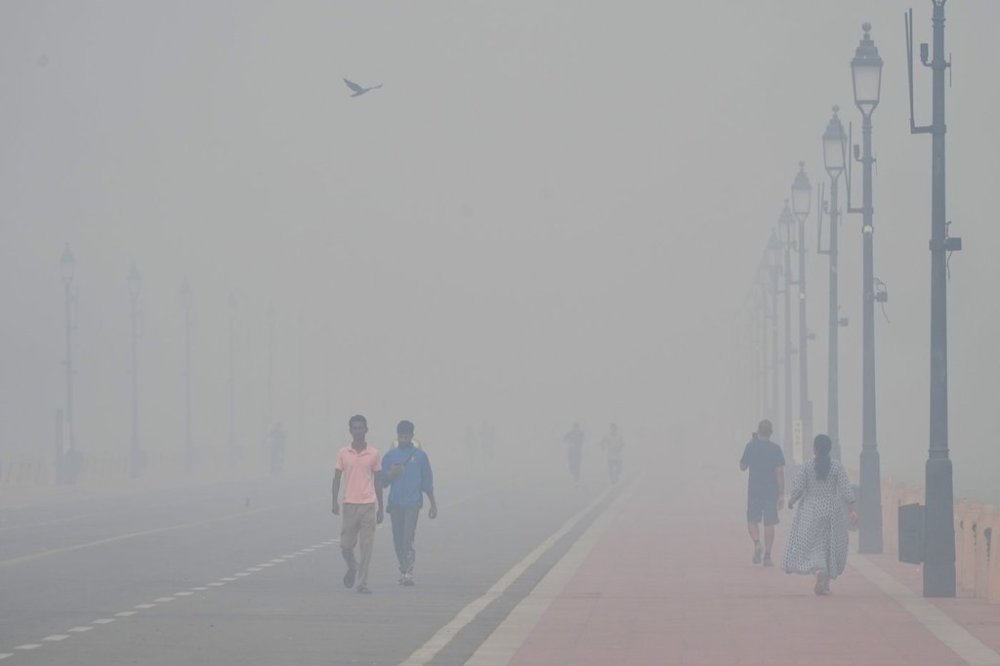
“I have never seen anything like this before. We can’t see anything here because of pollution,” said Vedant Pachkande, a tourist visiting New Delhi.
India’s top court last week eased a blanket ban on firecrackers in New Delhi during Diwali, allowing limited use of “green firecrackers” that emit fewer pollutants. Developed by federal research institutes, they are designed to cut particulate and gas emissions by about 30%. The court had said they could be used during specific hours from Saturday to Tuesday, but like past years the rule was mostly flouted.
New Delhi and its metropolitan region — home to more than 30 million people — routinely ranks among the world’s most polluted cities during the winter when widespread Diwali fireworks coincide with cooler weather and smoke from crop residue fires set by farmers in nearby states.
Authorities in New Delhi have implemented a set of measures to curb pollution, which include limits on construction activity and restrictions on diesel generators. But environmentalists say long-term solutions, such as cleaner energy and stricter vehicle-emission controls, are needed to prevent the annual crisis.
Rising pollution also cuts the amount of sunshine India receives, a recent study found.

Indian scientists have found that sunshine hours — the time strong sunlight reaches the Earth — have steadily declined across most of India due to rising air pollution, according to a study published this month in Scientific Reports, a journal by Nature Portfolio. The researchers attributed the drop to increasing aerosols — tiny particles from industrial emissions, biomass burning and vehicle pollution.
“We see a greater impact in more polluted regions such as northern India,” said Manoj K. Srivastava, a scientist at Banaras Hindu University and one of the study’s authors.
Srivastava said the reduction in sunshine can affect the amount of solar power India can generate as well as the country’s agricultural productivity apart from impacting local environment and people’s health.
___
AP reporter Sibi Arasu contributed to this report.