Feds unveil new climate strategy with no details on Canada’s emission commitments
Advertisement
Read this article for free:
or
Already have an account? Log in here »
To continue reading, please subscribe:

Digital Subscription
One year of digital access for only $205*
- Enjoy unlimited reading on winnipegfreepress.com
- Read the E-Edition, our digital replica newspaper
- Access News Break, our award-winning app
- Play interactive puzzles
*First annual payment billed as $205.00 + GST for one year. This annual subscription will automatically renew at $233.00 + GST every 52 weeks (10% off the regular annual price of $259.35). Offer available to new and qualified returning subscribers only. Cancel any time.
To continue reading, please subscribe:
Add Free Press access to your Brandon Sun subscription for only an additional
$1 for the first 4 weeks*
- Enjoy unlimited reading on winnipegfreepress.com
- Read the E-Edition, our digital replica newspaper
- Access News Break, our award-winning app
- Play interactive puzzles
*Your next Brandon Sun subscription payment will increase by $1.00 and you will be charged $17.95 plus GST for four weeks. After four weeks, your payment will increase to $24.95 plus GST every four weeks.
Read unlimited articles for free today:
or
Already have an account? Log in here »
Hey there, time traveller!
This article was published 04/11/2025 (315 days ago), so information in it may no longer be current.
OTTAWA – The federal government’s climate competitiveness strategy promises a stronger industrial carbon pricing system and the prospect of ending the emissions cap on oil and gas production to drive more investments in clean growth.
But the strategy, outlined in the federal budget on Tuesday, was short on details — and offered no update on where Canada stands on its 2030 and 2035 emission reduction targets.
That’s despite assurances from federal ministers in recent months that the competitiveness plan would shed light on Canada’s commitments.
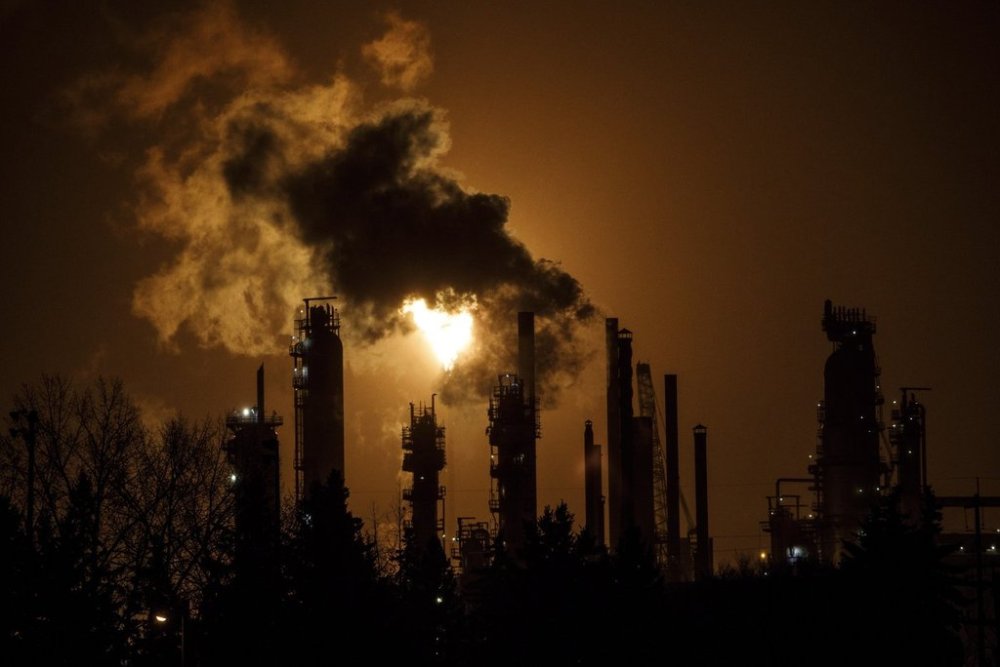
Under the Paris climate pact, Canada committed to cutting emissions to at least 40 per cent below 2005 levels by 2030. Multiple analyses in recent months suggest the country will miss that goal by a wide margin.
The budget also doesn’t mention possible incentive measures to encourage Canadians to lower their own emissions, such as the revival of a subsidy for electric vehicle purchases.
During his leadership campaign last winter, Prime Minister Mark Carney promised “green incentives” for consumers. He pledged to resume electric vehicle rebates during the federal election campaign in April.
Neither of those measures has materialized.
“I was a little bit disappointed in the climate competitiveness strategy, to be honest. I had expected more concrete measures, particularly around projects and sectors that would have resulted in emissions reductions,” said Rachel Samson, vice-president of research at the Institute for Research on Public Policy.
“I would say it definitely under-delivered. I had some high hopes given what the prime minister and other ministers had said. Certainly there is some promising language there … but there weren’t a lot of specifics. There was a lot of, ‘We’re going to talk to the provinces and territories and come up with something later.'”
The new climate plan appears to depend heavily on strengthening the industrial carbon price. It plots a course for the price per tonne beyond 2030 and seeks to improve the carbon markets that underpin the whole system.
“Setting a long-term trajectory will allow businesses to make investment decisions with confidence now and into the future. Securing pan-Canadian agreement on this trajectory will increase certainty,” the budget reads.
The budget document says industrial carbon pricing “is expected to deliver more emission reductions than any other policy, with negligible impacts on affordability for Canadians.”
That’s a nod to the affordability accusations that plagued the consumer carbon price and ultimately led to its demise. Carney scrapped it on his first day in office in March.
Industrial carbon pricing works by setting an emissions target by sector and requiring big emitters to pay the price per tonne on what they emit above that target. Companies that emit less than the target can sell credits to those that emit more, using a carbon credit market.
The climate competitiveness strategy — which the government is touting as “a central pillar” of its plan to make Canada the strongest economy in the G7 — also commits to “promptly” applying the federal backstop to provinces and territories that fall below Ottawa’s benchmark.
Saskatchewan paused its industrial carbon price program altogether on April 1, while Alberta has proposed changes to its own program which observers say likely won’t meet the benchmark.
But government officials say there’s no timeline for Ottawa to act.
Still, the Canadian Climate Institute said the strategy was “a good first step” toward ensuring Canada can be competitive in a decarbonized global market.
“If Canada aims to double non-U.S. exports over the next decade, it will be critical to increase trade with Europe, Asia, and the Americas — all of which continue to take strong action to accelerate the shift to renewables, electric vehicles and other low-carbon electric technologies,” said the institute’s president Rick Smith.
The budget also signals the government plans not to proceed with implementing the proposed emissions cap on oil and gas producers — a policy industry had called on Ottawa to scrap.
Ending that cap appears to be contingent on the promised improvements to the industrial pricing system, scaling up carbon-capture and storage technology and enhancing regulations to cut methane emissions from the oil and gas sector.
The government says those measures “would create the circumstances whereby the oil and gas emissions cap would no longer be required, as it would have marginal value in reducing emissions.”
The budget doesn’t indicate whether the government will continue working toward implementing the emissions cap in the event those plans for carbon capture don’t materialize.
Carney told reporters in March he would keep the emissions cap in place, though he also said he wanted to find other ways to lower emissions. Last month he shifted his stance, saying keeping the cap “depends” on what else is being done to lower emissions.
The emissions cap is supposed to come into force in 2030 and would require upstream oil and gas operations to reduce their emissions to 35 per cent below where they were in 2019. Ottawa tabled draft regulations to implement the cap last year, two years behind schedule.
“This is a guns-not-butter budget with massive new spending on border guards, police and the military, but austerity for programs that care for people and nature,” said Keith Stewart, senior energy strategist at Greenpeace Canada.
“You can’t fight for our future when you are retreating on climate action, including by removing limits on pollution from the oil and gas industry and weakening anti-greenwashing legislation.”

The budget also proposes to extend the availability of tax credits for building carbon capture and storage systems by five years at an estimated cost of $3 billion.
Buried in the budget is a plan to amend the Building Canada Act to require that projects the government considers to be in the “national interest” include information on how those projects “contribute to clean growth and to meeting Canada’s objectives with respect to climate change.”
The act cites criteria the new Major Projects Office can consider when choosing projects for fast-track approval — but the government isn’t bound to them and can choose projects even if they don’t meet the suggested criteria.
The federal government declined earlier this year to define “national interest” in the context of the act, despite calls from opposition MPs.
This report by The Canadian Press was first published Nov. 4, 2024.
Related Articles
Canadians should see red over another Liberal deficit budget

Advertisement Advertise With Us
Advertisement Advertise With Us