Parks Canada sites saw 13 per cent spike in visitors with Canada Strong Pass in place

Advertisement

Advertise with us

OTTAWA - Parks Canada sites saw a 13 per cent increase in the number of visitors over the summer while the Canada Strong Pass was in effect.

Read this article for free:


or

Already have an account? Log in here »

To continue reading, please subscribe:

Subscribe and receive a limited-edition Free Press branded hat or tote.

Digital Subscription

One year of digital access for only $205*

  • Enjoy unlimited reading on winnipegfreepress.com
  • Read the E-Edition, our digital replica newspaper
  • Access News Break, our award-winning app
  • Play interactive puzzles

*First annual payment billed as $205.00 + GST for one year. This annual subscription will automatically renew at $233.00 + GST every 52 weeks (10% off the regular annual price of $259.35). Offer available to new and qualified returning subscribers only. Cancel any time.

To continue reading, please subscribe:

Add Free Press access to your Brandon Sun subscription for only an additional

$1 for the first 4 weeks*

  • Enjoy unlimited reading on winnipegfreepress.com
  • Read the E-Edition, our digital replica newspaper
  • Access News Break, our award-winning app
  • Play interactive puzzles
Start now

*Your next Brandon Sun subscription payment will increase by $1.00 and you will be charged $17.95 plus GST for four weeks. After four weeks, your payment will increase to $24.95 plus GST every four weeks.

Hey there, time traveller!
This article was published 03/12/2025 (301 days ago), so information in it may no longer be current.

OTTAWA – Parks Canada sites saw a 13 per cent increase in the number of visitors over the summer while the Canada Strong Pass was in effect.

Megan Hope, a spokesperson for Parks Canada, said the agency reported about 14.5 million visitors from June 20 to Sept. 2.

“It’s clear that the Canada Strong Pass inspired Canadians to stay at home and explore the country,” she said in an email.
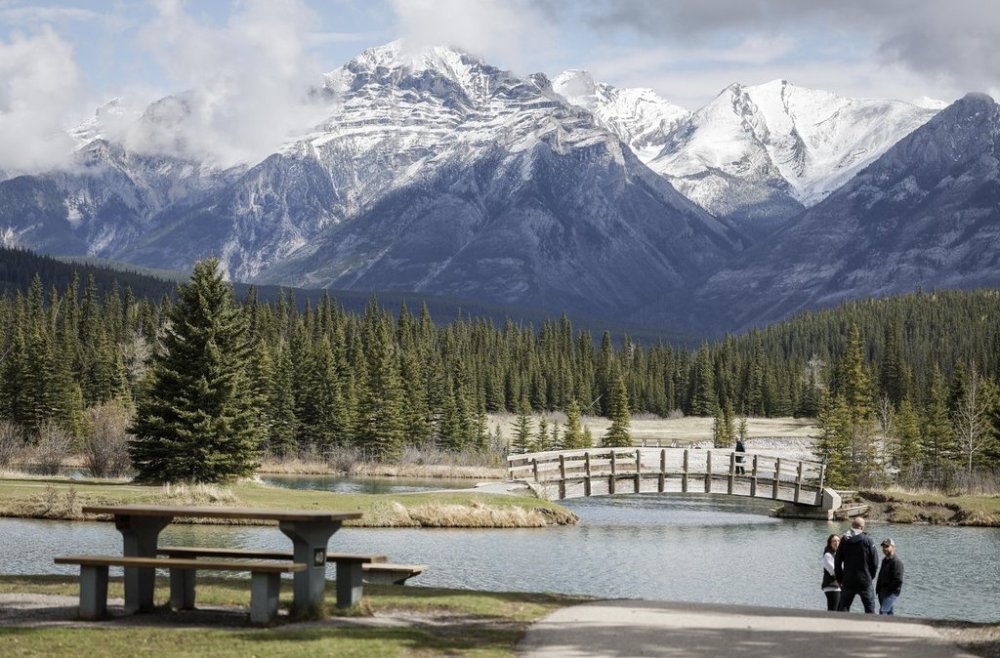
Visitors explore Cascade Ponds in Banff National Park, Alta., Thursday, May 15, 2025. THE CANADIAN PRESS/Jeff McIntosh

National historic sites managed by Parks Canada reported an increase in visitors of around 20 per cent, while national parks saw an approximate increase of nine per cent.

The Canada Strong Pass offered free admission to national parks and sites maintained by Parks Canada.

A document shared by Parks Canada says the Northwest Territories and Nunavut saw a combined 67 per cent increase in visitors over the last two years. They received 2,960 visitors in 2025, up from 1,771 in 2023.

Newfoundland and Labrador saw a 58 per cent jump to 157,538 visitors in 2025, up from 99,985 in 2023.

All provinces and territories saw increases in the number of visitors — except Saskatchewan. That province reported 153,920 Parks Canada visitors in 2025, down 25 per cent from 205,265 in 2023.

Hope said families visiting Parks Canada sites saved “significantly” through the Canada Strong Pass. In addition to free admission, she said, a family of four camping for five nights in a fully serviced campsite could have saved an average of $50.70 with the pass.

The same family visiting a national historic site for a day could have saved an additional $26.50, she said.

Hope said Parks Canada uses many strategies to manage visitation,  including “promoting less visited and less-sensitive areas of the parks, informing visitors about appropriate behaviour in natural spaces and educating them on ways to avoid human-wildlife conflict.”

The Canada Strong Pass also offered free national museum admission to children 17 and under, and a 50 per cent discount on national museum admission for those aged 18 to 24.

The Department of Canadian Heritage said in September that midsummer results showed an average 15 per cent spike in attendance at participating national museums compared to last year.

VIA Rail Canada said more than 50,000 bookings were made using the pass, which offered free travel for children and teens aged 17 and under travelling with an adult, and discounted fares for youth aged 18 to 24.

The government is renewing the Canada Strong Pass later this month, from Dec. 12 to Jan. 15, 2026. It will once again offer free admission to national historic sites, national parks and national marine conservation areas operated by Parks Canada and a 25 per cent discount on camping fees.

The government is also planning to offer free admission and discounted camping next summer from June 19 to Sept. 7, 2026.

This report by The Canadian Press was first published Dec. 3, 2025.

Report Error Submit a Tip

More Stories

Accused grandparent scammer charged with sex crimes involving minor

Free Press staff 3 minute read 12:11 PM CDT

An Edmonton man accused of defrauding several Winnipeg seniors in so-called grandparent scams has also been charged for allegedly sexually assaulting a teenage girl in the city.

Winnipeg Police Service financial crime investigators were alerted after three city residents, all in their 80s, were defrauded of more than $37,000 in August after receiving calls from someone posing as a grandchild who claimed to need cash to pay for bail, police said Tuesday.

The first victim received several phone calls between Aug. 17 and 22 from a caller who claimed the victim’s grandson had been arrested and needed cash bail. The victim agreed to pay and handed over cash and gold and silver coins to a man who showed up at their door four separate times.

On Aug. 18, another adult received a call from someone claiming to be their grandson who needed cash for bail and the victim obliged, paying a man who went to their home to pick up money.

Eliminating short-term sick notes ‘big step forward’: Doctors Manitoba

Matthew Frank 4 minute read Preview

Eliminating short-term sick notes ‘big step forward’: Doctors Manitoba

Matthew Frank 4 minute read Updated: 6:32 PM CDT

Manitoba doctors will no longer be required to issue sick notes for short-term employee absences due to illness or injury, starting Thursday.

The new provincial legislation, which officially passed in June, will only allow employers to request the medical documents when an employee has been absent for more than a week or if they’ve called in sick 10 or more times in a calendar year.

Dr. Nichelle Desilets, Doctors Manitoba board chair, said the legislation will free up time for physicians to concentrate on medical appointments and called the new rules among the strongest in Canada.

“What may be a small change in the labour code can be a big step forward on improving access to medical care for all Manitobans and using our health care resources wisely,” she said during a news conference Tuesday.

Read
Updated: 6:32 PM CDT

Manitoba PC leader Khan survives confidence vote

Carol Sanders 3 minute read Preview

Manitoba PC leader Khan survives confidence vote

Carol Sanders 3 minute read Updated: Yesterday at 8:33 PM CDT

Manitoba Progressive Conservative Leader Obby Khan survived a confidence vote last week.

Caucus communications director Alison Sutherland confirmed the vote was held Friday and that Khan still has “the full confidence” of the PC caucus.

She did not provide further details.

The party under Khan’s leadership is floundering, a recent poll suggests.

Read
Updated: Yesterday at 8:33 PM CDT

Billions of dollars spent on health, but scattershot financial reporting leaves decision-makers, Manitobans in the dark, auditor general says

Nicole Buffie 3 minute read Preview

Billions of dollars spent on health, but scattershot financial reporting leaves decision-makers, Manitobans in the dark, auditor general says

Nicole Buffie 3 minute read 5:20 PM CDT

Manitoba’s auditor general says significant gaps in health-sector financial reporting make it difficult to understand how billions of dollars in public funds are spent.

Auditor General Tyson Shtykalo is calling for clearer, more transparent reporting in his latest report, titled Observations on Health Sector Financial Reporting and Accountability in Manitoba.

“Manitoba spends nearly $10 billion annually on health care, but current financial reporting does not provide a clear picture of how that money is spent, what services cost, or the financial pressures facing the system,” Shtykalo said in a news release.

While some financial information is available, the reports do not provide a “complete, consistent, or easily understood” picture of how health-care funds are spent, the report said.

Read
5:20 PM CDT

What does the PC stand for in party’s name? Seems to be Pretty Confused

Tom Brodbeck 5 minute read Preview

What does the PC stand for in party’s name? Seems to be Pretty Confused

Tom Brodbeck 5 minute read 1:11 PM CDT

It should have been obvious from the beginning that the Manitoba Progressive Conservative party was going to have trouble holding itself together under Obby Khan.

Read
1:11 PM CDT

Wab Kinew as ‘communicator in chief’

Paul G. Thomas 6 minute read Preview

Wab Kinew as ‘communicator in chief’

Paul G. Thomas 6 minute read Yesterday at 2:00 AM CDT

Premier Wab Kinew and his party have been riding high in the polls longer than normal for a government one year or less away from its first re-election contest. One reason is his ubiquitous, dominating communications presence as NDP leader and premier.

The argument here is that Kinew has supplemented his prerogatives as premier and party leader (such as appointing cabinet ministers and approving party nominations) with the skilful use of communications to advance his policy agenda, boost his personal popularity and maintain the competitive advantage of his party over the opposition Progressive Conservatives.

Communications has always been a significant part of politics and policy making. However, in the contemporary political and media environments, communications considerations have moved from the background to the foreground of decision-making by political parties, including when they are performing in the role of government. Campaigning and governing now overlap in what has been described as a permanent election campaign.

Political parties use communications strategies for several purposes: to establish an image of the leader which makes a positive emotional connection with voters; to promote a coherent message and to keep party members on message; and to gain favourable media coverage for its policies and other actions on almost a daily basis.

Read
Yesterday at 2:00 AM CDT