

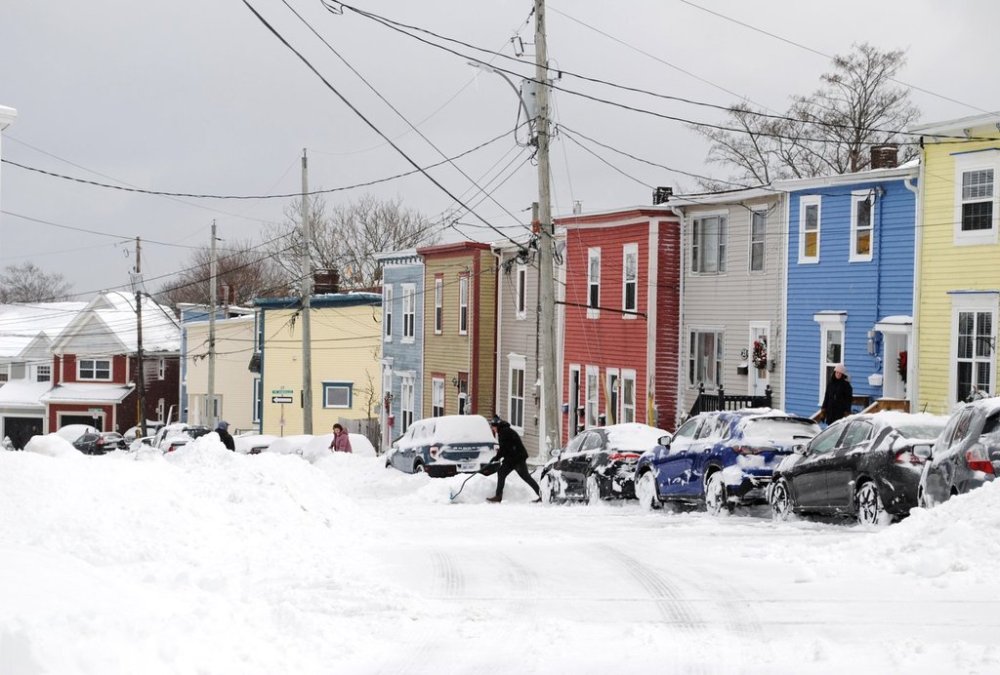
First winter storm of 2026 shuts down much of Newfoundland and Labrador’s capital
Advertisement
Read this article for free:
or
Already have an account? Log in here »
To continue reading, please subscribe:
Monthly Digital Subscription
$1 per week for 24 weeks*
- Enjoy unlimited reading on winnipegfreepress.com
- Read the E-Edition, our digital replica newspaper
- Access News Break, our award-winning app
- Play interactive puzzles
*Billed as $4.00 plus GST every four weeks. After 24 weeks, price increases to the regular rate of $19.95 plus GST every four weeks. Offer available to new and qualified returning subscribers only. Cancel any time.
Monthly Digital Subscription
$4.99/week*
- Enjoy unlimited reading on winnipegfreepress.com
- Read the E-Edition, our digital replica newspaper
- Access News Break, our award-winning app
- Play interactive puzzles
*Billed as $19.95 plus GST every four weeks. Cancel any time.
To continue reading, please subscribe:
Add Free Press access to your Brandon Sun subscription for only an additional
$1 for the first 4 weeks*
*Your next subscription payment will increase by $1.00 and you will be charged $16.99 plus GST for four weeks. After four weeks, your payment will increase to $23.99 plus GST every four weeks.
Read unlimited articles for free today:
or
Already have an account? Log in here »
ST. JOHN’S – Residents of eastern Newfoundland woke up to knee-deep snow drifts and cancelled classes on Monday as the first storm of the new year howled outside their windows.
The overnight storm dumped about 20 centimetres of snow onto Newfoundland and Labrador’s capital city of St. John’s by the morning, said David Neil, a warning preparedness meteorologist with Environment Canada.
Though it was the first storm of 2026, it was technically the fourth to hit the region since Christmas Day, he said in an interview.
The back-to-back weather systems have contributed to above-average snowfall in Newfoundland and parts of Labrador, Neil added. That’s exactly what’s needed to ward off the drought-like conditions that fuelled destructive wildfires in the province last year, he said.
“We have started off the winter a little bit more on the right foot when it comes to avoiding those really dry conditions,” Neil said.
Much of Atlantic Canada experienced parched, dry conditions throughout the summer and fall in 2025. Wildfires in eastern Newfoundland destroyed more than 200 homes and structures. In Nova Scotia, crews battled a wildfire at Long Lake, in Annapolis County, into October.
On Sunday, Environment Canada issued yellow warnings about the incoming storm in eastern Newfoundland, indicating the weather agency was concerned about potential hazardous conditions. The snow fell overnight and into Monday morning, and it was blown around by winds gusting at more than 50 kilometres an hour in some places.
Many schools in the region were closed for the day, including Memorial University’s facilities in St. John’s. City busses stayed off the roads until later in the afternoon.
Meanwhile, Environment Canada warned that a northwesterly flow of arctic air could bring snow squalls to western Cape Breton until Monday evening. Snow squalls are sudden bursts of wind and snowfall that can cause brief stretches of dangerous conditions, including whiteouts.
The weather agency said residents should be careful on roads and walkways amid the accumulating snow.
This report by The Canadian Press was first published Jan. 5, 2025.