

Alberta government looks to test water in all provincially owned buildings for lead
Advertisement
Read this article for free:
or
Already have an account? Log in here »
To continue reading, please subscribe:
Monthly Digital Subscription
$1 per week for 24 weeks*
- Enjoy unlimited reading on winnipegfreepress.com
- Read the E-Edition, our digital replica newspaper
- Access News Break, our award-winning app
- Play interactive puzzles
*Billed as $4.00 plus GST every four weeks. After 24 weeks, price increases to the regular rate of $19.95 plus GST every four weeks. Offer available to new and qualified returning subscribers only. Cancel any time.
Monthly Digital Subscription
$4.99/week*
- Enjoy unlimited reading on winnipegfreepress.com
- Read the E-Edition, our digital replica newspaper
- Access News Break, our award-winning app
- Play interactive puzzles
*Billed as $19.95 plus GST every four weeks. Cancel any time.
To continue reading, please subscribe:
Add Free Press access to your Brandon Sun subscription for only an additional
$1 for the first 4 weeks*
*Your next subscription payment will increase by $1.00 and you will be charged $16.99 plus GST for four weeks. After four weeks, your payment will increase to $23.99 plus GST every four weeks.
Read unlimited articles for free today:
or
Already have an account? Log in here »
EDMONTON – Alberta’s government is planning to test the drinking water in all provincially owned buildings for lead and copper, citing a need to be proactive as its infrastructure ages.
A request for bids from private companies published by the government says the project will cover more than 200 buildings. That includes the provincial legislature in Edmonton, museums, two young offender centres and courthouses in all corners of the province.
“The objective is to ensure the water remains safe for human consumption and to provide a comprehensive report detailing test results and any necessary recommendations for corrective action,” reads the request for proposals.
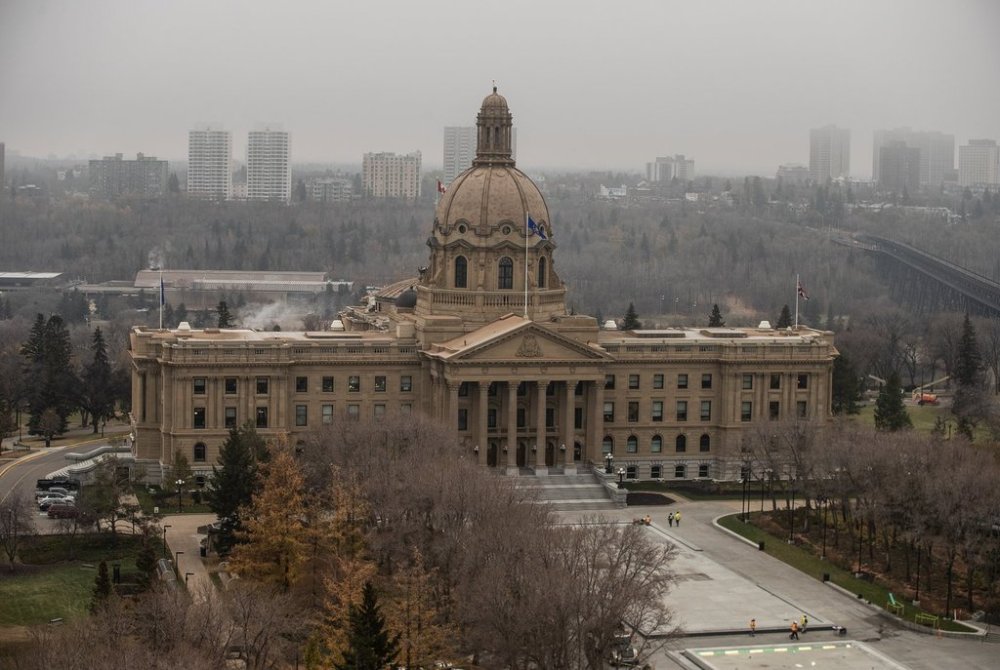
Infrastructure Minister Martin Long’s office said a number of government-owned buildings are old and only getting older.
“Alberta Infrastructure wants to be a responsible steward by proactively testing the water in government facilities to ensure there has not been a degradation in water,” Long’s press secretary, Alex Cattran, said in an email.
Should the testing reveal any issues or degraded water systems, the province will immediately address them, Cattran said.
He added that provincewide testing is a break from usual procedure, as it was done on a case-by-case basis in the past.
Cattran didn’t say if recent tests showed or indicated a need for a ramped-up testing effort.
Health Canada says both copper and lead ingestion can be harmful, though lead is known to be a higher risk as it has been designated toxic to people.
The agency says lead water lines were widely used across Canada until 1975, while soldering materials containing lead were used for plumbing for a decade after that.
Because the use of lead in other products, such as paint, was widely phased out before the turn of the century, food and drinking water are presently the primary sources for lead exposure, Health Canada says.
Ottawa has set a maximum concentration level for lead in drinking water that’s considered acceptable, but federal policy is that every effort should be made to have concentrations as low as possible.
Ensuring drinking water is free of high levels of lead has been, and continues to be, an issue for local governments across Canada as well.
City officials in Yellowknife announced Tuesday that recent tests found exceeded levels at certain water fixtures in a handful of municipal buildings, including city hall.
As a result, the city said in a news release, it now plans to test all of its buildings for lead. The city said residents shouldn’t be concerned as test results aren’t applicable to the overall water supply and only represent the specific fixtures tested.
The effects of lead exposure have been shown to vary depending on exposure rates, Health Canada said in a 2019 report, though studies have found “reduced cognition, increased blood pressure and renal dysfunction in adults, as well as adverse neurodevelopmental and behavioural effects in children.”

Included in Alberta’s list of building to test are a number of provincially run group homes, and the Alberta School for the Deaf in Edmonton.
Cattran said the province didn’t have plans to test other schools, such as those run by public or catholic school boards. He said it was up to those boards to manage their own testing programs.
Joanne Anderson, with the Calgary Board of Education, said the division doesn’t currently have a scheduled testing program but will test specific sites if concerns are raised.
Alberta’s request for proposals, which closed to bidders on Tuesday, says the province wants the testing and reporting completed by the spring of next year.
This report by The Canadian Press was first published Jan. 14, 2026.