Canadians sitting on $2 billion in uncashed federal cheques: documents

Advertisement

Advertise with us

OTTAWA - Canadians have left more than $2 billion on the table by not cashing millions of paper cheques mailed out by the federal government, documents tabled recently in Parliament say.

Read this article for free:


or

Already have an account? Log in here »

To continue reading, please subscribe:

Subscribe and receive a limited-edition Free Press branded hat or tote.

Digital Subscription

One year of digital access for only $205*

  • Enjoy unlimited reading on winnipegfreepress.com
  • Read the E-Edition, our digital replica newspaper
  • Access News Break, our award-winning app
  • Play interactive puzzles

*First annual payment billed as $205.00 + GST for one year. This annual subscription will automatically renew at $233.00 + GST every 52 weeks (10% off the regular annual price of $259.35). Offer available to new and qualified returning subscribers only. Cancel any time.

To continue reading, please subscribe:

Add Free Press access to your Brandon Sun subscription for only an additional

$1 for the first 4 weeks*

  • Enjoy unlimited reading on winnipegfreepress.com
  • Read the E-Edition, our digital replica newspaper
  • Access News Break, our award-winning app
  • Play interactive puzzles
Start now

*Your next Brandon Sun subscription payment will increase by $1.00 and you will be charged $17.95 plus GST for four weeks. After four weeks, your payment will increase to $24.95 plus GST every four weeks.

Hey there, time traveller!
This article was published 02/02/2026 (224 days ago), so information in it may no longer be current.

OTTAWA – Canadians have left more than $2 billion on the table by not cashing millions of paper cheques mailed out by the federal government, documents tabled recently in Parliament say.

The data says roughly 3.9 million paper cheques that were issued to Canadians over the past four fiscal years — worth $2,159,665,155. — went uncashed.

They included various tax refunds, pension cheques and benefits issued by the Canada Revenue Agency and other departments.
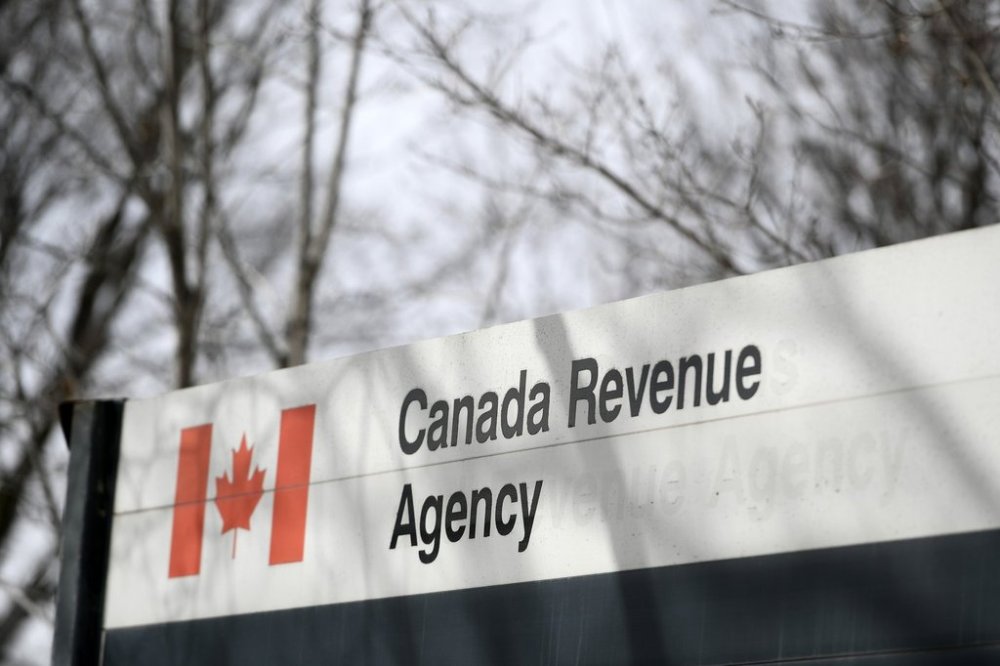
A Canada Revenue Agency sign in Ottawa is shown on Monday, March 1, 2021. THE CANADIAN PRESS/Justin Tang

Canadians failed to deposit roughly $141 million in Canada Carbon Rebate cheques and $50 million in Climate Action tax credits issued to residents of B.C. — cancelled rebates that were designed to offset the cost of carbon pricing.

Even though those rebate programs have ended, government cheques never expire and can be replaced if they are lost or damaged.

Taxpayers can check their Canada Revenue Agency accounts to see whether they were issued cheques they never cashed, or call the agency by phone to find out.

Roughly $42.8 million in cheques issued to families through the Canada Child Benefit — a tax-free monthly payment meant to help with the expense of raising children — also went uncollected.

The federal government prefers to pay Canadians by direct deposit and only 8.51 per cent of total federal payments are made by cheque. Many agencies still issue large numbers of cheques.

The administrative cost for the government to issue a cheque is about $1.83. That means issuing the 121 million cheques mailed out from April 1, 2022 to Sept. 30, 2025 likely cost taxpayers about $222 million.

The information was disclosed in a government response published by Parliament on Jan. 26 to a research question posed by Conservative finance critic Adam Chambers.

Prepared by Public Services and Procurement Canada, the response states that it’s up to individual departments and agencies to manage their transition away from paper cheques.

It also said the federal government had at one point explored creating a prepaid card program for some government payments. Ottawa decided that would be too expensive compared to direct deposit, and Canadians were largely against the idea of introducing prepaid cards.

This report by The Canadian Press was first published Feb. 2, 2026.

Report Error Submit a Tip

More Stories

News briefs for Sunday, September 13, 2026

1 minute read Updated: Yesterday at 9:47 AM CDT

A collection of breaking news briefs filed on Sunday, September 13, 2026

Suspect arrested two months after bear spray, air rifle incident at Henderson Hwy. hotel

9:47 AM

A man has been arrested and remains in police custody after being charged with spraying bear spray inside a Henderson Highway hotel in early July. The suspect is also accused of  pointing a gun, chasing people and making violent threats in the hotel's parking lot after a dispute over a VLT ticket at the licensed establishment in the 1000 block of Henderson Highway.

The port of Churchill — but done right

Editorial 4 minute read Preview

The port of Churchill — but done right

Editorial 4 minute read Saturday, Sep. 12, 2026

The seagoing grain carrier wasn’t christened with a champagne bottle. There was no confetti or streamers. Nevertheless, the Aug. 31 event marking the first shipment of grain to be loaded at the Port of Churchill since 2020 was celebrated like the launch of a brand new vessel.

The presence of the federal minister of northern and arctic affairs, provincial cabinet ministers and leaders and elders from several northern First Nations signalled that the fast-tracked process of refurbishing and buffing up Manitoba’s deep-water seaport gem is gaining momentum.

For OneNorth, the partnership of 29 First Nations and 12 northern communities which owns the Port of Churchill and the Hudson Bay Railway (both operated by the Arctic Gateway Group) the event heralded a new beginning. It’s been eight years since OneNorth purchased the port and railroad, and six years since grain was moved by rail through Manitoba and then by ship to European markets. Two more grain shipments, plus shipments of potash and critical minerals, will continue through the fall.

When Prime Minister Mark Carney solicited the premiers to suggest “nation-building” projects following his election in 2025, Premier Wab Kinew pitched a Manitoba trade corridor that would move wheat, critical minerals, potash and energy (oil or liquid natural gas) through the Port of Churchill.

Read
Saturday, Sep. 12, 2026

Mayoral candidate denounced for online comments

Morgan Modjeski 3 minute read Preview

Mayoral candidate denounced for online comments

Morgan Modjeski 3 minute read Updated: Yesterday at 2:34 PM CDT

A Winnipeg mayoral candidate is facing criticism after he posted derogatory comments about immigrants and used the word “gay” as an insult online.

Sydney Adams said the response she got from Zac Uminski, who is seeking the city’s top office alongside 12 other individuals, left her baffled. She recently criticized Uminski over his use of artificial intelligence to produce campaign material, to which he replied he can’t afford to hire people to make art or “do whatever gay s—- you think is better than AI.”

“What was going through my head was that this is just unacceptable,” she said.

Adams said Uminski also posted other disparaging remarks about newcomers.

Read
Updated: Yesterday at 2:34 PM CDT

Port of Churchill expansion could chase belugas away, U of M researcher says

Nicole Buffie 4 minute read Preview

Port of Churchill expansion could chase belugas away, U of M researcher says

Nicole Buffie 4 minute read Yesterday at 9:07 AM CDT

As plans to expand the Port of Churchill into a four-season trade corridor gathers momentum, a University of Manitoba researcher has published a report on what ship traffic could mean for the beluga whales that gather in the Churchill River estuary each summer.

Veronica Coppolaro said more vessels in the waterways bring a risk that belugas will stop using the estuary for migration, which would impact the ecological landscape, tourism and communities that rely on the animals for food and cultural purposes.

“There are studies showing that (noises) change the way they swim, they change the way (the whales) are vocalizing, they change their main activity, and so this (expansion) can have consequences at different levels,” she said.

The Churchill river estuary is a marine habitat where the Churchill River empties into Hudson Bay. During the summer months belugas gather in the area to feed and give birth.

Read
Yesterday at 9:07 AM CDT

Bombers bring A-game in avenging Labour Day loss

Taylor Allen 7 minute read Preview

Bombers bring A-game in avenging Labour Day loss

Taylor Allen 7 minute read Yesterday at 7:11 PM CDT

This season hasn’t been overly pretty at times for the Winnipeg Blue Bombers.

But if they’ve proven anything over their last four games, including Saturday’s 19-6 Banjo Bowl victory over the Saskatchewan Roughriders, it’s that they’re capable of beating the CFL’s best when they come to play.

“The sky’s the limit for this team. We can hang with anyone, and we know that,” said receiver Tommy Nield. “It’s just a matter of being consistent and playing team football.”

The Bombers, now 7-6, avenged their Labour Day Classic loss and won the season series with the Riders (8-5) thanks to point differential in their head-to-head meetings.

Read
Yesterday at 7:11 PM CDT

Downtown no place to be after dark, huge majority of Winnipeggers say in survey

Joyanne Pursaga 8 minute read Preview

Downtown no place to be after dark, huge majority of Winnipeggers say in survey

Joyanne Pursaga 8 minute read Friday, Sep. 11, 2026

Most Winnipeggers are afraid to walk alone downtown and believe the city needs more police officers, a new survey finds.

Winnipeg Police Service released its 2026 citizen survey Friday.

Downtown safety appears to remain a major concern, with just 44 per cent saying they feel very or reasonably safe walking alone in the area during the day. The number plummets to eight per cent overall at night, down from nine per cent in 2024, the last time the survey was conducted.

This year, 14 per cent of men felt very or reasonably safe walking alone downtown at night, compared to just three per cent of women.

Read
Friday, Sep. 11, 2026