

Land clearing starts as Whale Sanctuary Project in Nova Scotia reaches milestone
Advertisement
Read this article for free:
or
Already have an account? Log in here »
To continue reading, please subscribe:
Monthly Digital Subscription
$1 per week for 24 weeks*
- Enjoy unlimited reading on winnipegfreepress.com
- Read the E-Edition, our digital replica newspaper
- Access News Break, our award-winning app
- Play interactive puzzles
*Billed as $4.00 plus GST every four weeks. After 24 weeks, price increases to the regular rate of $19.95 plus GST every four weeks. Offer available to new and qualified returning subscribers only. Cancel any time.
Monthly Digital Subscription
$4.99/week*
- Enjoy unlimited reading on winnipegfreepress.com
- Read the E-Edition, our digital replica newspaper
- Access News Break, our award-winning app
- Play interactive puzzles
*Billed as $19.95 plus GST every four weeks. Cancel any time.
To continue reading, please subscribe:
Add Free Press access to your Brandon Sun subscription for only an additional
$1 for the first 4 weeks*
*Your next subscription payment will increase by $1.00 and you will be charged $16.99 plus GST for four weeks. After four weeks, your payment will increase to $23.99 plus GST every four weeks.
Read unlimited articles for free today:
or
Already have an account? Log in here »
HALIFAX – The group in Nova Scotia behind a bid to build North America’s first seaside refuge for captive whales has started clearing land near a bay on the province’s eastern shore — six years after the project was first announced.
“We are now at the stage when all our years of studies, all our detailed engineering analyses and our site modelling can be applied to final construction,” Charles Vinick, CEO of the U.S.-based Whale Sanctuary Project, said in a statement released Thursday.
The privately funded non-profit organization wants to build a 40-hectare underwater net enclosure that will hold up to 10 whales retired from marine theme parks. A fence has already been erected around the property near Wine Harbour, N.S., about 200 kilometres east of Halifax.
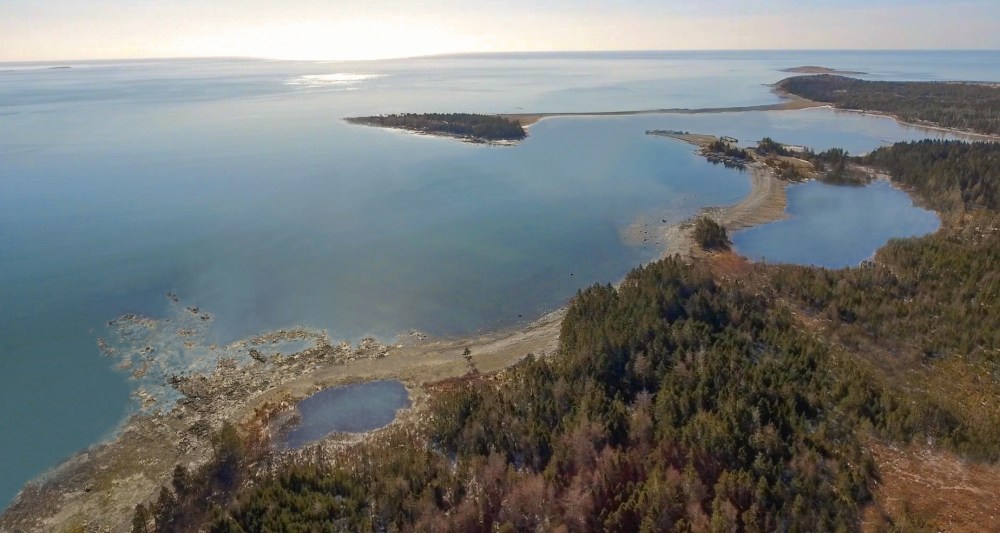
In October, the Nova Scotia government approved a 20-year lease for the group, covering 83 hectares of Crown lands and coastal waters.
The group is hoping the French government will decide later this month to approve the transfer of two killer whales from Marineland Antibes in the south of France to the sanctuary, but the whales’ owners are opposed to the move. Marineland Antibes closed in January 2025.
As well, the project requires transfer permits from the federal Fisheries Department and plenty of fundraising to cover the $15-million cost of construction and $1.5 million in annual operating expenses.
Meanwhile, Vinick said the group has hired Nova Scotia-based R.J. MacIsaac Construction Ltd. as general contractor.
MacIsaac Construction president Boyd MacIsaac said the project represented a technically demanding marine build.
“We’re confident in our ability to execute it responsibly,” he said in a statement. “We know this coastline, we understand its conditions, and we’re committed to delivering infrastructure that meets rigorous environmental and engineering standards.”
The next step will be reconstruction of a wharf on the western side of Indian Harbour.
Vinick said a priority for the project is using Canadian materials and suppliers “to ensure the project delivers economic participation within Nova Scotia and across Canada.”
After Premier Tim Houston’s cabinet approved the Crown lease in October, a group of adjacent landowners came forward to criticize the move, arguing the government had promised the project would not move ahead without the landowners’ unanimous consent.
At the time, Houston said the lease was granted because the project had won widespread support, which included approval from Municipality of the District of St. Mary’s, the Assembly of Nova Scotia Mi’kmaw Chiefs and a long list of experts at Dalhousie University in Halifax.
This report by The Canadian Press was first published March 12, 2026.