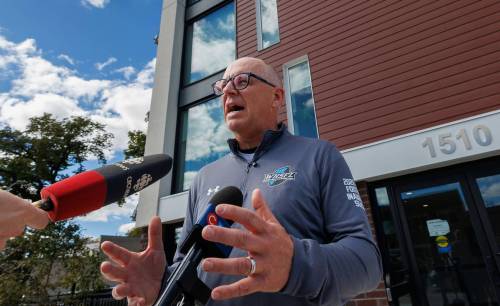
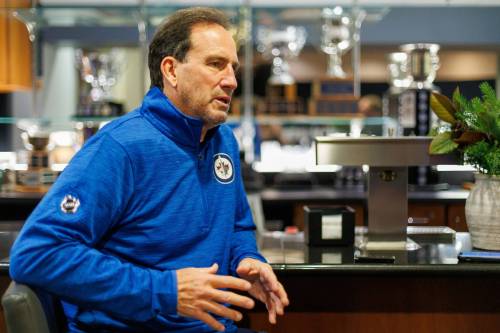
Reaction to the Alberta-Ottawa agreement on carbon pricing, pipeline plans
Advertisement
Read this article for free:
or
Already have an account? Log in here »
To continue reading, please subscribe:

Digital Subscription
One year of digital access for only $205*
- Enjoy unlimited reading on winnipegfreepress.com
- Read the E-Edition, our digital replica newspaper
- Access News Break, our award-winning app
- Play interactive puzzles
*First annual payment billed as $205.00 + GST for one year. This annual subscription will automatically renew at $233.00 + GST every 52 weeks (10% off the regular annual price of $259.35). Offer available to new and qualified returning subscribers only. Cancel any time.
To continue reading, please subscribe:
Add Free Press access to your Brandon Sun subscription for only an additional
$1 for the first 4 weeks*
- Enjoy unlimited reading on winnipegfreepress.com
- Read the E-Edition, our digital replica newspaper
- Access News Break, our award-winning app
- Play interactive puzzles
*Your next Brandon Sun subscription payment will increase by $1.00 and you will be charged $17.95 plus GST for four weeks. After four weeks, your payment will increase to $24.95 plus GST every four weeks.
Read unlimited articles for free today:
or
Already have an account? Log in here »
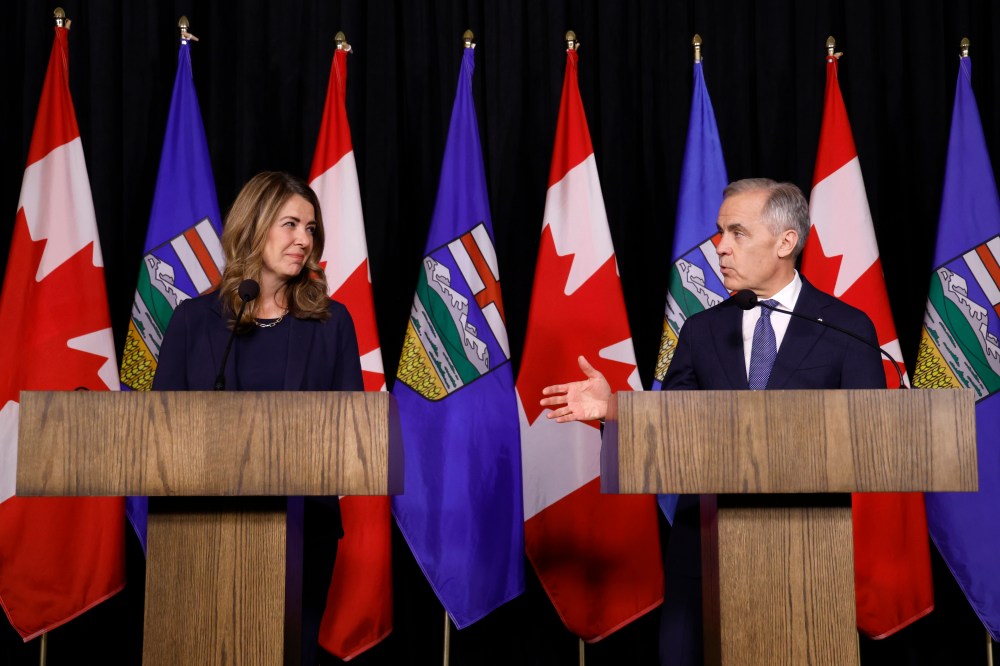
CALGARY – Shovels could hit the ground on a new West Coast oilsands pipeline as early as September 2027, the federal and Alberta governments said Friday, after they announced a plan to gradually increase the province’s effective industrial carbon price to at least $130 a tonne by 2040.
That means an agreement on the Pathways carbon capture project is the last outstanding item to nail down from the energy accord both governments signed in November.
Here’s some reaction to the latest federal-provincial agreement:
—
“We are building a Canada that works with a more prosperous, sustainable and resilient economy for all.” — Prime Minister Mark Carney
—
“This gives industry the time and certainty needed to plan, invest and deliver real emissions-reducing projects without undermining competitiveness. It means that we’re much closer to attaining our joint ambition to make Canada into a global energy leader and a trusted supplier of responsibly produced lower-emissions energy in the world.” — Alberta Premier Danielle Smith
—
“Conservatives want a pipeline without a carbon tax, not a carbon tax without a pipeline.” — federal Conservative Leader Pierre Poilievre
—
“As a country, it’s time to stop rewarding bad behaviour. It cannot be the case that the projects that get prioritized in Canada are those where a premier threatens to leave the country.” — British Columbia Premier David Eby
—
“This announcement marks the Carney government’s official surrender to the oil and gas lobby. By gutting carbon pricing to the point of irrelevance, it has dismantled the last federal climate measure standing. We now have a federal government that no longer even pretends to rein in big corporate polluters.” — federal NDP Leader Avi Lewis
—
“Alberta now has some forward movement in building Canada’s energy future. This is good news, and necessary. But now Danielle Smith has to get to work, in an increasingly difficult environment of her own creation.” — Alberta NDP Leader Naheed Nenshi
—
“Oil Sands Alliance is committed to advancing the Pathways carbon capture and storage project provided the necessary regulatory and fiscal terms are in place, to support the project and new oilsands growth in Canada. An industrial carbon tax only adds uncompetitive costs to industry on top of the costs of a carbon capture project.” — Kendall Dilling, president of the Oil Sands Alliance, a group of major producers proposing the Pathways carbon capture project.
—
“The new industrial carbon tax plan improves on earlier proposed versions yet still represents a unique cost to Canadian oil and natural gas producers. If growing Canadian energy exports is our goal, we should not be adding costs to oil and natural gas production when no other directly competing country has done so.” — Lisa Baiton, president and CEO of the Canadian Association of Petroleum Producers.
—
“Today’s historic agreement between the government of Canada and the government of Alberta puts politics aside for progress. When we feud within the federation, we send the message that investors should pursue business opportunities elsewhere. When we unite, we invite investment back.” Canadian Chamber of Commerce president and CEO Candace Laing
—
“Today’s implementation agreement between the governments of Canada and Alberta is an important and welcome step toward unleashing Canada’s full energy potential.” — Business Council of Canada president and CEO Goldy Hyder.
—
“Today’s announcement reflects the scale of ambition required for future generations. Once again, it is business that must rise to the occasion — with courage, capital, and a shared belief that we can build a great Canada together.” — ATCO Ltd. CEO Nancy Southern
—
“These commitments provide much-needed certainty to help us invest in our electricity system to provide affordable, reliable electricity for our customers well into the future.” — ENMAX CEO Mark Poweska
—
“This project would provide significant economic benefits and long-term prosperity for First Nations. It is critical that governments continue to engage and work in meaningful partnership with First Nations as this work moves forward.” — Jim Boucher, former Fort McKay First Nation chief and co-founder of Saa Dene Group.
—
“Today’s announcement does nothing to increase the chances of a pipeline and oil tankers route to the North Coast ever becoming a reality.” — Coastal First Nations president and Heiltsuk Nation elected Chief Marilyn Slett
—
“With this disastrous agreement, Canada and Alberta are squandering another critical opportunity to wean Canada off fossil fuels, and it is a provocation of Indigenous Peoples in B.C. who oppose a new pipeline to the West Coast.” — Amnesty International Canada secretary-general Ketty Nivyabandi.
—
“No project that threatens the extinction of iconic southern resident killer whales and puts communities’ health at risk could be ‘nation building.'” — Ecojustice nature director Margot Venton
—
“The only thing happening faster than the federal rollback of climate policies is the global renewable energy revolution that will turn all of these concessions to Big Oil into a massive lost opportunity to build a better, safer Canada. A greener world is a safer and more affordable world, so let’s not confuse what is good for oil companies with what is good for regular people.” — Greenpeace Canada senior energy strategist Keith Stewart
—
“This agreement is knocking down the last pillar in Canada’s climate policy, creating unnecessary economic, environmental and health risks for its people.” — International Institute for Sustainable Development’s Canada energy transition lead Nichole Dusyk
—
“Pushing the $130 price by 15 years means there will be no effective action to reduce oilsands emissions for a generation. This decision guarantees that oilsands emissions — which reached an all-time high in 2025 — will continue to rise year over year for at least another 15 years.” — Pembina Institute executive director Chris Severson-Baker
—
“Ultimately, 2040 is too late to reach a market carbon credit price of $130 a tonne in Alberta. That is especially true given the cost to oilsands producers is cents per barrel on average. The deferred timeline on carbon pricing risks watering down industrial carbon pricing systems in other provinces, like B.C., which would otherwise be at a significant competitive disadvantage.” — Canadian Climate Institute president Rick Smith
—
“Any new bitumen pipeline and tanker megaproject would come at the sacrifice of what Canadians hold dear — clean water, clean air, a healthy environment, and the protection of endangered species. To get it built, the Carney government is trying to bulldoze key long-standing environmental protections, including protections for nature, endangered species, clean water, and marine life. At the same time, he’s rolling back promises to make the biggest polluters in the country pay their fair share.” — Stand.earth campaigns director Liz McDowell
—
“This deal has the potential to deliver meaningful investment in decarbonization as carbon prices escalate through the 2030s. It replaces an old policy regime that wasn’t working with a new approach that can deliver both emissions reductions and economic growth.” — Clean Prosperity CEO Michael Bernstein
—
This report by The Canadian Press was first published May 15, 2026.
Related Articles
Carney, Smith all smiles while time runs out on climate change
Advertisement Advertise With Us
Advertisement Advertise With Us