US Supreme Court settles long-running water dispute over dwindling Rio Grande
Advertisement
Read this article for free:
or
Already have an account? Log in here »
To continue reading, please subscribe:

Digital Subscription
One year of digital access for only $205*
- Enjoy unlimited reading on winnipegfreepress.com
- Read the E-Edition, our digital replica newspaper
- Access News Break, our award-winning app
- Play interactive puzzles
*First annual payment billed as $205.00 + GST for one year. This annual subscription will automatically renew at $233.00 + GST every 52 weeks (10% off the regular annual price of $259.35). Offer available to new and qualified returning subscribers only. Cancel any time.
To continue reading, please subscribe:
Add Free Press access to your Brandon Sun subscription for only an additional
$1 for the first 4 weeks*
- Enjoy unlimited reading on winnipegfreepress.com
- Read the E-Edition, our digital replica newspaper
- Access News Break, our award-winning app
- Play interactive puzzles
*Your next Brandon Sun subscription payment will increase by $1.00 and you will be charged $17.95 plus GST for four weeks. After four weeks, your payment will increase to $24.95 plus GST every four weeks.
Read unlimited articles for free today:
or
Already have an account? Log in here »
ALBUQUERQUE, N.M. (AP) — The U.S. Supreme Court has approved a settlement package designed to rein in groundwater pumping along one of North America’s longest rivers and ensure enough water reliably makes it from New Mexico to Texas, ending a long-running dispute over management of the Rio Grande.
In a brief order Tuesday, the court accepted the recommendation of a special master to move forward with agreements first proposed last year by New Mexico, Texas and Colorado.
The settlement calls for reducing groundwater pumping along the dwindling river and retiring water rights from irrigated farmland in southern New Mexico. The states held up the proposal as a promise to restore order to an elaborate system of storing and sharing water between two vast irrigation districts in southern New Mexico and western Texas.
“We’re very excited to be redirecting resources from costly and lengthy litigation to solutions on the ground,” Hanna Riseley-White, director of the Interstate Stream Commission, said Wednesday.
Those solutions will include everything from long-term fallowing programs and more efficient irrigation infrastructure to developing new sources of water, like tapping brackish supplies or importing water, and improving stormwater management so more runoff can be captured and stored.
Researchers have warned that unsustainable use of the Rio Grande — which originates in Colorado and stretches south into Mexico — threatens water security for millions of people who rely on the binational river basin.
Farmers in southern New Mexico increasingly have turned to groundwater to irrigate pecan orchards and chile crops as hotter, drier conditions have reduced river flows and storage over recent decades. That pumping is what prompted Texas to sue in 2013, claiming the practice was cutting into water deliveries.
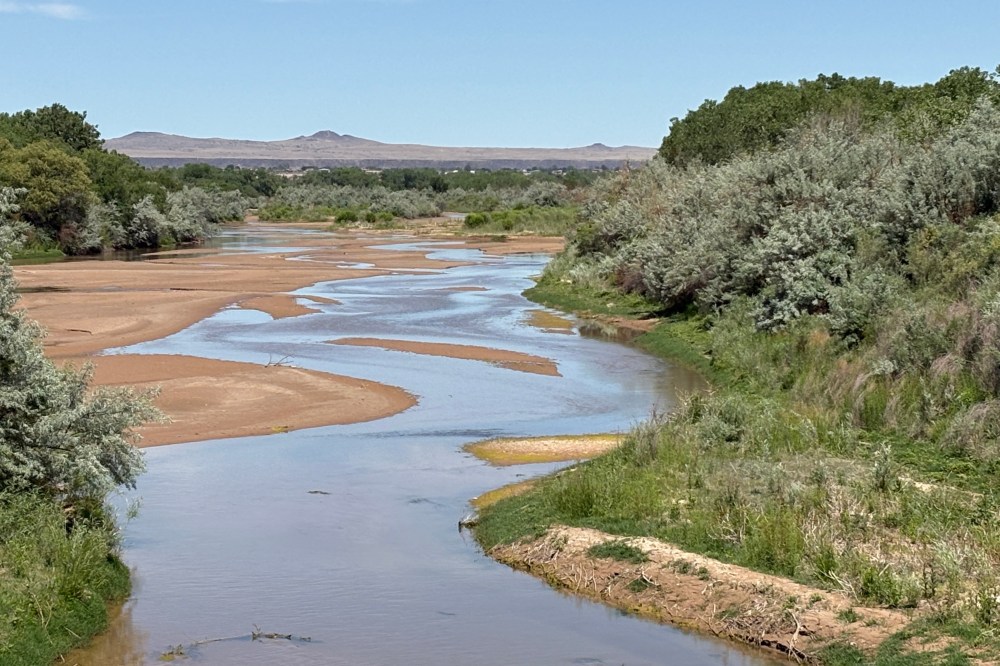
While the Colorado River gets all the headlines, experts say the situation along the Rio Grande is just as dire. Stretches of the river as far north as Albuquerque are expected to go dry again this year, marking the third time in five years.

The settlement package provides for a detailed accounting system for sharing water with Texas. New Mexico could rely on credits and debits from year to year to navigate through drought and wet periods, though it could be responsible for additional water-sharing obligations if deliveries are deferred too long.
Under the settlement, New Mexico must reduce annual groundwater depletions by 18,200 acre-feet, or about 5.9 billion gallons (22.3 billion liters) within the next 10 years. The commitment includes completing half of that within the next five years.
Riseley-White said that represents about 5% to 7% of current groundwater use in the lower Rio Grande. The settlement doesn’t dictate what sector the water savings comes from, so she said industry and municipalities could also partner with the state to meet the mandates.
Still, officials expect to achieve most of the necessary reductions from buying water rights from the agricultural industry, meaning more farmland would be retired.
Riseley-White said listening sessions are underway this week and the first acquisitions are expected to begin later this year. New Mexico has secured more than $40 million in federal funding to support the effort, she said.