World Cup stadiums earn prestigious certifications as green buildings before matches begin
Advertisement
Read this article for free:
or
Already have an account? Log in here »
To continue reading, please subscribe:

Digital Subscription
One year of digital access for only $205*
- Enjoy unlimited reading on winnipegfreepress.com
- Read the E-Edition, our digital replica newspaper
- Access News Break, our award-winning app
- Play interactive puzzles
*First annual payment billed as $205.00 + GST for one year. This annual subscription will automatically renew at $233.00 + GST every 52 weeks (10% off the regular annual price of $259.35). Offer available to new and qualified returning subscribers only. Cancel any time.
To continue reading, please subscribe:
Add Free Press access to your Brandon Sun subscription for only an additional
$1 for the first 4 weeks*
- Enjoy unlimited reading on winnipegfreepress.com
- Read the E-Edition, our digital replica newspaper
- Access News Break, our award-winning app
- Play interactive puzzles
*Your next Brandon Sun subscription payment will increase by $1.00 and you will be charged $17.95 plus GST for four weeks. After four weeks, your payment will increase to $24.95 plus GST every four weeks.
Read unlimited articles for free today:
or
Already have an account? Log in here »
Most of the stadiums for this year’s FIFA World Cup have achieved green building status after a push for certification in the run-up to the tournament.
As the tournament opens, 13 of the 16 stadiums have earned LEED certification, the world’s most widely used green building rating system, the U.S. Green Building Council said. Ten have been certified since 2024 through the rigorous process to ensure buildings meet strict sustainability standards. The council expects at least two of the three remaining stadiums to achieve certification in the coming weeks.
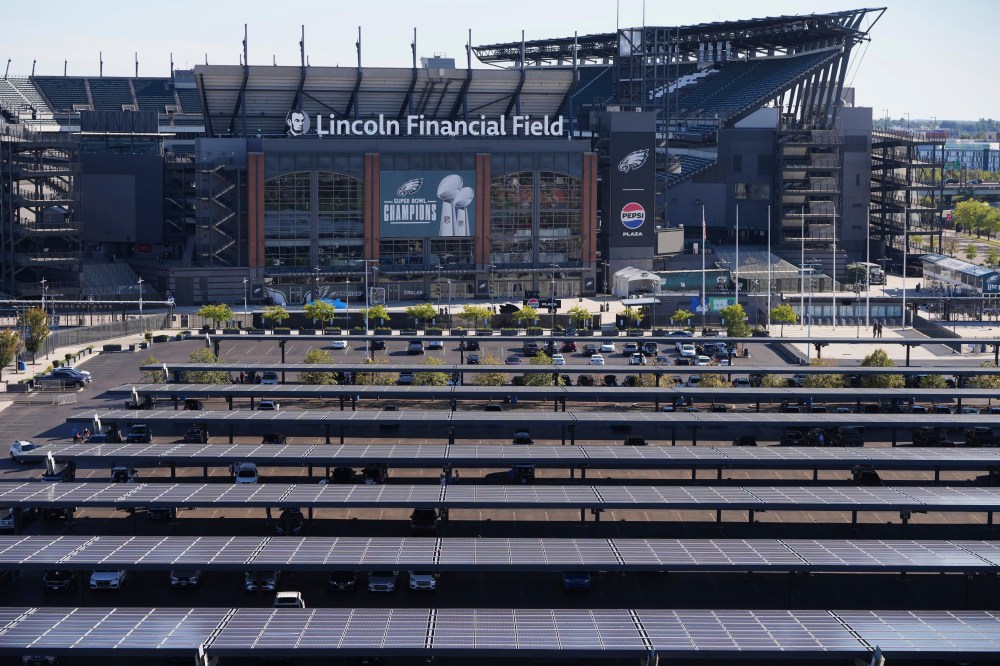
Together, the LEED-certified stadiums have installed over 11,500 solar panels to generate clean electricity. Because of the changes made, they will save over 100 million gallons of potable water annually and eliminate more than 5 million single use plastics annually, according to information shared by the stadiums. Four venues are reusing, recycling or composting nearly all waste, preventing it from reaching a landfill.
“They’re going to be able to achieve cost savings, they are also going to be improving their indoor air quality,” said Rhiannon Jacobsen, a managing director at the U.S. Green Building Council. “That would then support the fan experience and improve team performance.”
FIFA has committed to reducing its greenhouse gas emissions by 50% by 2030 and reaching net-zero carbon emissions by 2040. The tournament’s use of existing stadiums avoids the carbon pollution that comes with venue construction for huge sports events. And achieving the sustainability designation means these stadiums have demonstrated efficient use of energy and water, improved air quality and reduced waste.
Still, scientists warn that this will be the most polluting World Cup to date, largely because of air travel required for fans and teams transiting across North America and the tournament’s expansion from 32 to 48 teams. Air travel is a significant contributor to climate change because burning jet fuel releases carbon dioxide.
The tournament will generate more than 9 million metric tons of carbon pollution, the same as nearly 6.5 million average British cars being driven for an entire year, according to a report by Scientists for Global Responsibility, the New Weather Institute and other environmental sustainability groups.
How LEED works
The U.S. Green Building Council introduced the first version of its flagship LEED rating system in 1998, testing it with 19 projects. Since then, it has become the global standard for designing, constructing and operating healthy, efficient and cost-saving green buildings.
The council creates and updates the standards while its sister organization, Green Business Certification Inc., certifies the projects. Projects earn points in categories including energy and atmosphere, water efficiency and indoor environmental quality. Points correspond to a level of certification: certified, silver, gold and platinum.
LEED-certified buildings typically use about 25% less energy, reduce carbon emissions by about 34% and use 10% less water than conventional buildings, according to the council.
There are 51 LEED-certified professional sports venues in North America, the vast majority in the U.S., the council said. And there’s a total of about 150 certified sports venues in North America, which includes collegiate stadiums and arenas.
The USGBC recently launched a map to spotlight certified stadiums. It’s showing soccer and baseball stadiums in addition to the World Cup venues so far, and the map will later be expanded.
The impact of green building strategies
Garrett Wittmaier, director of stadium services for the Kansas City Chiefs, said FIFA encouraged host venues to become LEED certified and the timeline was certainly challenging. But he said it was attainable for GEHA Field at Arrowhead Stadium because they had already been making changes in recent years to become more sustainable.
Those include daily sorting to divert over 90% of trash from local landfills in 2025, adding biodigesters for food waste, installing LED sports lighting, limiting water flow in sinks and automating urinal flushing. Their reusable cup program prevented about 100,000 plastic cups from becoming trash.
“We are continuously looking for ways to reduce the negative impact of large events on local communities and the environment,” Wittmaier wrote in an email.
The oldest of the venues, 60-year-old Estadio Azteca in Mexico City, reached the highest tier of LEED certification in October. Jacobsen said it demonstrates how older venues can meet modern sustainability standards.
Latin America’s largest soccer stadium, with 87,500 seats, reduced indoor water use by 36% using efficient fixtures and reduced energy use by nearly 45% with efficient heating and air conditioning equipment and new lighting. Officials developed a program to reduce waste and a policy to purchase sustainable products, including toilet paper.
Félix Aguirre, deputy general manager of the stadium, said this was an opportunity to elevate sustainability and position the venue as a benchmark for responsible sports infrastructure. Aguirre said achieving this in about one year was an extraordinary accomplishment, given the age and original conditions of the facility, with some spaces that had never had adequate ventilation systems.
Levi’s Stadium in Santa Clara, California; Lincoln Financial Field in Philadelphia and Mercedes-Benz Stadium in Atlanta participated in LEED prior to host cities being announced in 2022. The rest earned certifications since early 2024.
The other LEED certified stadiums are: BMO Field in Toronto; Estadio BBVA in Guadalupe, Mexico; AT&T Stadium in Arlington, Texas; Gillette Stadium in Foxborough, Massachusetts; Hard Rock Stadium in Miami Gardens, Florida; MetLife Stadium in East Rutherford, New Jersey; BC Place in Vancouver; and Estadio Akron in Guadalajara, Mexico.
The stadiums that will host the most matches are certified
AT&T Stadium will host nine matches, the most of the 16 sites. It achieved a gold certification in March.
Scott Woodrow, the assistant general manager for facilities, said they had previously invested in energy efficiency projects that would help if they ever pursued LEED. The World Cup gave them a reason to achieve it, he added.
They spent more than $7 million adding high-efficiency heating and cooling systems, water fixtures and sustainable lighting. Woodrow said a consultant estimated a 16% reduction in overall energy use.
MetLife Stadium, which will host eight matches including the final, achieved gold certification in May.
It focused on using solar energy, efficient lighting and hybrid and electric vehicles, as well as diverting waste from landfills. President and CEO Ron VanDeVeen said in a statement that the certification shows how premium guest experiences and rigorous green building practices can go hand in hand.
___
AP Sports Writer Carlos Rodriguez in Mexico City contributed to this report.
___
The Associated Press’ climate and environmental coverage receives financial support from multiple private foundations. AP is solely responsible for all content. Find AP’s standards for working with philanthropies, a list of supporters and funded coverage areas at AP.org.
Related Articles
Foreign officers to help Toronto cops manage international fans during FIFA World Cup










Advertisement Advertise With Us
Advertisement Advertise With Us