Political blame game follows as screwworm parasite threatens cattle in Texas
Advertisement
Read this article for free:
or
Already have an account? Log in here »
To continue reading, please subscribe:

Digital Subscription
One year of digital access for only $205*
- Enjoy unlimited reading on winnipegfreepress.com
- Read the E-Edition, our digital replica newspaper
- Access News Break, our award-winning app
- Play interactive puzzles
*First annual payment billed as $205.00 + GST for one year. This annual subscription will automatically renew at $233.00 + GST every 52 weeks (10% off the regular annual price of $259.35). Offer available to new and qualified returning subscribers only. Cancel any time.
To continue reading, please subscribe:
Add Free Press access to your Brandon Sun subscription for only an additional
$1 for the first 4 weeks*
- Enjoy unlimited reading on winnipegfreepress.com
- Read the E-Edition, our digital replica newspaper
- Access News Break, our award-winning app
- Play interactive puzzles
*Your next Brandon Sun subscription payment will increase by $1.00 and you will be charged $17.95 plus GST for four weeks. After four weeks, your payment will increase to $24.95 plus GST every four weeks.
Read unlimited articles for free today:
or
Already have an account? Log in here »
U.S. Agriculture Secretary Brooke Rollins watched sterile flies being released to fight the New World screwworm on Thursday and visited the Texas ranch where one of the first cases of the pest was detected. The screwworm could devastate the nation’s cattle industry.
Later, she repeated her assertion that former President Joe Biden’s administration is responsible for the parasite’s return to the U.S. six decades after it was eradicated. Democratic leaders say cuts to the nation’s agriculture agency under President Donald Trump are to blame.
Screwworms are on their way to becoming a billion-dollar international problem, but can be contained if ranchers are vigilant, watch their herds and other wildlife, and quickly treat any infestations, Rollins said. She pointed to the calf where screwworms were found six days earlier in a wound where its umbilical cord had been attached.
“He couldn’t be happier. He’s bouncing around the pasture,” Rollins said.
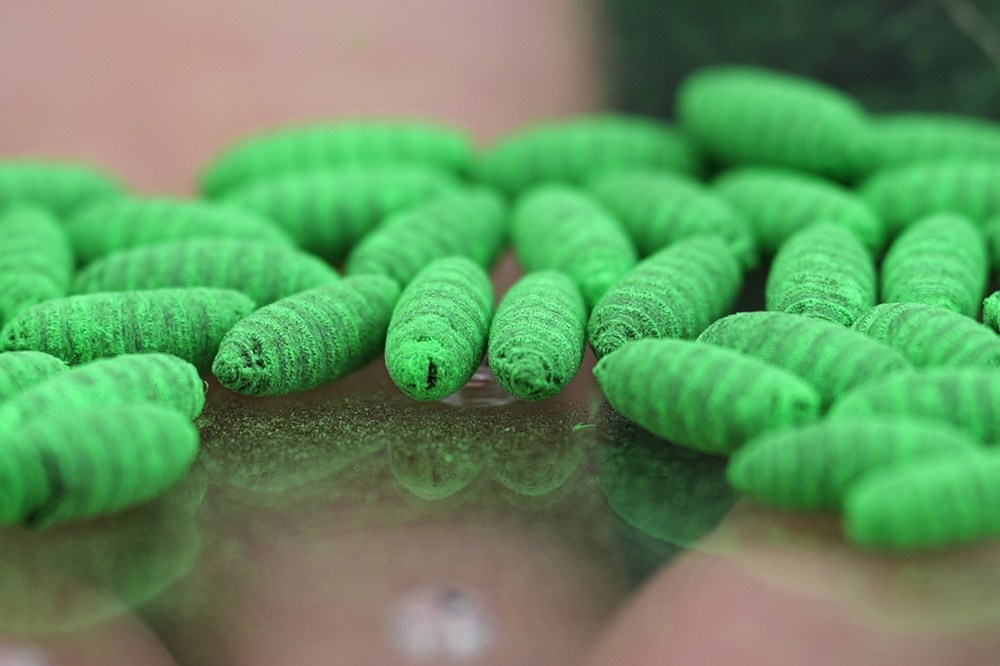
Screwworms are flies that lay their eggs in the wounds of warm-blooded animals and feed on living flesh rather than dead tissues. Scientists say releasing sterile flies to mate with females is the most effective way to control the population, a strategy that has worked for decades. A warming planet is complicating efforts by giving screwworms, which thrive in hot, humid weather, more places to spread.
Billion-dollar response planned to fight screwworms
The U.S. Department of Agriculture is preparing an all-out assault on the screwworm, which had been contained in the narrow isthmus of Panama for decades.
No matter the cause, driving screwworms back south and keeping them out of the U.S. will be expensive. The USDA estimated it would spend over $1 billion on efforts to save cattle herds and other livestock.
About $750 million will go toward building and operating a plant capable of producing up to 300 million sterile flies a week. The technique has been used for decades, as female screwworms mate just once, and if they choose a sterile mate, their eggs don’t hatch, and the fly population dwindles.
The goal is to protect the U.S. cattle industry. Experts think the parasite shouldn’t cause an immediate increase in near-record-high beef prices as long as it doesn’t turn into an outbreak and large groups of cattle die. Screwworms don’t affect food safety.
The parasite has already disrupted the Mexican beef industry. The U.S. closed its southern ports to Mexican livestock last summer.
Mexico has had more than 28,000 cases of screwworms since the flies returned two years ago, mostly confined to its southern states. The Mexican government stopped the importation of almost all live animals from the U.S. after screwworms were discovered here.
Scientists aren’t sure how screwworms emerged again
The U.S. had been almost entirely rid of screwworms for 60 years, with scientists in North and Central America eventually driving it down to the containment zone in Panama. But in 2023, the flies emerged and began heading back north.
Experts say screwworms are here to stay at least for this summer. Seven cases have already been detected in Texas and New Mexico. A 12-mile (20-kilometer) quarantine zone goes up around every place a case is found.
As they work toward a solution, scientists say they aren’t sure exactly what led to screwworms leaving the area in Panama where they were boxed in.
“I don’t have the answer to that one, and I don’t know if anyone does. It doesn’t help us to speculate,” said Jonathan Cammack, a professor of livestock entomology and parasitology at Oklahoma State University.
The key now is to ramp up the sterile fly program and get international cooperation to get the pests back down to Panama, he said.
Climate change is also helping drive the spread of screwworms, said Lee Haines, an associate research professor of biological sciences at the University of Notre Dame.
“The fly is a creature of warmth as its entire life cycle, from egg to adult, can complete in as little as three weeks under tropical conditions,” Haines said.
Even Canada has temporarily stopped importing cattle, horses or other livestock from Texas. The parasites prefer humid areas where temperatures are at least 77 F (25 C), and those days are increasing further north.
Democrats question cuts; Republicans blame immigration
As Rollins moves quickly to implement a billion-dollar response to the screwworm outbreak, she has also blamed the Biden administration, noting that it was in office as the parasite began moving north again.
She said without showing any evidence the flies were with animals that followed immigrants north as well as hitching rides with cattle and other animals being sold by Mexican cartels outside of regular markets.
“People moving north to America, bringing their livestock with them, the Mexican cartels with the illicit cattle traffic, we knew it was coming,” Rollins told the U.S. Senate Agriculture Committee on Wednesday.

Nearly a dozen Democratic U.S. senators sent a letter to Rollins this week questioning whether job losses at the USDA have hurt food inspections and livestock safety programs.
Nearly 20% of the counties in the U.S. that started 2025 with at least one employee from the federal Animal Plant and Health Inspection Service ended the year with none, the letter said.
Rollins said she has moved over 100 USDA employees into the screwworm response. She said it has been one of her top priorities since Trump picked her to lead the USDA.
But Democratic U.S. Rep. Ted Lieu of California said blaming Biden is shortsighted and again shows the Trump administration creates problems through reckless spending cuts.
“The life cycle of a screwworm is about 14 to 54 days, depending on temperature and humidity. The Trump administration has been in office for over 500 days,” Lieu said earlier this week. “This is on the Trump administration. They need to own up to it, and they need to apologize.”