Iran war turns Asia toward diversifying energy supplies, undermining climate goals

Advertisement

Advertise with us

BANGKOK (AP) — Asian nations hit hard by the Iran war's price shocks are rushing to diversify and strengthen their energy security, potentially undermining their commitments to curb climate change.

Read this article for free:


or

Already have an account? Log in here »

To continue reading, please subscribe:

Subscribe and receive a limited-edition Free Press branded hat or tote.

Digital Subscription

One year of digital access for only $205*

  • Enjoy unlimited reading on winnipegfreepress.com
  • Read the E-Edition, our digital replica newspaper
  • Access News Break, our award-winning app
  • Play interactive puzzles

*First annual payment billed as $205.00 + GST for one year. This annual subscription will automatically renew at $233.00 + GST every 52 weeks (10% off the regular annual price of $259.35). Offer available to new and qualified returning subscribers only. Cancel any time.

To continue reading, please subscribe:

Add Free Press access to your Brandon Sun subscription for only an additional

$1 for the first 4 weeks*

  • Enjoy unlimited reading on winnipegfreepress.com
  • Read the E-Edition, our digital replica newspaper
  • Access News Break, our award-winning app
  • Play interactive puzzles
Start now

*Your next Brandon Sun subscription payment will increase by $1.00 and you will be charged $17.95 plus GST for four weeks. After four weeks, your payment will increase to $24.95 plus GST every four weeks.

BANGKOK (AP) — Asian nations hit hard by the Iran war’s price shocks are rushing to diversify and strengthen their energy security, potentially undermining their commitments to curb climate change.

As negotiations on ending the war drag on, countries in energy hungry Southeast Asia are exploring nuclear power and promising renewable rollouts. But they are also investing in coal power to provide a buffer during times of crisis.

The Iran war has not shaken coal’s status as a pillar of Southeast Asia’s energy security, said Sandeep Pai at Duke University’s Nicholas Institute for Energy, Environment and Sustainability.
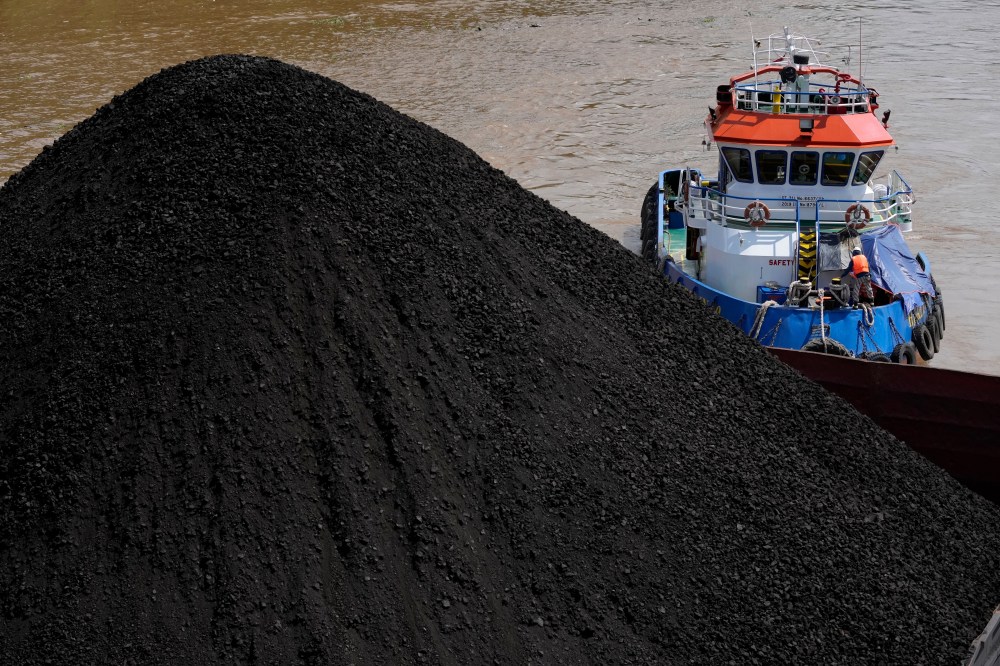
FILE - A tug boat pushes a barge carrying coal on Mahakam river in Samarinda, East Kalimantan, Indonesia, Dec. 19, 2022. (AP Photo/Dita Alangkara, File)

Until recently, coal was slowly being phased out to reduce climate change-causing emissions and address air quality concerns. But the conflict has complicated that scenario.

“At the end of the day, energy security triumphs any other climate considerations,” Pai said.

Iran war alters the future of coal in Asia

In East Asia, South Korea and Japan began burning more coal to keep national energy grids powered while the closure of the Strait of Hormuz due to the war disrupted flows of oil and gas to Asia.

Southeast Asian nations like Thailand, Vietnam and the Philippines did the same.

This emergency response has led to longer-term policies that have given coal an extension of life, Pai said.

Coal investments are predicted to rise globally to $180 billion in 2026, according to the International Energy Agency, which is the highest its been since 2012.

In 2021, the United Nations declared coal had been consigned to history after nearly 200 countries agreed to phase out coal power. After Russia’s 2022 invasion of Ukraine disrupted gas supplies, European nations burned more coal and built more fossil fuel pipelines and import terminals.

Now, this second energy shock in less than a decade is reinforcing coal’s value to energy security in Asia, according to Michelle Manook of FutureCoal, a group backed by the fossil fuel industry that was formerly known as the World Coal Association.

Global coal-fired power generation declined by 0.6% last year, according to the Global Energy Monitor, but new coal power capacity increased 3.5%.

Southeast Asia eyes fossil fuels and rooftop solar

Indonesia, the world’s largest thermal coal exporter and a bellwether for the fossil fuel industry, is overhauling its trade rules and imposing new taxes after coal prices hit multi-year highs.

But it’s also chasing new solar goals, planning to install 100 gigawatts of rooftop solar by 2034, up from 1.3 gigawatts of capacity now.

“Indonesia’s obviously tied to coal in so many ways, but it’s seen beyond that,” said Dave Jones, with the energy think tank Ember.

Renewables still dominate growth in regional power generation, he noted.

Likewise, Vietnam has increased its use of coal but also has committed to installing rooftop solar on 10% of public offices and homes nationwide by 2030.

After the war began, the Philippines burned more coal and declared a national energy emergency. It considered lifting a ban on new coal plants but decided not to. Earlier approved projects will still be built.

In the meantime Philippine consumers have been putting up rooftop solar in record rates.

“This really doesn’t cancel out any of the green energy gains,” said Brenda Valerio of the nonprofit New Energy Nexus in the Philippines. “But it does really show that the energy transition is non-linear and contested.”

A renewed focus on coal and nuclear power

Much of the liquified natural gas going through the Strait of Hormuz went to South Korea and Japan, countries that import nearly all their energy needs.

Facing a shortfall, South Korea delayed the retirement of three coal plants, potentially slowing progress toward its climate goals. It raised power generation at its active nuclear plants and sped up maintenance at five offline reactors.

Japan has been pushing ahead with restarts of nuclear power plants that were idled after the 2011 Fukushima meltdown, said Michiyo Miyamoto with the Institute for Energy Economics and Financial Analysis. That disaster led Japan to step up use of coal as those plant closures temporarily cut its total generating capacity by about a third.

India wants to spend $3.9 billion to convert coal into industrial fuels and chemicals to replace imported products, maintaining its use of coal.

Efforts to reduce emissions and hit net zero ambitions are long-term campaigns that require years of effort and focus, said Luke Holt, the Asia-Pacific director of energy for the consultancy firm Ramboll.

“But we see that they are easily distracted,” he said. “We’ve had a number of shocks to the decarbonization plan.”

___

Associated Press writer Chan Ho-him in Hong Kong and Aniruddha Ghosal in Hanoi, Vietnam contributed to this report.

___

The Associated Press’ climate and environmental coverage receives financial support from multiple private foundations. The AP is solely responsible for all content. Find AP’s standards for working with philanthropies, a list of supporters and funded coverage areas at AP.org.


Report Error Submit a Tip

More Stories

Canadians loving Carney’s decision to stand tall against floundering U.S. bully

Tom Brodbeck 5 minute read Preview

Canadians loving Carney’s decision to stand tall against floundering U.S. bully

Tom Brodbeck 5 minute read Friday, Sep. 11, 2026

It’s hard to imagine a more dramatic political contrast than the one unfolding on opposite sides of the Canada-U.S. border.

Mark Carney is fighting a trade war with Donald Trump, taking the occasional verbal punch from the American president and imposing retaliatory tariffs on U.S. products.

And the prime minister is being rewarded for it politically.

Trump, meanwhile, is fighting pretty much everyone he can find — including some of America’s closest allies — and his own voters are increasingly giving him the political equivalent of a raised middle finger. That’s quite a tale of two leaders.

Read
Friday, Sep. 11, 2026

Iran war turns Asia toward diversifying energy supplies, undermining climate goals

Anton L. Delgado, The Associated Press 5 minute read Preview

Iran war turns Asia toward diversifying energy supplies, undermining climate goals

Anton L. Delgado, The Associated Press 5 minute read Tuesday, Jun. 30, 2026

BANGKOK (AP) — Asian nations hit hard by the Iran war's price shocks are rushing to diversify and strengthen their energy security, potentially undermining their commitments to curb climate change.

As negotiations on ending the war drag on, countries in energy hungry Southeast Asia are exploring nuclear power and promising renewable rollouts. But they are also investing in coal power to provide a buffer during times of crisis.

The Iran war has not shaken coal's status as a pillar of Southeast Asia’s energy security, said Sandeep Pai at Duke University’s Nicholas Institute for Energy, Environment and Sustainability.

Until recently, coal was slowly being phased out to reduce climate change-causing emissions and address air quality concerns. But the conflict has complicated that scenario.

Read
Tuesday, Jun. 30, 2026

Bombers exact revenge in Banjo Bowl, lose Collaros to injury

Taylor Allen 6 minute read Preview

Bombers exact revenge in Banjo Bowl, lose Collaros to injury

Taylor Allen 6 minute read Saturday, Sep. 12, 2026

Redha Kramdi downplayed the significance of his return for the Winnipeg Blue Bombers.

“I don’t think I have that big of an impact,” said Kramdi on Tuesday, who watched the club go 2-4 while he was sidelined with a cast on his left hand.

It sounded silly at the time, and it’s even sillier now considering how exceptional the 29-year-old safety from Montreal was in Saturday’s 22nd edition of the Banjo Bowl.

Kramdi caused two turnovers — a forced fumble and an interception — to lead the Bombers to a 19-6 victory over the Saskatchewan Roughriders in front of a sell-out crowd at Princess Auto Stadium.

Read
Saturday, Sep. 12, 2026

Drug recovery centre opens office in ‘heart of the city’

Morgan Modjeski 4 minute read Preview

Drug recovery centre opens office in ‘heart of the city’

Morgan Modjeski 4 minute read Saturday, Sep. 12, 2026

Richard Halverson found his freedom from addiction through Adult & Teen Challenge and, six years later, he hopes a new Winnipeg location will bring hope to the city.

Dozens gathered Saturday morning to mark the grand opening of the recovery centre’s community services office on Main Street.

Located inside the former Wojcik funeral home, the bright-white building — which was also formerly a liquor store — will serve as an access point for people fighting drug addiction. That includes connecting them to addictions support, housing and training.

“For me, I always start with: ‘What’s your story?’” said Halverson, who now works for the faith-based organization.

Read
Saturday, Sep. 12, 2026

Child hospitalized after being hit in Walmart parking lot

1 minute read Saturday, Sep. 12, 2026

Police are investigating after a child was struck by a vehicle in a Walmart parking lot on Kenaston Boulevard Friday evening.

At 9 p.m. officers from the Winnipeg Police Service traffic division attended to a motor vehicle-pedestrian collision in the 1600 block of Kenaston, police said Saturday.

A school-aged child was taken to hospital in unstable condition, police said, but the child was later upgraded to stable condition.

Police said the child sustained minor injuries and an investigation is ongoing.

The port of Churchill — but done right

Editorial 4 minute read Preview

The port of Churchill — but done right

Editorial 4 minute read Saturday, Sep. 12, 2026

The seagoing grain carrier wasn’t christened with a champagne bottle. There was no confetti or streamers. Nevertheless, the Aug. 31 event marking the first shipment of grain to be loaded at the Port of Churchill since 2020 was celebrated like the launch of a brand new vessel.

The presence of the federal minister of northern and arctic affairs, provincial cabinet ministers and leaders and elders from several northern First Nations signalled that the fast-tracked process of refurbishing and buffing up Manitoba’s deep-water seaport gem is gaining momentum.

For OneNorth, the partnership of 29 First Nations and 12 northern communities which owns the Port of Churchill and the Hudson Bay Railway (both operated by the Arctic Gateway Group) the event heralded a new beginning. It’s been eight years since OneNorth purchased the port and railroad, and six years since grain was moved by rail through Manitoba and then by ship to European markets. Two more grain shipments, plus shipments of potash and critical minerals, will continue through the fall.

When Prime Minister Mark Carney solicited the premiers to suggest “nation-building” projects following his election in 2025, Premier Wab Kinew pitched a Manitoba trade corridor that would move wheat, critical minerals, potash and energy (oil or liquid natural gas) through the Port of Churchill.

Read
Saturday, Sep. 12, 2026