Africa wants more homegrown solar to boost self-reliance, but China’s shadow remains
Advertisement
Read this article for free:
or
Already have an account? Log in here »
To continue reading, please subscribe:

Digital Subscription
One year of digital access for only $205*
- Enjoy unlimited reading on winnipegfreepress.com
- Read the E-Edition, our digital replica newspaper
- Access News Break, our award-winning app
- Play interactive puzzles
*First annual payment billed as $205.00 + GST for one year. This annual subscription will automatically renew at $233.00 + GST every 52 weeks (10% off the regular annual price of $259.35). Offer available to new and qualified returning subscribers only. Cancel any time.
To continue reading, please subscribe:
Add Free Press access to your Brandon Sun subscription for only an additional
$1 for the first 4 weeks*
- Enjoy unlimited reading on winnipegfreepress.com
- Read the E-Edition, our digital replica newspaper
- Access News Break, our award-winning app
- Play interactive puzzles
*Your next Brandon Sun subscription payment will increase by $1.00 and you will be charged $17.95 plus GST for four weeks. After four weeks, your payment will increase to $24.95 plus GST every four weeks.
Read unlimited articles for free today:
or
Already have an account? Log in here »
NAIROBI, Kenya (AP) — Africa’s largest economies are accelerating plans to build more domestic solar manufacturing capacity, a shift industry analysts say reflects both industrial ambition and growing unease over dependence on imports from China that dominate the global market.
Ethiopia, South Africa, Morocco and Nigeria have been stepping up efforts to localize manufacturing of equipment for solar power, from module assembly to more advanced manufacturing, according to industry experts.
However, they say China is likely to retain its dominant global role in making solar cells and other components. Its exports of such equipment have soared, partly due to a glut in supply back home.
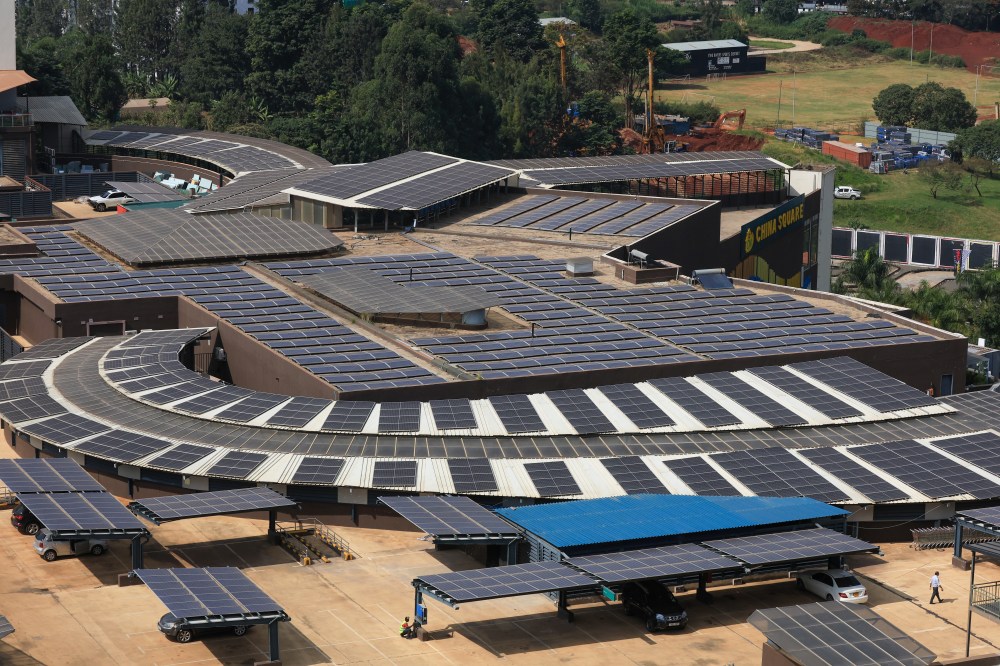
Chinese renewable energy investment and related construction projects in Africa reached $66 billion between 2010 and 2024, according to the think tank ODI Global.
“Growing economies, coupled with recent energy shortages in countries like Zambia and the ongoing need to provide access to underserved populations, make it (Africa) a perfect market for China to channel its overcapacity in the sector,” said Olena Borodyna, a senior geopolitical risk advisor with the London-based think tank.
Africa eyes solar production
Africa’s largest economies are keen to build their own solar manufacturing capacity.
South Africa’s utility, Eskom, plans to develop a 1-gigawatt solar manufacturing facility to capture more value from its fast-expanding solar market and respond to changing electricity demand.
Production of solar panels in Nigeria, meanwhile, is expanding rapidly, with local assembly capacity rising from about 120 megawatts to roughly 300 megawatts in the last two years. Its annual solar imports, mostly from China, also put it near South Africa’s level.
The homegrown manufacturing push is tied to structural shifts in Africa’s power markets. Rising adoption of rooftop and distributed solar systems in South Africa is reducing national grid demand, squeezing utilities’ revenues and prompting interest in diversification.
South Africa is already the continent’s largest importer of solar equipment, bringing in more than 3 gigawatts annually, also largely from China. Industry analysts say this scale of demand makes it one of the continent’s strongest candidates for localized production.
African power markets shift
The increased interest in solar power represents a significant shift, said Benjamin Clarke, policy director at the Africa Solar Industry Association, even if actual manufacturing capacity remains limited. He said nations pursuing solar manufacturing tend to already have industrial capacity and strong domestic demand.
“Morocco has doubled production to around 1 gigawatt a year. South Africa maintains a similar capacity. Egypt has gigawatt-scale projects coming online,” he said.
“A few years ago, local solar manufacturing was barely on the agenda anywhere in Africa,” Clarke said “It is now becoming a recognized pillar of industrial policy and green economic development.”
The need for more solar or other renewable power has soared. The industry group GOGLA estimates that more than 10 million solar kits were sold across Africa in 2025, serving roughly 148 million people. This was a 10% increase compared to 2024, with much of that growth concentrated in East and West Africa.
The solar build-out is within a highly concentrated global supply chain dominated by China. Africa has effectively no commercial-scale solar cell manufacturing, meaning emerging assembly plants still must rely on imported Chinese components.
“Most new factories assemble imported Chinese components rather than produce the high-value solar cells and other upstream materials, leaving Africa dependent on foreign technology for the most sophisticated parts of the supply chain,” Clarke said.
Technology transfer remains limited
China’s investment is helping Africa build manufacturing capacity and technical skills.
It’s a vital opportunity for technology transfer and job creation, ODI Global’s Borodyna said, “given China’s expertise in building out these technologies at scale.”
“China will play a huge role in the build-out of manufacturing capacity across the continent, as well as continue solar exports to the continent,” she said.
Experts say the continent has yet to receive the deeper sharing of knowhow needed to develop its own fully integrated solar industry.
Reliance on China for solar supply is likely to remain high in regions including Africa, said Hannah Pitt, with the think tank Rhodium Group’s energy and climate practice.
Trade restrictions in the U.S. and Europe have led Chinese companies to invest more in other regions such as Africa and Southeast Asia, according to Rhodium Group. Ethiopia is a favored destination, with more than half of the announced investments since 2018 coming from Chinese sources, alongside Japanese investments.
Investments in South Africa, Nigeria and Morocco were mostly led by domestic companies or joint ventures with local participation, the think tank said.
Saturated Chinese markets push solar manufacturing overseas
Extensive state support and years of steady investments in green technology manufacturing have resulted in an oversupply of solar power equipment and falling prices in China, a key factor in its huge global market share, said Lauri Myllyvirta with the Centre for Research on Energy and Clean Air.
With the market oversupplied, several major Chinese solar manufacturers, including Longi and Jinko, made losses in the first three months of 2026. For such companies, shifting overseas may be the only way to stay in business.
Chinese firms pledged as much as $250 billion in overseas green manufacturing projects between 2011 and the first half of last year, according to an estimate by Net Zero Industrial Policy Lab’s “China’s Green Leap Outward” report.
Chinese solar exports doubled in March reaching a new monthly record, as 50 countries set all-time records for Chinese solar imports in a single month, according to Ember, a think tank.
“In terms of producing and manufacturing things — like solar panels, batteries, electric vehicles — really China is by far the lead in this race,” said Li Shuo, director of the Asia Society Policy Institute’s China Climate Hub. “I personally expect the dominance of China to be further cemented and not weakened over the coming years.”
___
Chan reported from Hong Kong. Associated Press journalist Anton L. Delgado contributed from Bangkok.
___
The Associated Press’ climate and environmental coverage receives financial support from multiple private foundations. The AP is solely responsible for all content. Find AP’s standards for working with philanthropies, a list of supporters and funded coverage areas at AP.org.