Nero’s Bridge emerges from Tiber River as Rome faces water crisis
Advertisement
Read this article for free:
or
Already have an account? Log in here »
To continue reading, please subscribe:

Digital Subscription
One year of digital access for only $205*
- Enjoy unlimited reading on winnipegfreepress.com
- Read the E-Edition, our digital replica newspaper
- Access News Break, our award-winning app
- Play interactive puzzles
*First annual payment billed as $205.00 + GST for one year. This annual subscription will automatically renew at $233.00 + GST every 52 weeks (10% off the regular annual price of $259.35). Offer available to new and qualified returning subscribers only. Cancel any time.
To continue reading, please subscribe:
Add Free Press access to your Brandon Sun subscription for only an additional
$1 for the first 4 weeks*
- Enjoy unlimited reading on winnipegfreepress.com
- Read the E-Edition, our digital replica newspaper
- Access News Break, our award-winning app
- Play interactive puzzles
*Your next Brandon Sun subscription payment will increase by $1.00 and you will be charged $17.95 plus GST for four weeks. After four weeks, your payment will increase to $24.95 plus GST every four weeks.
Read unlimited articles for free today:
or
Already have an account? Log in here »
ROME (AP) — The remains of an ancient bridge have emerged in Rome’s Tiber River, near St. Peter’s Basilica, as weeks with virtually no rain caused water levels to plunge.
The bridge — known as Nero’s Bridge, named for the former Roman emperor — once connected Rome’s city center with the Tiber’s right bank.
“Nero is the most famous person linked to this area, because precisely in Nero’s circus, where the Vatican is now located, the Apostle Peter was martyred,” said Antonella Bonini, an archaeologist at Rome’s cultural heritage superintendency.
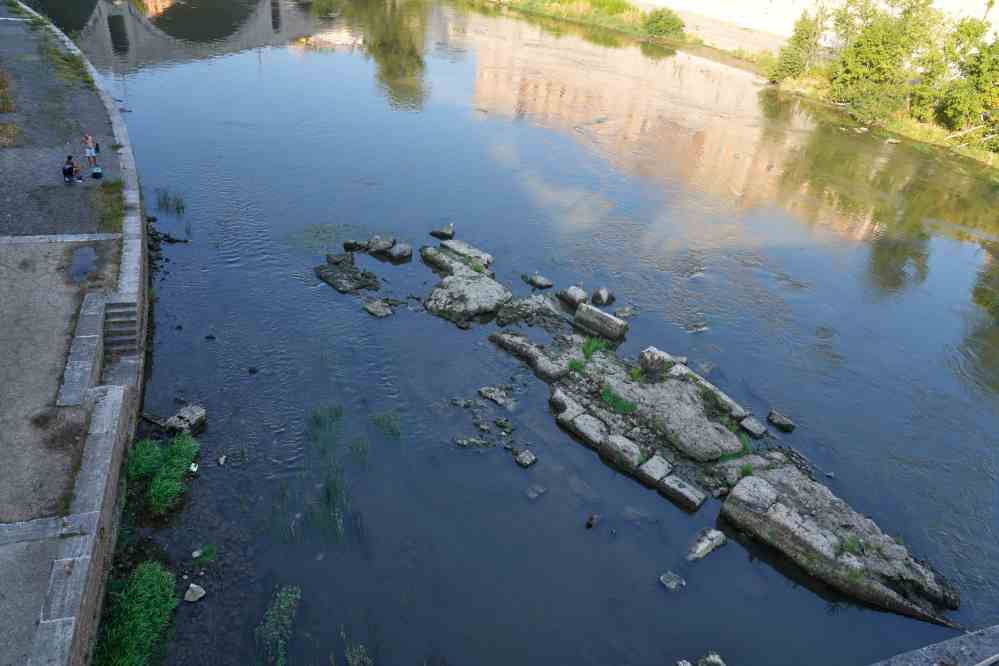
“However, scholars consider the bridge to be older (than Nero’s era) — built by Caligula, Nero’s uncle,” she said, adding that it existed as early as 39 AD.
The Tiber’s flow has fallen below 80 cubic meters (2,825 cubic feet) per second, about half the historic average for the month of July, according to Giovanni Giganti, coordinator of the Rome civil protection service’s center for water management.
“We are facing a major water crisis. And it is a crisis that is also due to the fact that this winter we did have quite abundant rainfall, but then the dry periods … were quite long,” Giganti said.