First Nations stuck in ‘spiralling cycle’ during wildfires: federal housing advocate
Advertisement
Read this article for free:
or
Already have an account? Log in here »
To continue reading, please subscribe:

Digital Subscription
One year of digital access for only $205*
- Enjoy unlimited reading on winnipegfreepress.com
- Read the E-Edition, our digital replica newspaper
- Access News Break, our award-winning app
- Play interactive puzzles
*First annual payment billed as $205.00 + GST for one year. This annual subscription will automatically renew at $233.00 + GST every 52 weeks (10% off the regular annual price of $259.35). Offer available to new and qualified returning subscribers only. Cancel any time.
To continue reading, please subscribe:
Add Free Press access to your Brandon Sun subscription for only an additional
$1 for the first 4 weeks*
- Enjoy unlimited reading on winnipegfreepress.com
- Read the E-Edition, our digital replica newspaper
- Access News Break, our award-winning app
- Play interactive puzzles
*Your next Brandon Sun subscription payment will increase by $1.00 and you will be charged $17.95 plus GST for four weeks. After four weeks, your payment will increase to $24.95 plus GST every four weeks.
Read unlimited articles for free today:
or
Already have an account? Log in here »
OTTAWA – First Nations are stuck in a “spiralling cycle” during wildfire seasons due to a lack of co-ordinated emergency management supports and a severe housing gap, the federal housing advocate is warning in a report on the 2025 wildfire season.
Last year saw the second-worst wildfire season on record, with 165 emergency events impacting 134 First Nations. More than 40,000 people were evacuated by mid-August from at least 83 communities.
“The risk of wildfires is not new to First Nations, but the authority and the resourcing First Nations need to manage emergencies and steward their territories with traditional knowledge have been undermined,” Marie-Josee Houle says in her new report, to be released Monday alongside the Assembly of First Nations.
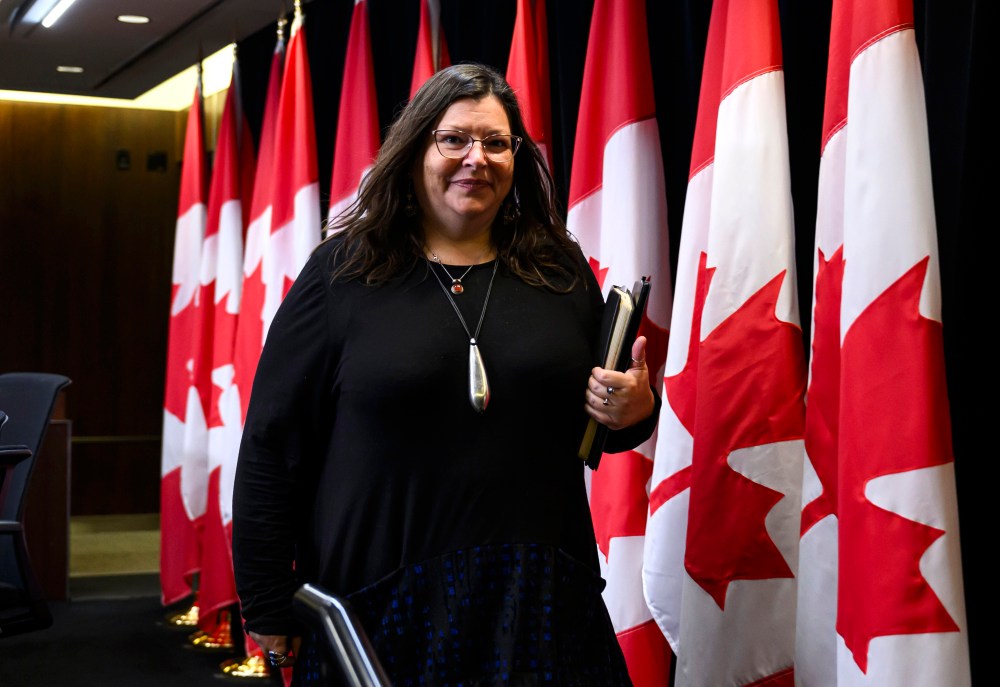
“Traditional knowledge should not only be respected but actively supported and funded as part of modern emergency governance and climate adaptation. Otherwise, the ability of First Nations to protect their communities is severely compromised.”
The report says wildfire displacement is becoming a feature of life for First Nations, linked to pre-existing housing and infrastructure gaps.
Climate change is making wildfire seasons worse, with drier conditions leading fires to spread more rapidly. While there are not necessarily more fires, the fires are becoming more intense, with a prolonged season and limited ability to extinguish them.
AFN National Chief Cindy Woodhouse Nepinak said while the report looked at the 2025 season, this year has also been devastating for First Nations, including the total loss of one community in northern Ontario.
She said there are systemic gaps in emergency responses that threaten the safety and dignity of First Nations and their right to housing.
“First Nations, we are foundational partners in Canada. That is why we must mobilize our resources to protect our rights and showcase the strength of First Nations that are on the front line of climate change,” she said.
In the 2025 wildfire season, First Nations were provided little or no advance warning of changing conditions, the report says, and some were ignored by some provincial governments.
Houle and the AFN said in Manitoba, both the Assembly of Manitoba Chiefs and Manitoba Keewatinowi Okimakanak called for supports for northern First Nations who declared a state of emergency, but the province did not respond for 10 days. First Nations in northern Saskatchewan called for similar, and received a slow response from the province.
Without action from the provincial governments, the federal government cannot respond to emergencies.
Supports also varied by jurisdiction during evacuations, with some municipalities and Indigenous organizations working together to support evacuees.
Others, the report says, were wholly unprepared for the number of evacuees and their needs, and some were unwilling to receive evacuees altogether.
Mass evacuation centres grouped everyone together, meaning elders with health conditions were made to sleep on cots and some victims of abuse were forced to stay in the same centres as their abusers.
Some hotels treated evacuees poorly, including by barring access to facilities like the gym or pool. The report says some evacuees were told to pick up their meals from a back entrance, and were not allowed to enter hotel restaurants.
“First Nations women, children, and youth became magnets for human traffickers, who, along with drug dealers, gained easy access to the hotels they were staying in. Many returned to their communities ill or in worse health,” the report says.
The report notes it’s also more difficult for First Nations to insure homes in their communities. Premiums can be prohibitive, and communities are generally underinsured.
Houle and the AFN offer 10 recommendations, including one to develop a national emergency management strategy to co-ordinate between First Nations and the federal and provincial governments. Other recommendations were to invest in First Nations-led fire safety and monitoring and improve on-reserve infrastructure.
A 2024 report from the AFN and the Conference Board of Canada found closing the First Nations infrastructure gap could generate $635 billion in economic output over seven years, and pegged the cost for upgrades at $349 billion.

The federal auditor general said closing that gap means building more than 55,000 new hosing units and repairing another 80,000.
Houle and the AFN say that gap is not the result of poor choices by individuals or First Nations leadership, but are the reflection of a system where laws and policies have been used to isolate and marginalize First Nations.
“Governments must work in full partnership with First Nations to shift from reactive emergency responses to preventative, rights-based approaches grounded in First Nations leadership,” Houle said in a media statement.
“Now is the time to act to keep communities safe and housed in a changing climate.”
This report by The Canadian Press was first published Aug. 24, 2026.