United Nations talks in Mongolia expose growing drought crisis as climate impacts worsen
Advertisement
Read this article for free:
or
Already have an account? Log in here »
To continue reading, please subscribe:

Digital Subscription
One year of digital access for only $205*
- Enjoy unlimited reading on winnipegfreepress.com
- Read the E-Edition, our digital replica newspaper
- Access News Break, our award-winning app
- Play interactive puzzles
*First annual payment billed as $205.00 + GST for one year. This annual subscription will automatically renew at $233.00 + GST every 52 weeks (10% off the regular annual price of $259.35). Offer available to new and qualified returning subscribers only. Cancel any time.
To continue reading, please subscribe:
Add Free Press access to your Brandon Sun subscription for only an additional
$1 for the first 4 weeks*
- Enjoy unlimited reading on winnipegfreepress.com
- Read the E-Edition, our digital replica newspaper
- Access News Break, our award-winning app
- Play interactive puzzles
*Your next Brandon Sun subscription payment will increase by $1.00 and you will be charged $17.95 plus GST for four weeks. After four weeks, your payment will increase to $24.95 plus GST every four weeks.
Read unlimited articles for free today:
or
Already have an account? Log in here »
BENGALURU, India (AP) — Representatives from nearly 200 countries wrapped up United Nations desertification talks in Ulaanbaatar, Mongolia on Friday, seeking ways to keep land productive as climate change heats the planet and degraded soils and landscapes lose their ability to hold water, produce food and support livelihoods.
Up to 40% of the world’s land is degraded, according to the United Nations Convention to Combat Desertification, which organizes the biennial talks. Droughts are also emerging in areas that were not considered highly vulnerable a decade ago, said Yasmine Fouad, the convention’s executive secretary.
“Drought is coming coupled with the impact of climate change,” Fouad said in an interview with the Associated Press. “It’s becoming more frequent, more intense and more prolonged.”
Countries left Ulaanbaatar without resolving one of the talks’ key issues — whether to create a legally binding global drought agreement — postponing a decision until the next round of talks in Egypt in two years. The issue had already been deferred at the previous meeting two years ago.
Healthy soil can reduce drought impact
Drought is often described as a shortage of rain. But specialists at the conference said its severity is increasingly determined by what happens to land before the rain stops.
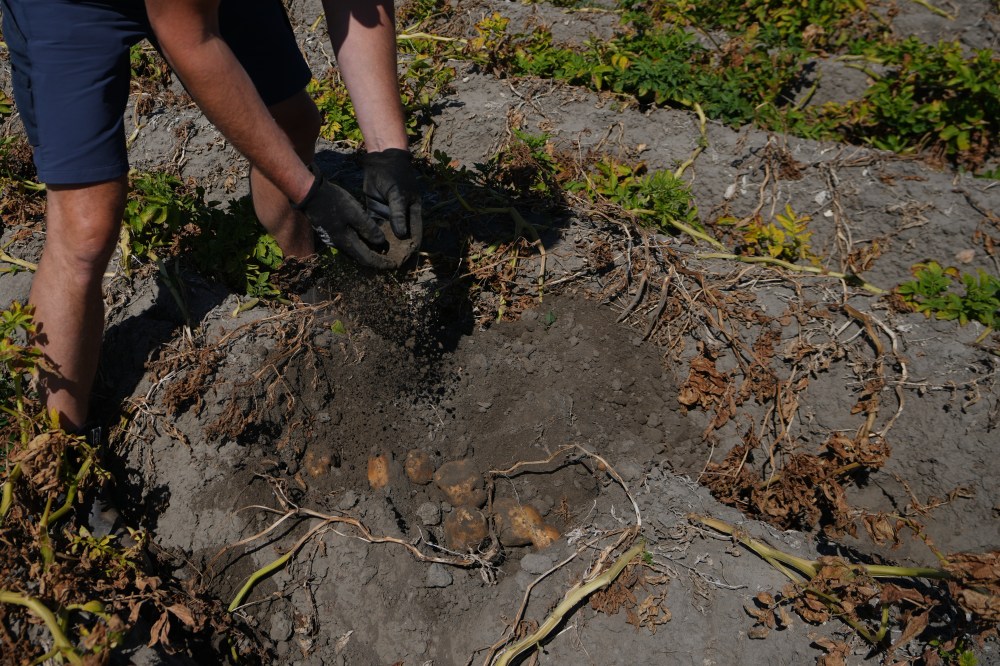
Healthy soils absorb and store water, helping crops, grasslands and natural ecosystems survive dry periods. Degraded soils shed water more quickly and lose productivity, making communities more vulnerable when temperatures climb or rainfall becomes erratic, according to land experts.
“You cannot maintain healthy soil without managing your water,” Fouad said. “And you cannot say we have sustainable water management without ensuring that your soil and your land is OK.”
The connection between land and water is especially important for agriculture. Joao Campari, global leader for food and agriculture at WWF International, said treating land and water as separate systems overlooks the basic conditions needed for food security.
“If you don’t have water, you don’t have agriculture. If you don’t have land, you don’t have agriculture,” he said.
The pressure on land is expected to grow as demand for food increases. According to U.N. reports, with the world’s population growing, the world will need to produce 50% more food than it did in 2012 by 2050. But expanding production by clearing grasslands, savannas or other natural areas can worsen land degradation, releasing carbon from soils and reducing the ability of landscapes to store water.
Land degradation can also worsen sand and dust storms. Fouad said that while the storms are carried through the air, their roots are often on the ground, where unsustainable land use leaves soil exposed. Restoring vegetation and improving land management can help keep soil in place and reduce the amount swept up by strong winds.
Mongolia talks raise billions for restoring rangelands
The 12-day conference launched a rangelands initiative bringing together $1.2 billion across 45 projects. Fouad said the Asian Development Bank also announced $2 billion for efforts to combat land degradation in the Asia Pacific region.
Rangelands — including grasslands, savannas and other areas used by grazing animals and pastoral communities — cover 54% of the Earth’s land surface and support around 2 billion people, according to the UNCCD.
Campari said grasslands, savannas and rangelands are being converted to other uses at roughly four times the rate of forests. Because they hold large amounts of carbon in their soils, their destruction can release greenhouse gases to the atmosphere even when few trees are being cut down.
“They contain twice the carbon that is in the atmosphere,” Campari said. “So when you clear these spaces to produce food, it means that all this carbon leaves the soil and enters the atmosphere.”
Land restoration faces a $278 billion annual funding gap
An estimated $355 billion a year is needed through 2030 to meet global land restoration commitments, but current investment is about $77 billion, leaving a gap of $278 billion annually. Private finance accounts for only about 6% of global investment in land restoration, according to U.N. reports.
The challenge is not only raising money but making it available before drought becomes a disaster. More than 70 countries now have national drought plans, up from three in 2013, but climate experts say plans often lack the funding needed to turn early warnings, water management, restoration and agricultural adaptation into action.
Fouad said governments need to move from drought plans to investment plans, bringing private companies, local communities, women and young people into national platforms that can develop projects and attract financing.
A new Drought Resilience Investment Facility, announced earlier this week in Ulaanbaatar, aims to mobilize up to $400 million in public and private capital for projects involving water security, sustainable agriculture, nature-based solutions and land restoration.
For Esther Penunia, secretary general of the Asian Farmers Association, the inability to settle the legal question around drought should not become an excuse for delay.
“We cannot wait for COP18 for solutions,” she said. “We know we have solutions and we can do them as long as we have the necessary resources.”
___
Sibi Arasu can be followed on X at @sibi123. Reach him at sarasu@ap.org.
___
The Associated Press’ climate and environmental coverage receives financial support from multiple private foundations. AP is solely responsible for all content. Find AP’s standards for working with philanthropies, a list of supporters and funded coverage areas at AP.org.