Households will pay more for energy because of federal policy changes, think tank says
Advertisement
Read this article for free:
or
Already have an account? Log in here »
To continue reading, please subscribe:

Digital Subscription
One year of digital access for only $205*
- Enjoy unlimited reading on winnipegfreepress.com
- Read the E-Edition, our digital replica newspaper
- Access News Break, our award-winning app
- Play interactive puzzles
*First annual payment billed as $205.00 + GST for one year. This annual subscription will automatically renew at $233.00 + GST every 52 weeks (10% off the regular annual price of $259.35). Offer available to new and qualified returning subscribers only. Cancel any time.
To continue reading, please subscribe:
Add Free Press access to your Brandon Sun subscription for only an additional
$1 for the first 4 weeks*
- Enjoy unlimited reading on winnipegfreepress.com
- Read the E-Edition, our digital replica newspaper
- Access News Break, our award-winning app
- Play interactive puzzles
*Your next Brandon Sun subscription payment will increase by $1.00 and you will be charged $17.95 plus GST for four weeks. After four weeks, your payment will increase to $24.95 plus GST every four weeks.
Read unlimited articles for free today:
or
Already have an account? Log in here »
Households in the contiguous United States will pay thousands of dollars more for energy through 2040 because of federal policy changes since President Donald Trump returned to office such as canceling new clean energy projects, according to modeling released Friday by a nonpartisan think tank.
The Energy Innovation analysis found that households will pay an average of $6,500 more for energy, cumulatively through 2040. In five states, households will pay roughly $9,000 more: Oregon, Mississippi, South Dakota, Virginia and Wyoming.
The California-based think tank said there will be more demand for natural gas for electricity because the administration is canceling new wind, solar and hydrogen projects and there will be more gasoline demand for transportation because Trump and Congress are revoking policies that incentivized efficient and lower-emissions vehicles. Higher demand increases prices.
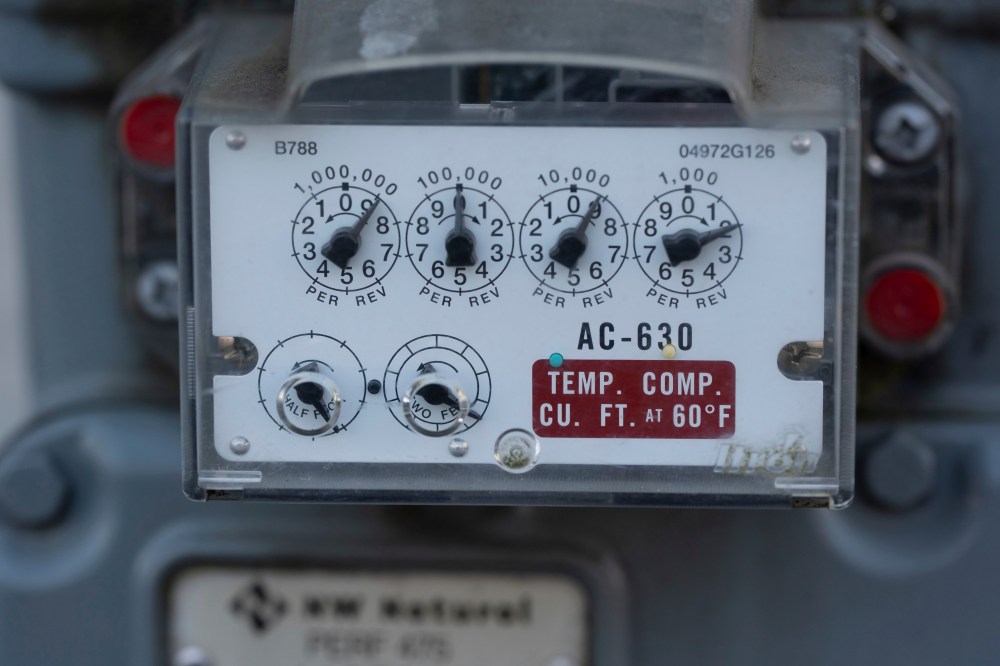
Energy prices are elevated in many countries. The International Energy Agency said after Russia invaded Ukraine, record prices were observed between 2022 and 2024 in the European Union, the United Kingdom, Japan and Korea. In many countries, the rise has outpaced income growth and inflation since 2019, including the European Union and the United States.
In some areas of the U.S., demand from data centers is being blamed. The Iran war has sent oil and gasoline prices sharply higher, too. The Energy Information Administration expects residential U.S. customers to pay about 18.6 cents per kilowatt-hour in 2027, compared to 17.3 cents in 2025 and 18.2 cents in 2026.
The independent research firm Rhodium Group has also examined the issue, saying in April the U.S. has entered a new period of rising electricity prices. It cited increasing price volatility in natural gas, which is increasingly used to generate power; needed grid improvements; inflation; storm recovery and wildfire mitigation; and shifting policies.
Absent significant policy action, electricity prices likely will continue their significant rise over the next five years, the firm said.
White House spokeswoman Taylor Rogers said Wednesday that lowering electricity prices remains a top priority and Trump is unleashing reliable energy like coal and natural gas to reverse the damage Democrats did to the grid by increasing clean energy. A 2025 Department of Energy report, mandated by Trump, warned of increasing blackouts if the U.S. continued closing coal and natural gas plants.
“Joe Biden created a grid crisis; President Trump is fixing it,” Rogers wrote in an email. “If the Democrats had their way, these costly and unreliable renewable energy projects would still be failing our grid and our communities.”
The Republican president prioritizes fossil fuels to produce electricity, unlike Biden, who saw clean energy as a climate solution. The conservative Institute for Energy Research said in December that blue states have high rates because they have embraced aggressive renewable mandates, 100% carbon-free targets, premature coal and nuclear retirements and restrictions on natural gas infrastructure. It said high electricity prices are not an inevitability; they are a choice.
Analysis examined impact on states solely from federal policy changes
It focused on the sweeping package of tax breaks that slashed funding for clean energy tax credits, known as the One Big Beautiful Bill, Trump signed; environmental rollbacks, including clean air and power plant rules and the revocation of a scientific finding that underpinned the U.S. fight against climate change; the loosening of fuel economy standards and blocking of California’s novel rule banning the sale of new gas-powered cars by 2035; and federal actions to stop wind, solar and hydrogen projects.
These changes will result in annual household energy costs rising in every state in the contiguous U.S., plus job losses in 47 of 48 states and losses to the gross domestic product in 46 states, Energy Innovation said. It’s projecting 37,000 additional premature deaths from air pollution, $72 billion in additional healthcare costs and more than 9 billion tons of additional carbon pollution because of the environmental rollbacks. The analysis did not include Alaska or Hawaii because key federal data is not available for those two states, said Robbie Orvis, senior director for modeling and analysis.
“Across pretty much every state, things are worse. The outlook now is worse for states and the affordability crisis will be worse because of the combined set of policies,” Orvis said.
Climate Justice Alliance legislative director Mar Zepeda said her Washington, D.C., electric bill increased $200 in the past month. Zepeda blames electricity demands from data centers, and said federal “affordability” policies only exacerbate this.
“They may call it affordability, but affordable for whom and at what cost? Not for regular people,” Zepeda said in an email.
White House says the think tank is partisan
Rogers said it is “irresponsible” to classify Energy Innovation as nonpartisan because its employees have donated to Democrats and worked with Democrats on climate policy.
Spokesman Silvio Marcacci said Energy Innovation works with policymakers who want to cut emissions and lower bills, regardless of party. He said multiple Republican-led states have used their tool designed to model policies affecting energy use and emissions. Much of their data comes from government sources, including the EIA.
Rogers also said states led by Democrats that have embraced aggressive renewable mandates see higher energy costs, notably California and New York. She said this proves Republican policies are working.
However, in the Energy Innovation analysis, three of the five states facing the highest costs have Republican governors. Its research has found that states with high levels of wind and solar generation, including Republican-led Iowa and Oklahoma, have experienced the lowest rate increases.
The average price residential customers pay for electricity increased during Biden’s term and has continued to rise under Trump, according to EIA data.
Oregon households’ annual energy spending slated to increase the most
The modeling projects federal policy changes will increase annual energy spending in Oregon by $840 per household in 2035 and $1,200 per household in 2040, with a cumulative $9,300 increase from 2026 to 2040 — the highest of any state.
The Oregon Citizens’ Utility Board advocates for residential utility customers. Executive Director Bob Jenks called those numbers “frightening” because Oregon already has an energy affordability problem. He cited steep rate increases as utilities make upgrades and data centers use more power.
As costs rise, Jenks expects utilities to disconnect more customers who can’t afford their bills.
Jenks said wind and solar are essential for affordable electricity, and he wants the federal government to partner with states to develop the energy they need.
“We’re trying to optimize among the resource options we have, and they’re trying to take things away and raise the costs,” he said.
___
The Associated Press’ climate and environmental coverage receives financial support from multiple private foundations. AP is solely responsible for all content. Find AP’s standards for working with philanthropies, a list of supporters and funded coverage areas at AP.org.