Takeaways from AP’s report on Alaska’s growing fight over trawling and bycatch

Advertisement

Advertise with us

THE BERING SEA (AP) — Alaska pollock is the second-largest fishery on Earth and supplies everything from McDonald’s Filet-O-Fish sandwiches to fish sticks and imitation crab. The fishery uses methods that it — and McDonald’s — say are aimed at minimizing environmental impacts, but the nets that catch pollock catch other marine life, too.

Read this article for free:


or

Already have an account? Log in here »

To continue reading, please subscribe:

Subscribe and receive a limited-edition Free Press branded hat or tote.

Digital Subscription

One year of digital access for only $205*

  • Enjoy unlimited reading on winnipegfreepress.com
  • Read the E-Edition, our digital replica newspaper
  • Access News Break, our award-winning app
  • Play interactive puzzles

*First annual payment billed as $205.00 + GST for one year. This annual subscription will automatically renew at $233.00 + GST every 52 weeks (10% off the regular annual price of $259.35). Offer available to new and qualified returning subscribers only. Cancel any time.

To continue reading, please subscribe:

Add Free Press access to your Brandon Sun subscription for only an additional

$1 for the first 4 weeks*

  • Enjoy unlimited reading on winnipegfreepress.com
  • Read the E-Edition, our digital replica newspaper
  • Access News Break, our award-winning app
  • Play interactive puzzles
Start now

*Your next Brandon Sun subscription payment will increase by $1.00 and you will be charged $17.95 plus GST for four weeks. After four weeks, your payment will increase to $24.95 plus GST every four weeks.

THE BERING SEA (AP) — Alaska pollock is the second-largest fishery on Earth and supplies everything from McDonald’s Filet-O-Fish sandwiches to fish sticks and imitation crab. The fishery uses methods that it — and McDonald’s — say are aimed at minimizing environmental impacts, but the nets that catch pollock catch other marine life, too.

That bycatch — the marine life caught unintentionally while fishers target something else — has become especially contentious as salmon runs across western Alaska have collapsed, leading to a seven-year ban on Chinook fishing along the Yukon River, where dozens of Alaska Native communities have relied on salmon for generations.

In Rampart, a Koyukon village on the Yukon, Janet Woods told The Associated Press that before the ban, her family’s summers revolved around checking nets, cutting fish and tending the smokehouse.
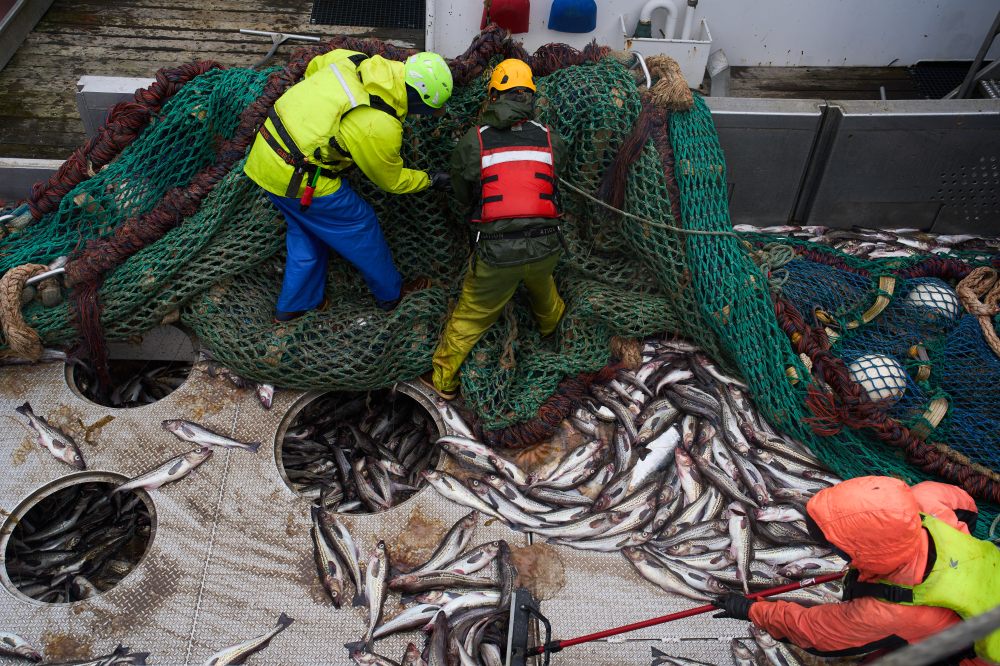
Crew members work on deck after hauling in a catch aboard the F/V Progress in the Bering Sea off the coast of Alaska, Wednesday, July 22, 2026. (AP Photo/Annika Hammerschlag)

“You think back in history how they tried to destroy us,” she said. “Taking our language, our ceremonies, and now our culture, and it’s been forever a fight for us just to hang on to what very little we have.”

Scientists say warming waters and changing ocean conditions, not trawl bycatch, are the primary causes of the declines. But bycatch is one source of salmon mortality managers can directly control, and critics say even small losses matter when runs are depleted.

Over the last 10 years, Bering Sea pollock trawlers caught an average of about 18,000 Chinook and 288,000 other salmon a year, nearly all of them chum.

“The people that bear the brunt of the conservation measures are people along the river,” said Andrew Seitz, a fisheries professor at the University of Alaska Fairbanks.

Here are some takeaways from AP’s report.

The fishery says it has invested heavily in reducing bycatch

Pollock captains stay in close contact with other vessels throughout each trip to share information about salmon concentrations, while the fleet receives weekly voluntary closure areas based on reports from the fishing grounds. Every pollock vessel also carries a salmon excluder, a device that gives salmon a way out of the net.

“The amount of science and management effort that goes into improving it is basically unprecedented anywhere,” said Matt Tinning, CEO of the At-Sea Processors Association, which represents five Alaska pollock companies.

Every fish, including salmon, caught by the Bering Sea pollock fleet is counted. Trawlers are monitored by observers or cameras, as are deliveries at shoreside processing plants.

Genetic testing shows that most chum salmon caught by pollock trawlers do not originate in western Alaska. But even a relatively small percentage can still represent tens of thousands of fish from struggling runs.

The fight over trawling goes beyond salmon

Small commercial halibut and crab fishers, along with charter operators, have echoed the grievances heard along the Yukon. They too have faced shrinking catch limits and closures as stocks decline, while groundfish trawlers continue to catch both species as bycatch.

The debate extends beyond what trawlers catch to how their gear operates.

Pollock vessels use pelagic, or midwater, trawls, designed to fish in the water column rather than along the seafloor like bottom trawls. But pollock often swim close to the bottom, so the nets can make substantial contact with the seafloor.

Yet some areas closed to bottom trawling to protect corals, sponges, crab and other marine life remain open to pelagic trawlers, prompting calls for tighter restrictions.

Trawling has become a major issue in Alaska’s elections

Anti-trawl sentiment has attracted Democrats, Republicans, commercial and sport fishers, and Alaska Native communities — constituencies that don’t often line up on the same side of resource debates.

At least 10 of the original 19 candidates in this year’s crowded governor’s race took positions critical of trawling or bycatch. The issue has also become a defining one in Alaska’s U.S. Senate race.

___

Follow Annika Hammerschlag on Instagram: @ahammergram.

___

The Associated Press receives support from the Walton Family Foundation for coverage of water and environmental policy. The AP is solely responsible for all content. For all of AP’s environmental coverage, visit https://apnews.com/hub/climate-and-environment
Report Error Submit a Tip

More Stories

Late philanthropist, family fill Harvest’s Empty Bowls with record-setting $5-M donation

Morgan Modjeski 3 minute read Preview

Late philanthropist, family fill Harvest’s Empty Bowls with record-setting $5-M donation

Morgan Modjeski 3 minute read Updated: Yesterday at 11:54 PM CDT

It was a record-breaking night for Harvest Manitoba made possible by a genuine Winnipeg hero and his family.

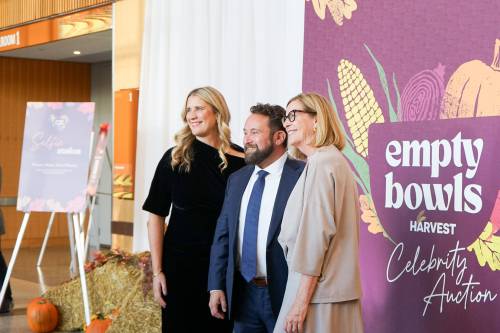
The organization’s annual Empty Bowls Celebrity Auction Dinner on Thursday raised $6.5 million to support Manitobans facing hunger and food insecurity.

And it was a $5-million legacy donation from late city philanthropist Doug Harvey and his family that will see the event go down in the history books as the largest gala fundraising total ever recorded in Manitoba.

“There was literally nothing that lit my dad up more than contributing himself, but even more so, inspiring others to give,” his daughter Lauren Harvey said Friday.

Read
Updated: Yesterday at 11:54 PM CDT

A Life's Story: Writer built bridges with genuine curiosity, compassion for diversity of religious practices

Janine LeGal 6 minute read Preview

A Life's Story: Writer built bridges with genuine curiosity, compassion for diversity of religious practices

Janine LeGal 6 minute read 6:00 AM CDT

Brenda Suderman knew how to make people feel comfortable. For a journalist, that character trait is a real strength, and it made people trust and appreciate her.

Whether covering musicals, worship spaces, the effects of pandemic shutdowns, death rituals and practices of different traditions, the discovery of the burial of 2,284 infants in unmarked graves, or any other of the countless topics she wrote about in her four- decade career, Suderman did it with genuine interest and care.

Born and raised in Winkler, Suderman grew up on a farm. Much of her childhood was spent in gardens and sugar beet fields.

Baptized at 16, she became a member of the Winkler Bergthaler Mennonite Church. The restrictions against women at the time contributed to planting the seeds of Suderman’s feminist perspective.

Read
6:00 AM CDT

Police looking into robbery of children captured on video

Morgan Modjeski 3 minute read Preview

Police looking into robbery of children captured on video

Morgan Modjeski 3 minute read Yesterday at 3:08 PM CDT

The Winnipeg Police Service said it is aware of a video circulating online that appears to show two children robbed while walking home from the library.

The mother of the siblings said the Sept. 26 incident, which happened in the area of Andrews Street and Magnus Avenue at around 7:30 p.m., has left her children afraid and her feeling guilty.

“I should have been there with them. I felt horrible,” said Brittany Beaudet. “I would have been out the door if I knew any sooner to help them out.”

In the 40-second video, the two children, 14-year-old Mason and nine-year-old Kenzie, are approached by a man wearing a black shirt, black pants and white shoes.

Read
Yesterday at 3:08 PM CDT

Nature doesn’t waste its time

Russell Wangersky 7 minute read Preview

Nature doesn’t waste its time

Russell Wangersky 7 minute read 2:01 AM CDT

Sixteen months in and the black burn from a forest fire somehow transitions from the foreground to the background. I’m not sure if it actually softens, if it really changes, or if is just that your eyes, now used to the background, start seeing less of it.

One thing’s for certain: nature doesn’t waste any time taking its opportunities. In the sheltered ground behind where the shed over our Newfoundland root cellar used to be, a forest of sorrel has arisen, its dark-green leaves with their distinctive double horns at their base crowding in tight amongst each other.

It’s no surprise: sorrel is new beginnings, often the first plant I see recultivating abandoned gardens or disturbed ground and I’m happy to have it around always. Its distinctive lemony bite is a fine addition to salads, though we’re not likely to choose it from that particular root cellar patch. Not with the way the asphalt roof shingles burned right around there. I shovelled up the heavy pats of congealed black tar last spring, right after the fire, bringing them up from inside the cellar in big plastic buckets to send to safe disposal. But there’s probably plenty of tar still in the ground and out of sight — hardly an appetizing thought.

From other areas, maybe we will eventually sample sorrel: it depends on how close they were to the house or shed or anything else that burned. And so very much burned. The province has said gardens are safe from contamination by fire-retardant chemicals as nothing has shown up in tests. But we know what way the wind was blowing — what burned, and where, is always part of the equation. It’s a strange calculation to make: I’m just glad our house wasn’t heated with fuel oil, was too old to contain asbestos, and didn’t have indoor plumbing for decades.

Read
2:01 AM CDT

Puzzles Palace

1 minute read Monday, Jul. 27, 2026

To solve our puzzles, please subscribe with this special offer: |

Police on scene at Fairmont hotel construction site

1 minute read Updated: Yesterday at 12:19 AM CDT

At least three police cars were present at the under-construction Fairmont Winnipeg Thursday evening.

The nature of the response was unclear, but officers were guiding traffic outside of the construction zone at 2 Lombard Place while the response was underway. At 6:50 p.m., traffic was flowing normally.

Security on site provided no information on the response, but an individual working behind site fencing told the Free Press there’d be no comment from anyone on site as to why police were on scene at this time.

An SUV with a Government of Manitoba logo on its side was also present alongside personnel from Manitoba Workplace Safety and Health. However, it’s unknown if it’s connected to the police response.