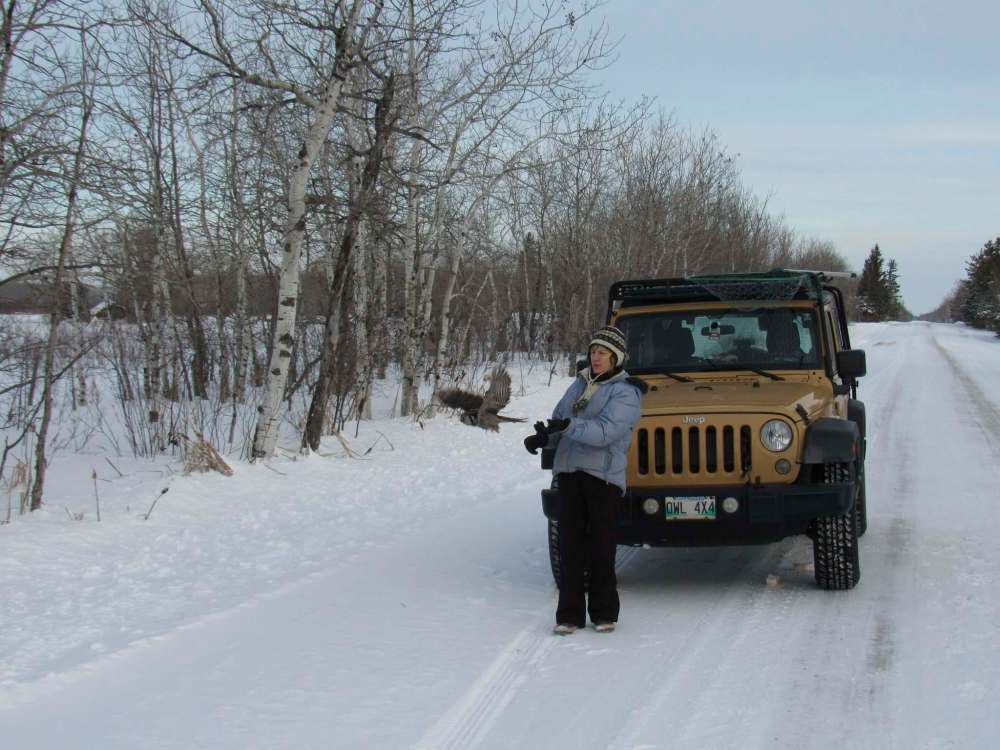
A real hoot-dunit
Researcher unravels mysteries of the great grey owl
Advertisement
Read this article for free:
or
Already have an account? Log in here »
To continue reading, please subscribe:
Monthly Digital Subscription
$1 per week for 24 weeks*
- Enjoy unlimited reading on winnipegfreepress.com
- Read the E-Edition, our digital replica newspaper
- Access News Break, our award-winning app
- Play interactive puzzles
*Billed as $4.00 plus GST every four weeks. After 24 weeks, price increases to the regular rate of $19.95 plus GST every four weeks. Offer available to new and qualified returning subscribers only. Cancel any time.
Monthly Digital Subscription
$4.99/week*
- Enjoy unlimited reading on winnipegfreepress.com
- Read the E-Edition, our digital replica newspaper
- Access News Break, our award-winning app
- Play interactive puzzles
*Billed as $19.95 plus GST every four weeks. Cancel any time.
To continue reading, please subscribe:
Add Free Press access to your Brandon Sun subscription for only an additional
$1 for the first 4 weeks*
*Your next subscription payment will increase by $1.00 and you will be charged $16.99 plus GST for four weeks. After four weeks, your payment will increase to $23.99 plus GST every four weeks.
Read unlimited articles for free today:
or
Already have an account? Log in here »
Hey there, time traveller!
This article was published 21/01/2017 (3361 days ago), so information in it may no longer be current.
Wildlife biologist Jim Duncan has an obsession with owls.
Duncan is the author of three illustrated books, including Owls of the World and The Complete Book of North American Owls.
He also has authored, co-authored and edited numerous scientific papers on owls, in particular the great grey owl, which is Manitoba’s official bird. Duncan and his wife, Patricia, who’s also trained as a biologist, have banded more than 2,500 owls, mainly great greys and the occasional northern hawk owl, for more than 30 years.
Duncan, the director of the department of sustainable development’s wildlife and fisheries branch, is a native of Quebec who has lived in Manitoba since 1984. He agreed to an email interview with the Winnipeg Free Press about his passion.
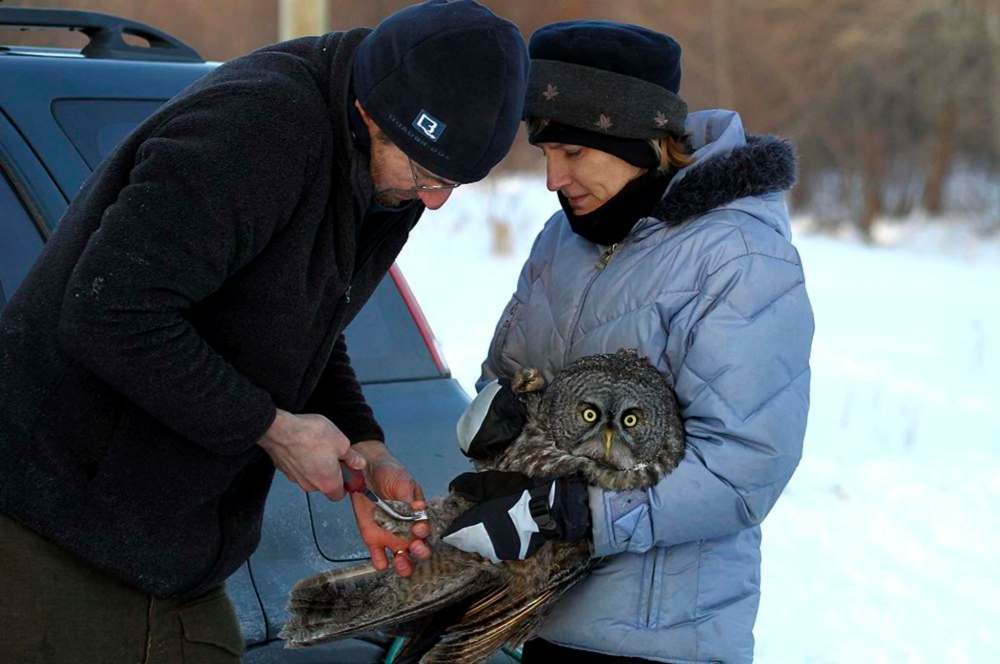
WFP: What and who sparked your fascination with birds, and, in particular, owls?
JD: My mom told me that I was her “easiest” baby in that she could park my stroller anywhere outside and I would be entertained simply by watching nature around me. This fascination continued to flourish thanks to my parents, who tolerated all manner of plants and animals, alive or dead, in my room and often throughout the house. My youthful imagination was also well fed by reading books (before the digital age) about natural history and biology. Birds occupied a special place in my heart because they fly, something they had in common with the plethora of pilots in my family, including my father, uncle, brother and cousin.
The more I researched birds the more I was drawn to birds of prey… My McGill professor, Dr. David Bird (yes, his real name!), introduced me to a PhD opportunity in Manitoba under Dr. Robert Nero, the world’s authority on our now official provincial bird, the great grey owl. I moved to Manitoba in 1984 to study this mysterious and huge owl, aptly called the phantom of the boreal forest. After a year, Bob introduced me to my research assistant and fellow biologist, Patricia Lane. Patsy became both my wife and lifetime research partner in this owl odyssey that continues to this day.
FP: You and Patsy have conducted an annual winter survey on great grey owls and northern hawk owls since 1991. What first prompted this research? What have you learned from it so far?
JD: The owl surveys and monitoring actually started in 1984. We kept track of changes of small mammal populations (prey of the great grey owl), climate conditions such as snow cover, nesting owls, and then winter movements of dispersing owls. This study is now incredibly in its 34th year, and is the longest-running research project of its kind on this owl species. This study was prompted by much speculation, but little to no hard evidence, about the ecology of this massive owl.
It was a challenging field-research project that matched Patsy’s and my aptitudes for living outdoors year-round immersed in Manitoba’s fabulous and beautiful natural boreal habitats. We discovered that Manitoba has the highest concentrations of breeding great grey owls documented on the planet.
We showed that these owls have a lifetime home range larger than African elephants, and that their survival depends on the contiguous presence of healthy boreal forest habitats that span Manitoba north to south, and into adjacent Minnesota and northwestern Ontario — an expansive ecosystem.
In some years they must migrate up to 800 kilometres in less than three months in search of meadow voles (a type of field mouse) and similar prey in order to survive. Perhaps the most amazing aspect of this large owl is their ability to locate prey by sound alone under snow as thick as 45 centimetres. By keeping a respectful distance, anyone can enjoy watching them hunt during the day on calm, cold winter days, sometimes even within an hour’s drive from Winnipeg.
Another opportunity for people to experience owls in Manitoba is to sign up for the volunteer nocturnal owl survey that Patsy and I started in 1991. Learning owl calls is easy (there are 11 owl species here), and you can do the 10-stop survey with family and friends. Our main objective for setting up this citizen science project was to give people from all walks of life an opportunity to experience personally some of our fascinating wild species that we live with in Manitoba.
We look forward to continuing these efforts to better understand and conserve Manitoba’s fabulous great grey and other owls for as long as we can. I also am currently helping to organize the next World Owl Conference in Evora, Portugal, in September. This series of scientific conferences started in Winnipeg in 1987…. Many such Manitoba-grown efforts, like this conference and the citizen science owl survey, are now international phenomenon. Judging by the dedicated young Manitoba folks I encounter through my owl and other work, this legacy of Manitobans affecting conservation outcomes in positive ways here and around the world is alive and bodes well for the future.
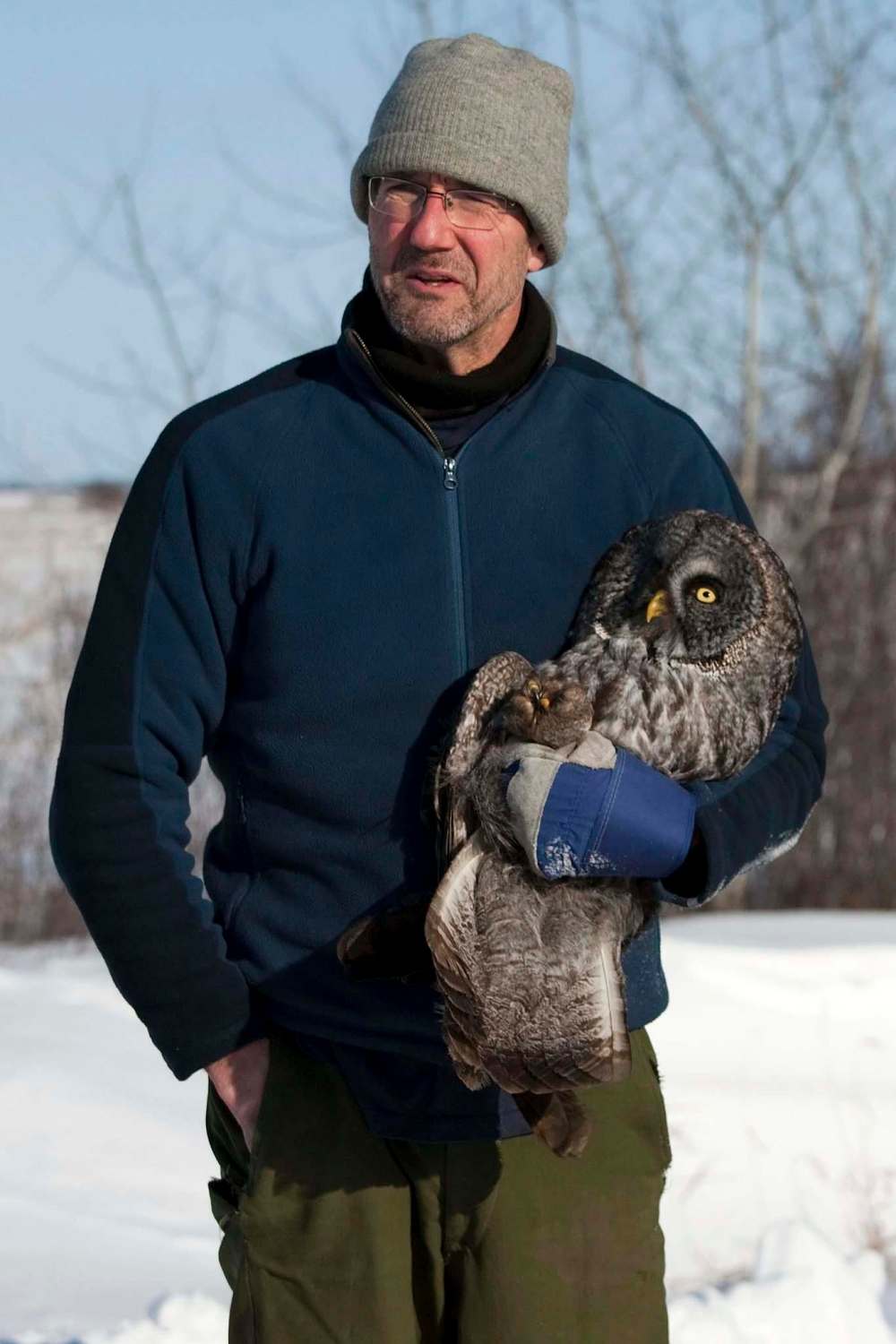
FP: What other types of wildlife research or projects have you done, and continue to do?
JD: I have enjoyed learning about and researching many of the estimated 39,000 wild plants and animals that call Manitoba home, including other birds, mammals, reptiles, amphibians, dragonflies, tiger beetles and predacious diving beetles. This work has ranged from supervising graduate students as an adjunct professor at the universities of Manitoba and Winnipeg to creating new ways for the public to get involved in collecting important information on biodiversity.
For example, I initiated the dragonfly survey and festival held at the Oak Hammock Marsh north of Winnipeg. I also helped biologist Doug Collicutt with creating the Manitoba Amphibian and Reptile Atlas Project.
There is still so much we don’t know about our biological diversity.
FP: What message do you have for people who find injured or abandoned wildlife?
JD: Folks who encounter such animals need to keep safe and ensure they do the right thing for the specific animal they encounter. Observing the animals from a respectful distance is often the best first thing to do to ensure that it is truly injured or orphaned. Calling one of the wildlife rehabilitation organizations licenced by Sustainable Development is the next thing they should do. Please see our website for more important information on this: http://www.gov.mb.ca/sd/wildlife/orphinj/inj.html.