Battery-powered Greek island bets on green future
Advertisement
Read this article for free:
or
Already have an account? Log in here »
To continue reading, please subscribe:
Digital Subscription
One year of digital access for only $1.44 a week*
- Enjoy unlimited reading on winnipegfreepress.com
- Read the E-Edition, our digital replica newspaper
- Access News Break, our award-winning app
- Play interactive puzzles
*Billed as $5.77 plus GST every four weeks. After 52 weeks, price increases to the regular rate of $19.95 plus GST every four weeks. Offer available to new and qualified returning subscribers only. Cancel any time.
To continue reading, please subscribe:
Add Free Press access to your Brandon Sun subscription for only an additional
$1 for the first 4 weeks*
- Enjoy unlimited reading on winnipegfreepress.com
- Read the E-Edition, our digital replica newspaper
- Access News Break, our award-winning app
- Play interactive puzzles
*Your next Brandon Sun subscription payment will increase by $1.00 and you will be charged $17.95 plus GST for four weeks. After four weeks, your payment will increase to $24.95 plus GST every four weeks.
Read unlimited articles for free today:
or
Already have an account? Log in here »
Hey there, time traveller!
This article was published 11/05/2022 (1629 days ago), so information in it may no longer be current.
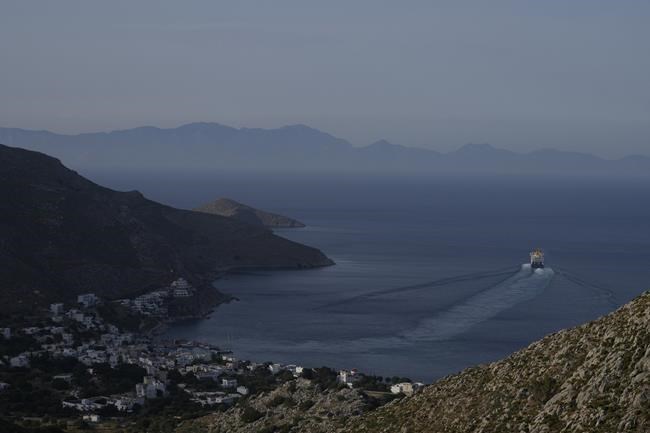
TILOS, Greece (AP) — When deciding where to test green tech, Greek policymakers picked the remotest point on the map: tiny Tilos.
Providing electricity and basic services, and even access by ferry, are all a challenge for this island of just 500 year-round inhabitants. Its most recent problem has been dealing with plastic.
But authorities this week announced that more than 80% of Tilos’ trash is now being recycled. A landfill where untreated garbage was once buried in a hillside has been permanently closed.

The island has already been producing most of its own electricity since 2019, using a solar park and a wind turbine hooked up to trailer-sized batteries that maintain an uninterrupted supply.
S-shaped and slightly larger than Manhattan, Tilos is a far-flung member of an island chain in the southeast Aegean Sea, where most beaches are empty, goats roam next to centuries-old churches and the sawtooth mountains smell of wild oregano. Self reliance is a necessity here and a source of pride.
So is embracing technology.
At the main port, electric vehicles hum past tourists, transporting goods. Solar panels power bus stop information boards and a ramp that gives people with disabilities access to the sea.
Mayor Maria Kamma-Aliferi said Tilos’ dwindling population added urgency to making changes. “In the 1990s there were 270 people left on this island. There were very few births. The school was in danger of closing because it had so few kids ‒ I was one of them,” she said.
“And the island came close to being fully deserted.”
But the mayor stayed on the island and took university correspondence courses to put herself through business school and learn about public administration.
“We came close to the brink, and I think that is what motivates us now,” she said, standing at the site of the old landfill where flowers have now been planted.
With tourism in the Mediterranean set to rebound this summer after the worst of the pandemic, many Greek islands face an urgent strain on their resources: a lack of drinking water and a reliance on diesel to produce electricity as energy prices continue to soar.
Greece has about 200 populated islands, many of which still experience rolling blackouts in the summer and struggle to cope with overflowing landfills, normally hidden in the hills.
Tilos is expecting 30,000 visitors this summer, while the nearby island of Rhodes is set to receive more than 2 million by air alone.
Starting in December, Tilos piloted a home trash pickup scheme, with residents handed recycling kits and asked to wash and separate household waste.
“It’s working. We started with 10 houses and we’re now up to more than 400,” said Athanasios Polychronopoulos, who heads a Greek recycling firm, Polygreen, that offered the service for free, hoping to expand its model.
“This is an island community that’s open to change. It volunteered to take in refugees and held Greece’s first same-sex partnership ceremony. We had other options but we knew we had to start here,” he said.
The old landfill site has been replaced with a recycling plant where trash is separated on steel sorting tables to produce powdered glass, cement mix, compost fertilizer, compressed cardboard and paper drums, and plastic twine that an art gallery uses to make 3D printed couches and furniture.
The plant currently processes around 2 tons of waste per week, most of which is fully recycled. Roughly a third is composted, and 15% — classed as “non-recyclable” — is sterilized and shredded to be used in construction.
The company uses a proprietary app to prepare for incoming waste weighed at each house pickup. It has not released financial details of the scheme.
“We’re still making mistakes and learning,” Polychronopoulos said. “To our surprise, older people are the best at separating the waste. It makes sense, if you think about it: They can remember what things were like before there was plastic.”
Some residents can also remember when spotting a passing ship off the coast of Tilos was a rare sight. Rhodes is still two hours away by ferry; the Greek mainland is 15.
“We always wondered where all the plastic would go. And in the back of our minds we always felt we should do something about it,” says seaside restaurant owner Nikos Atsiknoudas.
Between meal prep, waiting tables and clearing them for new customers, staff tip everything into color-coded bins.
“It is extra work but no one can argue about the long-term benefit,” he says. “We have a lot of foreign visitors. They are more used to recycling than we are and they love it.”
Official visits to Tilos are rare and greeted with fanfare, with children in traditional costumes assembled at the harbor. The most recent was Greece’s energy and environment minister, Costas Skrekas, who arrived Tuesday with aides from the prime minister’s office to tour the new recycling plant.
“Our small islands face difficulties due to the distance from the mainland and the (environmental) burden from tourism,” he said after meeting schoolchildren at a recycling awareness class.
“Once again, the beautiful island of Tilos is a pioneer.”
___
Follow Gatopoulos at https://twitter.com/dgatopoulos
___
Associated Press climate and environmental coverage receives support from several private foundations. See more about AP’s climate initiative here. The AP is solely responsible for all content.