Canada’s emissions target gets further away as 2017 report shows increase

Advertisement

Advertise with us

OTTAWA - The return of oil and gas production following the devastating Fort McMurray wildfire and a colder than usual winter pushed Canada's national greenhouse gas emissions up in 2017 for the first time in several years, a new report says.

Read this article for free:


or

Already have an account? Log in here »

To continue reading, please subscribe:

Subscribe and receive a limited-edition Free Press branded hat or tote.

Digital Subscription

One year of digital access for only $205*

  • Enjoy unlimited reading on winnipegfreepress.com
  • Read the E-Edition, our digital replica newspaper
  • Access News Break, our award-winning app
  • Play interactive puzzles

*First annual payment billed as $205.00 + GST for one year. This annual subscription will automatically renew at $233.00 + GST every 52 weeks (10% off the regular annual price of $259.35). Offer available to new and qualified returning subscribers only. Cancel any time.

To continue reading, please subscribe:

Add Free Press access to your Brandon Sun subscription for only an additional

$1 for the first 4 weeks*

  • Enjoy unlimited reading on winnipegfreepress.com
  • Read the E-Edition, our digital replica newspaper
  • Access News Break, our award-winning app
  • Play interactive puzzles
Start now

*Your next Brandon Sun subscription payment will increase by $1.00 and you will be charged $17.95 plus GST for four weeks. After four weeks, your payment will increase to $24.95 plus GST every four weeks.

Hey there, time traveller!
This article was published 16/04/2019 (2724 days ago), so information in it may no longer be current.

OTTAWA – The return of oil and gas production following the devastating Fort McMurray wildfire and a colder than usual winter pushed Canada’s national greenhouse gas emissions up in 2017 for the first time in several years, a new report says.

The latest national inventory report on emissions, filed this week with the United Nations climate change secretariat, showed 716 million tonnes of greenhouse gases were produced in Canada in 2017, an increase of eight million tonnes from 2016.

The uptick pushes Canada even further away from its Paris climate change agreement pledge to slash emissions to 70 per cent of what they were in 2005 by 2030.

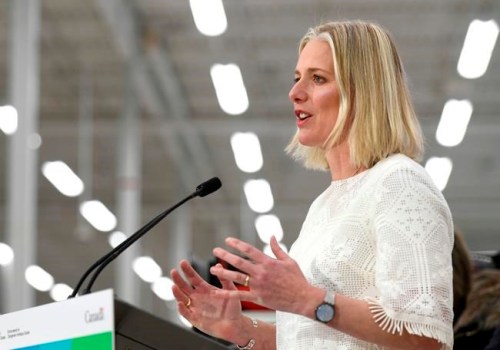
Minister of Environment and Climate Change Catherine McKenna speaks to reporters during a press conference on the Climate Action Incentive at a Canadian Tire store in Ottawa on Monday, March 4, 2019. Canada's greenhouse gas emissions edged up for the first time in three years in 2017, pushing the country even further away from its international climate change commitments. THE CANADIAN PRESS/Justin Tang

Canada needs to get emissions to no more than 511 million tonnes by 2030 to meet its pledge, even though international scientists last year warned the country must have steeper reductions to prevent the impacts of a warming planet from becoming impossible to mitigate.

The report follows one released two weeks ago — made public amid a political battle over the new federal carbon tax — that said Canada is warming twice as fast as the rest of the world.

Environment Minister Catherine McKenna defended her government’s record on emissions despite the uptick. She said the government’s “strongest” measures to fight pollution hadn’t been implemented in 2017, including the carbon tax, clean fuel standards and phasing out coal power.

“Canada’s climate plan is working, and the overall trend in emissions is downward toward 2030,” she said.

The 2017 emissions are two per cent below what emissions were in 2005.

Canada’s existing climate change action plan, which includes the carbon tax and subsidies to spur electric vehicle purchases, only gets Canada about 60 per cent of the way to its 2030 commitment. McKenna has previously said she thinks that gap will be closed as people adopt cleaner technology faster than expected.

On Tuesday, Environment Canada officials said the report did not analyze the direct impact of carbon pricing. Four provinces had a carbon price in 2017 — British Columbia and Alberta had a direct carbon tax, and Ontario and Quebec had cap-and-trade systems. B.C. and Alberta saw increases in emissions, while Ontario and Quebec saw a decrease.

Conservative environment critic Ed Fast said the 2017 numbers prove the Liberals’ climate plan isn’t working. The Conservatives are heavily critical of the carbon tax strategy and plan to eliminate it if elected in the fall.

“We don’t believe you can tax your way to a clean environment,” he said.

McKenna has been critical of the Conservatives for not saying yet what they would do to cut emissions, but Fast said Tuesday the Conservative plan will cut emissions and be released in plenty of time for Canadians to judge it before voting day in October.

Emissions went down from electricity generation, small vehicles and the chemical industry, but that wasn’t enough to offset the increases in larger vehicle use, residential heating thanks to the cold 2017 winter, and oil production one year after oilsands producers slashed production for two months because of the Fort McMurray fires.

Environment groups say the oilsands’ impact on Canada’s emissions cannot be overstated. Keith Stewart, a senior energy strategist at Greenpeace Canada, said emissions from the oilsands eclipse those from every province except Alberta and Saskatchewan.

In 2017, oil and gas production and refineries accounted for more than one-sixth of Canada’s total emissions. Emissions from production alone were up six million tonnes from the year before.

Stewart said as long as the Liberals try to increase oil exports, they’re not going to have much success at bringing down emissions.

“That is the dilemma at the heart of Canadian climate policy,” he said. “You can’t actually do both.”

Report Error Submit a Tip

More Stories

Hydro reports $446-M loss in 2025-26, points to fourth drought year in past five

Scott Billeck 3 minute read Preview

Hydro reports $446-M loss in 2025-26, points to fourth drought year in past five

Scott Billeck 3 minute read Yesterday at 6:38 PM CDT

Manitoba Hydro posted a $446-million loss in 2025-26, as drought conditions slashed hydroelectric generation, forcing the Crown corporation to buy more power while leaving it with less electricity to sell outside the province.

The loss was $666 million worse than the $220-million profit Hydro had budgeted. The utility posted a $63-million loss the previous year, according to the utility’s annual report released Tuesday.

Hydro said the 2025-26 fiscal year, which ended on March 31, marked its fourth low-water year in the past five years, among the worst stretches of water-flow conditions in its recorded history.

Hydroelectric generation fell 23 per cent to 24 billion kilowatt-hours from 31 billion the previous year, leaving Hydro a net importer of electricity.

Read
Yesterday at 6:38 PM CDT

Canadian emissions climb in 2017: report

Mia Rabson, The Canadian Press 4 minute read Preview

Canadian emissions climb in 2017: report

Mia Rabson, The Canadian Press 4 minute read Tuesday, Apr. 16, 2019

OTTAWA - The return of oil and gas production following the devastating Fort McMurray wildfire and a colder than usual winter pushed Canada's national greenhouse gas emissions up in 2017 for the first time in several years, a new report says.

The latest national inventory report on emissions, filed this week with the United Nations climate change secretariat, showed 716 million tonnes of greenhouse gases were produced in Canada in 2017, an increase of eight million tonnes from 2016.

The uptick pushes Canada even further away from its Paris climate change agreement pledge to slash emissions to 70 per cent of what they were in 2005 by 2030.

Canada needs to get emissions to no more than 511 million tonnes by 2030 to meet its pledge, even though international scientists last year warned the country must have steeper reductions to prevent the impacts of a warming planet from becoming impossible to mitigate.

Read
Tuesday, Apr. 16, 2019

Port of Churchill signs agreement with Dutch port

Aaron Epp 2 minute read Preview

Port of Churchill signs agreement with Dutch port

Aaron Epp 2 minute read Yesterday at 4:40 PM CDT

Arctic Gateway Group, operator of the Port of Churchill, has signed an agreement with the Port of Rotterdam in the Netherlands to attract business and strengthen supply chains linking Western Canada and Europe.

The agreement enables the two ports to work together to develop new trade in critical minerals and energy products, connect Canadian producers with European buyers, and identify opportunities to improve the supply chain from Western Canadian resource projects through Churchill and into European markets.

The Port of Rotterdam is Europe’s largest port and home to more than 3,000 businesses across its industrial complex, serving as a major gateway for critical raw materials and energy.

Meanwhile, the Port of Churchill has been identified as a transformative national strategy for Canada and is emerging as a northern trade corridor connecting Western Canada’s resources to global markets.

Read
Yesterday at 4:40 PM CDT

Expert urges food, drink makers to look to foreign markets

Gabrielle Piché 5 minute read Preview

Expert urges food, drink makers to look to foreign markets

Gabrielle Piché 5 minute read Yesterday at 5:04 PM CDT

Canada’s slowing population growth could restrict business expansion, a top economist for Farm Credit Canada warned Manitoba manufacturers.

Craig Johnston, the federal Crown corporation’s chief economist, addressed Prairie businesses at Farm Credit Canada’s Food and Beverage Summit Tuesday.

“There could be some modest growth in Canadian consumption of food and beverage,” Johnston said, relaying population numbers inside a Victoria Inn Hotel conference room.

Still, per-person spending on food is “stagnant, if not somewhat rising,” Johnson later told reporters.

Read
Yesterday at 5:04 PM CDT

Bombers coach happy to be back at work after backbreaking loss to Argos

Taylor Allen 6 minute read Preview

Bombers coach happy to be back at work after backbreaking loss to Argos

Taylor Allen 6 minute read Yesterday at 8:16 PM CDT

It’s the first practice day after a backbreaking loss.

The Winnipeg Blue Bombers are in a challenging predicament with four games remaining — starting Saturday on the road against the Montreal Alouettes (11-3) — that leaves their playoff aspirations far from solidified.

And yet, head coach Mike O’Shea makes his way behind the podium, looks out at a room of reporters and is grinning ear to ear.

Why so happy?

Read
Yesterday at 8:16 PM CDT

Woman took ‘meaningful’ responsibility after disposing of body: lawyer

Dean Pritchard 5 minute read Preview

Woman took ‘meaningful’ responsibility after disposing of body: lawyer

Dean Pritchard 5 minute read 6:00 AM CDT

A woman who was threatened with death if she didn’t help dispose the body of a Mexican man murdered in the basement of a North End home should serve no more jail time, a judge has been told.

Devlin Langlois, 25, has pleaded guilty to accessory after the fact to murder in the March 2025 killing of 28-year-old Diego Moscoza.

“By pleading guilty, Ms. Langlois has already taken meaningful accountability for her actions,” defence lawyer Joshua Rogala told King’s Bench Justice Candace Grammond at a sentencing hearing Monday.

He urged the judge to sentence Langlois to the equivalent of 14 months already served, plus two years supervised probation.

Read
6:00 AM CDT