Federal oilpatch bailout focus on cleanup of abandoned wells, reduced emissions

Advertisement

Advertise with us

Industry and environmental groups welcomed a multibillion-dollar oilpatch bailout package Friday, but both were looking for more from the federal government.

Read this article for free:


or

Already have an account? Log in here »

To continue reading, please subscribe:

Subscribe and receive a limited-edition Free Press branded hat or tote.

Digital Subscription

One year of digital access for only $205*

  • Enjoy unlimited reading on winnipegfreepress.com
  • Read the E-Edition, our digital replica newspaper
  • Access News Break, our award-winning app
  • Play interactive puzzles

*First annual payment billed as $205.00 + GST for one year. This annual subscription will automatically renew at $233.00 + GST every 52 weeks (10% off the regular annual price of $259.35). Offer available to new and qualified returning subscribers only. Cancel any time.

To continue reading, please subscribe:

Add Free Press access to your Brandon Sun subscription for only an additional

$1 for the first 4 weeks*

  • Enjoy unlimited reading on winnipegfreepress.com
  • Read the E-Edition, our digital replica newspaper
  • Access News Break, our award-winning app
  • Play interactive puzzles
Start now

*Your next Brandon Sun subscription payment will increase by $1.00 and you will be charged $17.95 plus GST for four weeks. After four weeks, your payment will increase to $24.95 plus GST every four weeks.

Hey there, time traveller!
This article was published 17/04/2020 (2346 days ago), so information in it may no longer be current.

Industry and environmental groups welcomed a multibillion-dollar oilpatch bailout package Friday, but both were looking for more from the federal government.

“We are awaiting additional details on the expansion of support, a critically important matter as companies try to weather the current crisis,” said Tim McMillan of the Canadian Association of Petroleum Producers.

“(Money) should be tied to regulatory change in Alberta to ensure the province puts in place a polluter-pays program, so the public is not left with these liabilities in the future,” said Greenpeace Canada spokesman Keith Stewart.
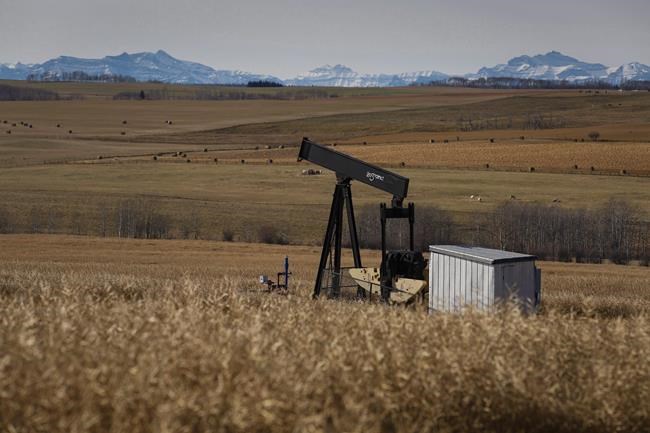
A de-commissioned pumpjack is shown at a well head on an oil and gas installation near Cremona, Alta., on October 29, 2016. Observers praised the federal government's multibillion-dollar oilpatch bailout package Friday, but warned the money should come with strings attached.
A de-commissioned pumpjack is shown at a well head on an oil and gas installation near Cremona, Alta., on October 29, 2016. Observers praised the federal government's multibillion-dollar oilpatch bailout package Friday, but warned the money should come with strings attached. "(Money) should be tied to regulatory change in Alberta to ensure the province puts in place a polluter-pays program so the public is not left with these liabilities in the future," said Greenpeace Canada spokesman Keith Stewart. THE CANADIAN PRESS/Jeff McIntosh

Prime Minister Justin Trudeau announced that his government plans to spend $1.7 billion in Alberta, Saskatchewan and British Columbia to clean up inactive and “orphan wells” — oil and gas wells that have been abandoned by their often-bankrupt owners without being remediated.

Ottawa also plans another $750 million to help cut emissions of methane, a potent greenhouse gas that leaks from energy facilities.

Federal documents say the program will apply to 4,700 orphan wells in Alberta and another 950 in Saskatchewan and British Columbia. It is also intended to cover 91,000 inactive wells in Alberta and another 48,000 such sites in Saskatchewan and B.C.

Trudeau said the money will support 10,000 jobs across the country.

Provincial leaders thanked Ottawa for the funding, but said more will be needed.

Alberta Premier Jason Kenney thanked the federal government. He said it would create needed jobs and bolster the economy.

“This will allow for a surge of well reclamation completion work all across the province, we hope starting immediately,” said Kenney.

“This is an important lifeline for hundreds of companies, large and small. This is going to breathe new life into many rural commutes.”

“The federal government has taken a positive first step in providing much needed supports to a vital industry,” Saskatchewan’s Scott Moe said, also in a statement. “However … we have not been made aware of whether this is an initial step of supporting our energy industry, or the only step.”

In a separate announcement, the federal export development bank said it would increase its support of the industry. Few details were provided.

Josha McNabb of the clean-energy think tank Pembina Institute said well cleanups and methane reductions are good steps toward reorienting Canada’s economy toward a low-carbon future.

“Those are types of things that are going to lead to an oil and gas sector that is more competitive because it’s cleaner, and also (develop) the kind of expertise that is going to be in demand,” she said.

Merran Smith at energy think tank Clean Energy Canada called the spending “a smart approach.”

“(It’s) inclined to orient relief and, we hope, subsequent stimulus efforts, towards activities that are aligned with their climate commitments,” she said in a release.

Well cleanup is a regular part of the oil service industry and contractors have the equipment, staff and expertise to get into the field right away, said Mark Scholz of the Canadian Association of Oilfield Drilling Contractors.

“This has now provided a bit of a lifeline to some of these contractors who can take on work that used to be a smaller part of their business. This will, no question, put more rigs in the field.”

Industry had asked for much broader help.

In a March 27 letter to Natural Resources Minister Seamus O’Regan, CAPP asked for no further climate change programs, a carbon tax freeze, no new clean fuel standard and a moratorium on environmental reporting requirements.

The Business Council of Alberta has called for cheap loans and a program to buy troubled companies.

Stewart said municipalities and First Nations should have some input into who gets priority for the cleanup money.

“(Companies) should, for example, be in good standing for paying their municipal taxes.”

Ottawa should also require Alberta to put timelines on well cleanups, he suggested.

The federal government has said it plans to reduce Canada’s methane emissions by 40 to 45 per cent below 2012 levels by 2025. It has created regulations to achieve that, but has given the provinces a chance to propose their own rules to achieve the same result.

Industry has said the best way to achieve the target is to let producers focus on an overall goal instead of requiring standard testing at all facilities. CAPP argues that concentrating on the largest emitters would give the biggest bang for the buck.

This report by The Canadian Press was first published April 17, 2020

— Follow @row1960 on Twitter
Report Error Submit a Tip

More Stories

Gillingham in lead with decided voters

Nicole Buffie 6 minute read Preview

Gillingham in lead with decided voters

Nicole Buffie 6 minute read Yesterday at 6:55 PM CDT

A cloud of uncertainty is hanging over Winnipeg as October’s municipal election nears.

Three months after a poll showed more than 40 per cent of Winnipeggers wanted to see someone other than current mayor Scott Gillingham elected, a new Abacus Data poll indicates more than half of Winnipeg voters are undecided heading into next month’s civic election.

Of decided voters, 55 per cent favour Gillingham compared to 23 per cent for former councillor and provincial cabinet minister Kevin Klein and 11 per cent for funeral director Mike Vogiatzakis.

Of all respondents, just over 50 per cent said they were unsure while 13 per cent said they will not vote.

Read
Yesterday at 6:55 PM CDT

Grieving child builds backyard rocket ship

Harriet Zaidman 4 minute read 2:01 AM CDT

I Built a Rocket Ship (Kids Can Press, 32 pages, hardcover, $22) by Winnipegger Anna Lazowski is a tender story for children ages 4-8 about a little girl trying to make sense of her mother’s death. The child engages in conversation with her late mom, agreeing and disagreeing about things said as she carries objects (and of course, the cat) to the backyard. There, she is building a rocket ship she will pilot into the skies to find her mom again.

Jennica Lounsbury’s varied perspectives show the range of emotions the little girl experiences.

● ● ●

Northwoods Lullaby by Mary Casanova (University of Minnesota Press, 32 pages, hardover, $25) is a bedtime book for readers up to age eight, perfect to bring a busy, happy day to a close. Just like children who are listening to adults reading the book, all the animal babies are being tucked into their nests and burrows by loving parents: “Thump and scamper,/nimble clover./ Soon it’s time to rest. Baby loon/ nestles in/as Papa floats along.”

Canada must not accept another Iranian autocracy

David Matas 5 minute read 2:01 AM CDT

Iran is a state run by a radical government victimizing its citizens and its neighbours. How do we change that? Any regime change that repeats the mistakes of the past is not a solution.

What went wrong in the past which led to the current regime? One answer is the U.K. and American aided coup which led to the ouster in 1953 of a democratically elected government headed at the time by Mohammad Mossadegh and its replacement with an American friendly autocrat, the Shah of Iran, Mohammad Reza Pahlavi.

The Shah imposed his rule through the Iranian National Intelligence and Security Organization — SAVAK, the acronym of its Persian name. SAVAK systematically inflicted torture, arbitrary killings and extra-judicial killings on perceived opponents of the regime. It was only a matter of time before repression of a regime directed to serving foreign interests would be overthrown.

What replaced the regime of the Shah, in 1979, the current regime of the mullahs, is a regime as intolerant and violent as the regime of the Shah and then some. That was not inevitable. But neither was it surprising. The vicious nature of the current regime, following the example set by the Shah, and its hatred for the United States, reacting to the U.S. aided imposition of the Shah, both echoes and reacts to the past. In 1979, the U.S. reaped what it sowed in 1953.

Give-and-take relationship of Roman leaders takes centre stage in Harris’s historical fiction

Reviewed by Kathryne Cardwell 4 minute read Preview

Give-and-take relationship of Roman leaders takes centre stage in Harris’s historical fiction

Reviewed by Kathryne Cardwell 4 minute read 2:01 AM CDT

British novelist Robert Harris’s latest work is a reflection on tyranny, corruption and betrayal among all-powerful political leaders.

You might be forgiven for thinking it’s a contemporary thriller — it’s actually historical fiction set in ancient Rome.

A former BBC journalist, Harris debuted as a novelist in 1992 with Fatherland, an alternative history where Nazi Germany won the Second World War.

Since then, the prolific author has become best-known for his works of historical fiction, especially his ancient Rome trilogy released from 2006-2015 and the novel Conclave, which was published in 2016 and was made into the film of the same name in 2024.

Read
2:01 AM CDT

Siloam Mission, WFPS discussing on-site paramedic to reduce staggering number of emergency calls

Scott Billeck 4 minute read Preview

Siloam Mission, WFPS discussing on-site paramedic to reduce staggering number of emergency calls

Scott Billeck 4 minute read Yesterday at 2:00 AM CDT

Winnipeg’s fire-paramedic service and its largest homeless-serving organization are discussing what it would look like to station at least one paramedic at Siloam Mission, as emergency calls to the downtown facility surge.

The ongoing discussions come as Winnipeg Fire Paramedic Service crews were dispatched 1,771 times during the first eight months of the year to the two adjacent Siloam properties at 303 Stanley St. and 300 Princess St.

WFPS said most of the calls were related to overdoses or other consequences of substance use, with the total nearly double the 854 calls recorded over the same period last year. By comparison, there were 831 calls during the same span in 2024, and 591 in 2023.

“The number of emergency calls isn’t sustainable for us as a service, but it’s certainly not sustainable for them as an agency trying to provide services,” WFPS chief Ryan Sneath told the Free Press. “And they recognize that they’re impacting emergency services, not them specifically, but the site in a significant way.”

Read
Yesterday at 2:00 AM CDT

Not good bet to shoulder gambling issue alone

Maureen Scurfield 5 minute read 2:01 AM CDT

DEAR MISS LONELYHEARTS: We’re living a lie over at our house, but it’s holding the family together.

I know my husband is deeply into gambling. If it weren’t for my steady job I don’t know where the family would be! I insist on paying all of our bills. I also funnel some major cash off to my sister, in case my husband tries to tap into my accounts somehow when I’m out of the house.

He doesn’t know my passwords, since I keep changing them, but he sometimes shows up behind me when I’m online, like he’s dying to ask something.

I say, “What are you looking at? Stop looking over my shoulder!” Then he makes a lame joke and goes away.