Indigenous conservation Canada’s way of the future, Guilbeault says

Advertisement

Advertise with us

Tanya Ball began her career as a social worker for the Kaska Dene First Nation. Now she runs a land guardian program, working to monitor and protect a vast stretch of the band's northern British Columbia wilderness.

Read this article for free:


or

Already have an account? Log in here »

To continue reading, please subscribe:

Subscribe and receive a limited-edition Free Press branded hat or tote.

Digital Subscription

One year of digital access for only $205*

  • Enjoy unlimited reading on winnipegfreepress.com
  • Read the E-Edition, our digital replica newspaper
  • Access News Break, our award-winning app
  • Play interactive puzzles

*First annual payment billed as $205.00 + GST for one year. This annual subscription will automatically renew at $233.00 + GST every 52 weeks (10% off the regular annual price of $259.35). Offer available to new and qualified returning subscribers only. Cancel any time.

To continue reading, please subscribe:

Add Free Press access to your Brandon Sun subscription for only an additional

$1 for the first 4 weeks*

  • Enjoy unlimited reading on winnipegfreepress.com
  • Read the E-Edition, our digital replica newspaper
  • Access News Break, our award-winning app
  • Play interactive puzzles
Start now

*Your next Brandon Sun subscription payment will increase by $1.00 and you will be charged $17.95 plus GST for four weeks. After four weeks, your payment will increase to $24.95 plus GST every four weeks.

Hey there, time traveller!
This article was published 25/06/2022 (1536 days ago), so information in it may no longer be current.

Tanya Ball began her career as a social worker for the Kaska Dene First Nation. Now she runs a land guardian program, working to monitor and protect a vast stretch of the band’s northern British Columbia wilderness.

But she’s still a social worker, in a way.

“Land guardians can help the land heal,” she said. “And the land can help the guardians heal.”
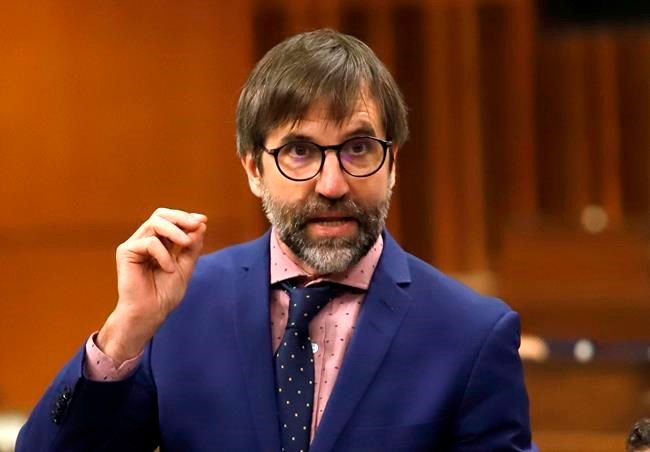
Environment and Climate Change Minister Steven Guilbeault rises during question period in the House of Commons on Parliament Hill in Ottawa on June 17, 2022. THE CANADIAN PRESS/ Patrick Doyle

Ball is at the forefront of the new way Canada protects its remaining healthy rivers, lakes, forests, mountains and plains. Crown governments would once rope off an area deemed particularly scenic or good for outdoor recreation and call it a park.

No longer.

“There’s no future when it comes to conservation where the federal government is involved (and) Indigenous people aren’t involved from the get-go,” said federal Environment Minister Steven Guilbeault. “This traditional model is a thing of the past.”

Conservation is now something Indigenous people lead instead of something done to them. Most protected areas in Canada are now being proposed by Indigenous groups, who aim to look after those lands themselves.

There are now about 80 protected areas in Canada monitored by the people to whom the lands originally belonged. Some are designated only by the local First Nation and some are part of the national parks system.

But more — many more — are on their way.

The most recent federal budget contains funding for at least another 27 Indigenous Protected and Conserved Areas. Ottawa just signed a memorandum of agreement with the Nunatsiavut government in Labrador to develop one with both parties involved from the start.

It’s the only way Canada is going to fulfil its international promise to protect 30 per cent of its land mass, said Sandra Schwartz of the Canadian Parks and Wilderness Society.

“Achieving those protection targets for Canada are realistic,” she said. “Many of those opportunities are on Indigenous land.”

Indigenous conservation comes from the historic cultural attachment to the land and the political desire for a land base, said Val Courtois of the Indigenous Leadership Initiative, who has been involved in the movement for years.

“The assertion of rights in Canada has always been about that relationship to place. This is just a new way of describing that responsibility.”

Indigenous Protected and Conserved Areas have been created under federal, provincial and band structures and vary widely in how they function and what they do. Some don’t meet international conservation area standards and won’t count toward Canada’s 30 per cent goal.

But they all involve some level of Indigenous co-management, they all involve land-use planning and they all involve guardians — local First Nations people charged and trained with stewarding the land.

Ball said her staff of eight takes water samples, makes maps, monitors hunting, delineates archeological sites, keeps track of visitor impacts, watches animal movements, assists conservation officers and runs research projects.

“They’re very busy,” she said.

One thing they don’t do is put up fences. Indigenous Protected Areas aren’t meant to keep anyone out, Courtois said.

“I would fall off my chair if I heard of an Indigenous group that is saying ‘let’s exclude everybody,'” she said. “There may be small portions that are particularly sacred, but the idea of exclusion of people is an antithesis of how we understand these places.”

Decisions on local development are made locally, she said.

Tara Shea of the Mining Association of Canada said her group generally supports Indigenous protection — as long as the process is transparent and potential mineral tenures are considered in advance.

“We strongly believe mineral development and biodiversity conservation can go hand-in-hand.”

There are challenges. While the federal government has set aside more than $300 million since 2018 for Indigenous conservation, Guilbeault acknowledges a source of permanent funding for such programs is still being sought.

“We don’t do permanent programs. The philanthropic world has played a huge role in conservation and will continue to. We welcome their involvement.”

Ottawa, the Northwest Territories, area First Nations and the U.S.-based Pew Charitable Trusts are currently negotiating a way for Pew money to finance the guardian program at the Edehzhie National Park and Indigenous Protected Area.

Another obstacle is the varying degrees of support from provincial governments, which control most of Canada’s Crown land.

“The level of enthusiasm varies,” said Guilbeault, who declined specifics. “Some provincial governments don’t believe in the government-to-government relationship.”

Courtois agrees.

“It’s tough for provinces,” she said. “They’re used to being in the driver’s seat.”

Ball believes Indigenous conservation is important for the whole country as a crucial component of reconciliation. She sees what happens if people from her First Nation go out on the land they once again help manage.

“Sometimes people want to come out just for the day. I just see a difference in people by the end of the day. Their behaviour changes, their mood has lifted,” Ball said.

“I think that’ll really help with social issues, too.”

This report by The Canadian Press was first published June 25, 2022.

— Follow Bob Weber on Twitter at @row1960

Report Error Submit a Tip

More Stories

Dynacare labs quickly reach capacity ahead of strike

Nicole Buffie 5 minute read Preview

Dynacare labs quickly reach capacity ahead of strike

Nicole Buffie 5 minute read Saturday, Sep. 5, 2026

Patients were being turned away from several Dynacare locations Saturday morning as people packed the labs in hopes of getting their blood collection done before workers strike.

By 10:30 a.m. the lobby at the Dynacare at 1581 Regent Ave. was standing-room only and walk-up patients were being turned away as the wait time for those lucky enough to get in creeped past two hours.

One woman got in right before workers cut off walk-ins at 10 a.m. after travelling to two other locations.

“I was driving by at 7:15 this morning and there was already a line-up to the road, so I was like ‘nope, not going there’ so I went to the one on Sterling Lyon (Parkway) and it was closed, and then I went to the one at St. Vital Mall and there had a line zig-zagging all the way through the corridors so I gave up and came back,” said Joanna, who declined to give her last name.

Read
Saturday, Sep. 5, 2026

Thousands affected by storm-related power outages

1 minute read Updated: Yesterday at 8:45 PM CDT

Thousands are still without power in Winnipeg after high winds and thunderstorms knocked out power lines Sunday.

About 4,000 Manitoba Hydro customers were still dealing with outages this morning after crews worked to restore power in the Westwood and River Heights areas, Hydro spokesman Peter Chura said. On Sunday, Hydro reported outages affecting approximately 6, 700 customers.

The high winds and heavy rain brought down trees and broke power poles, causing "very severe damage," in River Heights, one of the hardest-hit neighbourhoods, while some of the damage in the Westwood area appeared to be caused by lightning strikes, Chura said.

Thunderstorms rolled in at about 6 p.m. Sunday and brought heavy rain and high winds to some areas of the province. Winnipeg received about 35 mm of rain, while some areas got almost double that. More than 62 mm was recorded at The Forks and 68.8 mm was recorded at Portage Southport, according to Environment Canada.

Enrolment up at alternative schools

Maggie Macintosh 5 minute read Preview

Enrolment up at alternative schools

Maggie Macintosh 5 minute read Yesterday at 10:02 AM CDT

Independent schools are preparing to welcome a record number of students as more families pay for faith-based instruction and secular alternatives.

The overwhelming majority of Manitoba children — 200,000 — are starting in the public school system this fall. Since 2000, the percentage of students enrolled elsewhere — in homeschools, funded and non-funded independent schools — has nearly doubled, to 12 per cent from seven per cent.

“If money was no object, we could fill dozens and dozens more classrooms with the demand for independent education,” said Andrew Micklefield, executive director of the Manitoba Federation of Independent Schools, who is a former Tory government house leader.

The King’s School, Dasmesh School, Springs Christian Academy, Beautiful Saviour Lutheran School, Steinbach Christian School and IQRA Islamic School have all either upscaled at some point over the last five years or are actively in the process of expanding their footprint.

Read
Yesterday at 10:02 AM CDT

‘We belong… and we are giving back”: Sikh celebration enlivens downtown Winnipeg

Melissa Martin 3 minute read Preview

‘We belong… and we are giving back”: Sikh celebration enlivens downtown Winnipeg

Melissa Martin 3 minute read Sunday, Sep. 6, 2026

Downtown Winnipeg came alive with vibrant sights, sounds, and scents on Sunday, as Manitoba’s Sikh community flocked to Memorial Park to celebrate its annual Nagar Kirtan procession and festival.

This year marked the 422nd anniversary of the completion of the Guru Granth Sahib, the holy scripture central to the Sikh faith. Shortly after 1 p.m., a palanquin bearing a copy of the scripture was led in parade through downtown Winnipeg, with musical accompaniment.

“This is a chance to tell the public and the whole community where we come from and who we are,” said volunteer Prabh Grewal shortly before the procession got underway. “In a community there are people from every race and every country, and our main objective is to have everybody live in peace and harmony together.”

Before, during, and after the procession, the park hummed with life. As many as 55,000 people converged on the site, with the majority dressed in festive traditional attire. Near the height of the day’s 30 C heat, families relaxed in patches of shade, enjoying plates of Punjabi cuisine dished out for free at dozens of tents sponsored by local businesses.

Read
Sunday, Sep. 6, 2026

Time to ditch role as ex’s emotional crutch

Maureen Scurfield 5 minute read 2:00 AM CDT

DEAR MISS LONELYHEARTS: I mourn the end of summer every fall, but this year it’s far worse. My partner (a man, like me) broke up with me and my menagerie of animals.

The hardest part is that he still calls me before he goes to sleep at night — to see if I’m OK, and to tell me essentially, to buck up! Nothing like losing somebody and being told to be happy about it by the exact person you’ve lost.

He goes on about his new life and the people he’s meeting, and sometimes I just have to hang up on him.

Why does he bother calling? It seems like he maybe doesn’t know if he’s completely through with me yet, so he’s using me as a crutch. (Do I sound bitter?) What can I do?

Affordable housing development in Winnipeg, Swan River gets boost

Joyanne Pursaga 2 minute read 10:27 AM CDT

A new government partnership will aim to speed up home construction in Winnipeg and Swan River, with a goal to produce at least 740 affordable housing units.

The Build Canada Homes partnership between the governments of Canada, Manitoba and Winnipeg will support the delivery of at least 820 housing units in Winnipeg and the western Manitoba community, a news release from the federal government said Tuesday.

Governments officials will provide more details at a news conference at Portage Place Tuesday morning.

Many of the units will be targeted to low-income people, the homeless, newcomers, veterans and Indigenous communities.