Montana curbs wolf hunt after 23 from Yellowstone killed

Advertisement

Advertise with us

BILLINGS, Mont. (AP) — Montana wildlife commissioners on Friday moved to shut down gray wolf hunting in a portion of the state around Yellowstone National Park, amid mounting criticism over a record number of the animals shot or trapped after roaming across the park boundary this winter.

Read this article for free:


or

Already have an account? Log in here »

To continue reading, please subscribe:

Subscribe and receive a limited-edition Free Press branded hat or tote.

Digital Subscription

One year of digital access for only $205*

  • Enjoy unlimited reading on winnipegfreepress.com
  • Read the E-Edition, our digital replica newspaper
  • Access News Break, our award-winning app
  • Play interactive puzzles

*First annual payment billed as $205.00 + GST for one year. This annual subscription will automatically renew at $233.00 + GST every 52 weeks (10% off the regular annual price of $259.35). Offer available to new and qualified returning subscribers only. Cancel any time.

To continue reading, please subscribe:

Add Free Press access to your Brandon Sun subscription for only an additional

$1 for the first 4 weeks*

  • Enjoy unlimited reading on winnipegfreepress.com
  • Read the E-Edition, our digital replica newspaper
  • Access News Break, our award-winning app
  • Play interactive puzzles
Start now

*Your next Brandon Sun subscription payment will increase by $1.00 and you will be charged $17.95 plus GST for four weeks. After four weeks, your payment will increase to $24.95 plus GST every four weeks.

Hey there, time traveller!
This article was published 28/01/2022 (1692 days ago), so information in it may no longer be current.

BILLINGS, Mont. (AP) — Montana wildlife commissioners on Friday moved to shut down gray wolf hunting in a portion of the state around Yellowstone National Park, amid mounting criticism over a record number of the animals shot or trapped after roaming across the park boundary this winter.

But commissioners rejected calls to revive quotas that would limit the number of wolves killed along Yellowstone’s northern border to just a few annually. Those longstanding quotas were lifted last year after Republican lawmakers passed laws intended to drive down the wolf population by making it easier to kill the animals.

Yellowstone officials had pressed the state beginning in mid-December to suspend hunting in some areas along the park’s border. They said the deaths marked a significant setback for the long-term viability of Yellowstone’s renowned wolf packs.
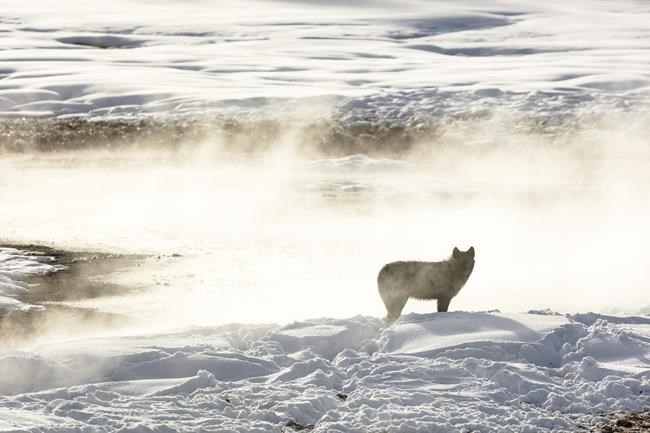
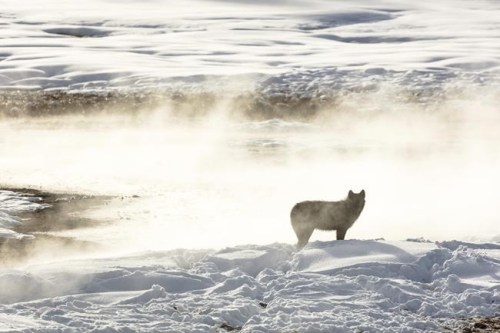
This Jan. 24, 2018, photo released by the National Park Service shows a wolf from the Wapiti Lake pack silhouetted by a nearby hot spring in Yellowstone National Park, Wyo. Park officials say hunters in neighboring states have killed 20 of the park's renown gray wolves in recent months, most of them in Montana after the state lifted hunting restrictions near the park. (Jacob W. Frank/National Park Service via AP, File)

Under Friday’s unanimous commission vote, hunting and trapping for wolves in southwestern Montana will be barred once the number killed in the region hits 82 animals. So far 76 have been reported killed in that area.

Twenty-three wolves from park packs have been killed so far this winter — 18 in Montana, three in Wyoming and two in Idaho, according to Yellowstone officials. That’s the most in a season since the predators were restored to the U.S. northern Rocky Mountains more than 25 years ago after being widely decimated last century.

The park is now down to 91 wolves, spokesperson Morgan Warthin said.

Urged by ranchers and hunters who want fewer wolves, Republican lawmakers in Montana and Idaho last year loosened hunting and trapping laws to allow night hunting, higher harvest limits, the use of snares and even aerial hunting in Idaho. Montana also eliminated the longstanding quotas.

Republican Gov. Greg Gianforte told Yellowstone Superintendent Cam Sholly in a recent letter that once a wolf exits the park and enters Montana it may be killed under state rules. Gianforte trapped and killed a radio-collared wolf from Yellowstone last year on private land near the park. He was later given a warning for violating state hunting rules by killing the wolf without first taking a mandatory trapper education course.

Sholly told wildlife commissioners in a letter released Friday that park wolves spend only 5 % of their time outside the park. In the last three years, Sholly wrote, there’s been only one attack on livestock by wolves in Park County, Montana, just north of the Yellowstone. Such attacks are frequently cited by ranchers who want to reduce wolf numbers.

The 184 wolves killed statewide so far this season has been in line with recent years, Montana officials said. There are more than 1,000 wolves in the state.
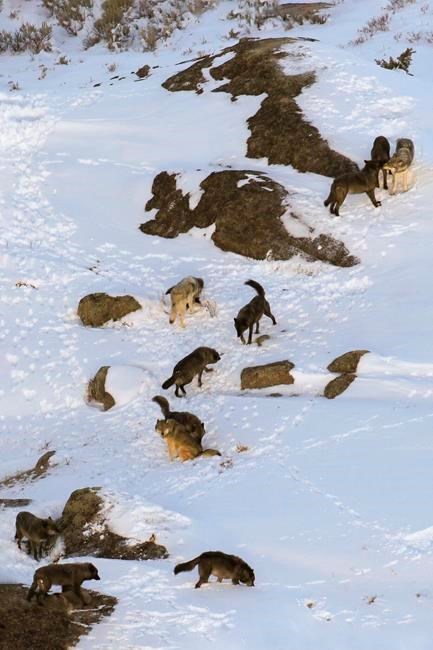
This Dec. 5, 2019 photo provided by the National Park Service shows the Junction Butte wolf pack taken from an aircraft in Yellowstone National Park. Park officials say seven wolves from the pack that's popular among tourists have been killed by hunters in Montana and Wyoming in recent months. (National Park Service via AP, File)

“We have a statutory obligation to reduce the wolf population,” said Patrick Tabor, vice chair of Montana’s Fish, Wildlife and Parks Commission, prior to Friday’s vote.

But the killings just outside Yellowstone have infuriated wildlife advocates and brought condemnation from some businesses that depend on park tourism.

One pack — the Phantom Lake Pack — is now considered “eliminated” after most or all of its members were killed over a two-month span beginning in October, according to the park.

Nature guide Cara McGary, who leads tourists on wildlife watching trips into the park from Gardiner, Montana, said the hunting along the park’s border targeted wolves where their greatest economic value was in being alive so tourists can see them.

“These are the most viewable wolves in the lower 48, if not the world,” McGary said. “The same packs that my clients pay me to see on every wildlife watching tour all year round … What’s the justification for this damage?”

The wolf season for the rest of the Montana is scheduled to run through March 15. State regulations allow Montana’s fish and wildlife commission to review hunting seasons for different regions of the state when their individual harvest thresholds are met, or statewide when the total number killed reaches 450 wolves.
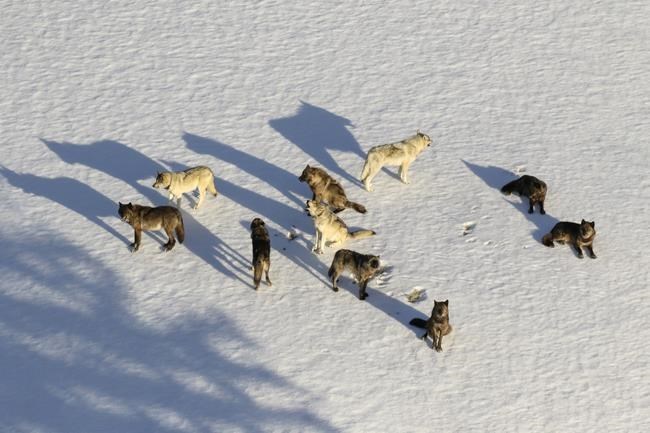
FILE - This March 21, 2019, aerial file photo provided by the National Park Service shows the Junction Butte wolf pack in Yellowstone National Park, Wyo. Park officials say 23 wolves have been killed by hunters and trappers after roaming out of the park in recent months. (National Park Service via AP, File)

The increasingly aggressive attitude toward the predators among state lawmakers has raised concerns within the federal government that overhunting could scuttle the costly effort to restore wolves in wild areas of the West.

In September, the U.S. Fish and Wildlife Service said it would examine if federal endangered species protections should be re-imposed for more than 2,000 wolves in six northern U.S. Rockies states including Montana, Idaho and Wyoming.

Those protections were lifted a decade ago, based in part on assurances the states would maintain viable wolf populations.

Report Error Submit a Tip

More Stories

Transit safety drives first mayoral debate

Morgan Modjeski 4 minute read Preview

Transit safety drives first mayoral debate

Morgan Modjeski 4 minute read Yesterday at 2:01 AM CDT

The safety of Winnipeg Transit drivers was front and centre Monday as the first mayoral debate of the 2026 election focused on public transit.

Kevin Klein, the most experienced of the 10 candidates at the Amalgamated Transit Union 1505-hosted debate, said the time for partial safety shields has passed.

“The partial shields have failed drivers. That’s why we need change,” the former PC MLA and city councillor said, adding driver safety is not a staffing issue, but a “protection failure.”

If elected, Klein said he will bring in full-shield implementation across the city within two years and start a nine-bus pilot project immediately.

Read
Yesterday at 2:01 AM CDT

Trade war fuelling spike in city costs

Joyanne Pursaga 4 minute read Preview

Trade war fuelling spike in city costs

Joyanne Pursaga 4 minute read Yesterday at 2:01 AM CDT

A trade war between the U.S. and Canada could cost the City of Winnipeg millions of dollars more than was anticipated during the budget process for this year’s expenditures and beyond.

Read
Yesterday at 2:01 AM CDT

Montana curbs wolf hunt after 23 from Yellowstone killed

Matthew Brown, The Associated Press 5 minute read Preview

Montana curbs wolf hunt after 23 from Yellowstone killed

Matthew Brown, The Associated Press 5 minute read Friday, Jan. 28, 2022

BILLINGS, Mont. (AP) — Montana wildlife commissioners on Friday moved to shut down gray wolf hunting in a portion of the state around Yellowstone National Park, amid mounting criticism over a record number of the animals shot or trapped after roaming across the park boundary this winter.

But commissioners rejected calls to revive quotas that would limit the number of wolves killed along Yellowstone's northern border to just a few annually. Those longstanding quotas were lifted last year after Republican lawmakers passed laws intended to drive down the wolf population by making it easier to kill the animals.

Yellowstone officials had pressed the state beginning in mid-December to suspend hunting in some areas along the park’s border. They said the deaths marked a significant setback for the long-term viability of Yellowstone's renowned wolf packs.

Under Friday's unanimous commission vote, hunting and trapping for wolves in southwestern Montana will be barred once the number killed in the region hits 82 animals. So far 76 have been reported killed in that area.

Read
Friday, Jan. 28, 2022

Police cracking down on gangs, organized crime in bars and lounges

Nicole Buffie 4 minute read Preview

Police cracking down on gangs, organized crime in bars and lounges

Nicole Buffie 4 minute read Updated: Yesterday at 6:56 PM CDT

Patrons can expect to see more police officers in and around bars and lounges in the coming months as the Winnipeg Police Service plans to crack down on gangs and organized crime.

Read
Updated: Yesterday at 6:56 PM CDT

Manitoba mineral production set to triple, premier says

Carol Sanders 5 minute read Preview

Manitoba mineral production set to triple, premier says

Carol Sanders 5 minute read Updated: Yesterday at 5:19 PM CDT

Premier Wab Kinew said Tuesday Manitoba plans to triple mineral production in the next five years “to unlock a new era of wealth creation and growth.”

“We’re going to make sure that opportunity is spread throughout the province,” he told a news conference at the Canada investment summit in Toronto.

The province is working with industry and Indigenous governments to send a message to investors that “we’re going to do mining right in Manitoba,” the premier said.

For too long, Manitoba has lagged behind neighbouring provinces, Kinew said.

Read
Updated: Yesterday at 5:19 PM CDT

Rogers, Telus deny blame for June twister alert barrage

Malak Abas 3 minute read Preview

Rogers, Telus deny blame for June twister alert barrage

Malak Abas 3 minute read Updated: Yesterday at 7:21 AM CDT

Telecom companies say they aren’t to blame for the barrage of tornado alerts Manitobans received during severe thunderstorms in early June.

The Canadian Radio-television and Telecommunications Commission announced in August it would investigate the unusually high number of alerts, and called on the Pelmorex Corp., which operates the national Alert Ready system, along with telecom companies Bell, Rogers and Telus to respond to a number of questions.

They were given until last Friday to describe their possible roles in the creation, receipt, processing or distribution of alerts issued from Environment and Climate Change Canada in the midst of the June 9 storm.

Telus said in its response that it received 133 alert requests targeted to Manitoba created by Environment Canada and forwarded by Pelmorex between 2:35 p.m. June 9 and 3:29 a.m. the following day. While the majority of those messages contained identical information and were automatically suppressed, 17 were ultimately sent out as alerts in Winnipeg.

Read
Updated: Yesterday at 7:21 AM CDT