Off-grid living beckons more than just hardy pioneer types
Advertisement
Read this article for free:
or
Already have an account? Log in here »
To continue reading, please subscribe:
Digital Subscription
One year of digital access for only $1.44 a week*
- Enjoy unlimited reading on winnipegfreepress.com
- Read the E-Edition, our digital replica newspaper
- Access News Break, our award-winning app
- Play interactive puzzles
*Billed as $5.77 plus GST every four weeks. After 52 weeks, price increases to the regular rate of $19.95 plus GST every four weeks. Offer available to new and qualified returning subscribers only. Cancel any time.
To continue reading, please subscribe:
Add Free Press access to your Brandon Sun subscription for only an additional
$1 for the first 4 weeks*
- Enjoy unlimited reading on winnipegfreepress.com
- Read the E-Edition, our digital replica newspaper
- Access News Break, our award-winning app
- Play interactive puzzles
*Your next Brandon Sun subscription payment will increase by $1.00 and you will be charged $17.95 plus GST for four weeks. After four weeks, your payment will increase to $24.95 plus GST every four weeks.
Read unlimited articles for free today:
or
Already have an account? Log in here »
Hey there, time traveller!
This article was published 08/06/2022 (1600 days ago), so information in it may no longer be current.
Living off-grid conjures images of survivalists in remote places and a rustic, “Little House on the Prairie” lifestyle with chores from morning to night. Yet only a tiny fraction of people living off-grid do it like that, and fewer still live more than an hour from any town.
“Living off-grid doesn’t mean you don’t buy your groceries at a store or take your waste to the local dump. It just means you are not connected to utility grids,” says Gary Collins, who has lived off-grid, or mostly off-grid, for a decade. He has published books on the subject, and leads online classes.
Although precise numbers of off-grid households are hard to come by, Collins estimates that only 1 percent of those living off-grid are in truly remote areas.
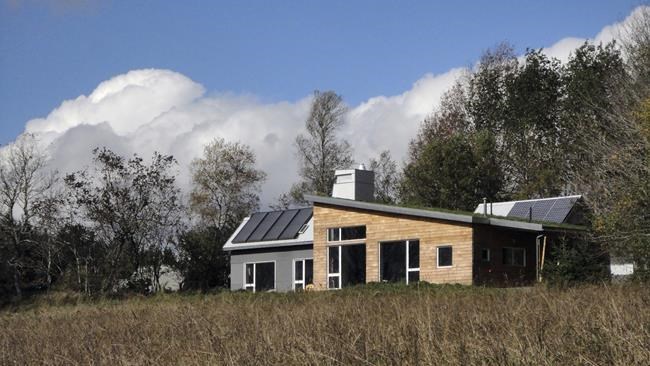
Overall, the off-grid movement remains small. But it got a boost after the COVID pandemic hit: City dwellers began to explore different ways of living, facilitated by improvements in alternative energy sources like solar power, and batteries for storing that power.
More frequent power outages and utility grids’ struggles to handle the severe weather events brought on by climate change have added to interest in disconnecting from the grid. So have utility bill hikes.
“There’s a lot more interest in living off the grid now because energy is costing so much and there are so many problems with grids,” says author Sheri Koones, whose books about sustainable houses include “Prefabulous and Almost Off the Grid” (Abrams, 2012).
There are also those who remain connected to the grid but try to power their homes independent of it. Koones cites the rise in “net metering,” when your property’s renewable energy source — usually solar — is producing more energy than you use, and your local utility pays you for the excess.
Today, off-grid living encompasses everything from “dry camping” in RVs (with no electrical or water hookups) to swank Santa Barbara estates, from modest dwellings tucked just outside of towns to — yes — remote rustic cabins.
“Everyone does it differently and everyone does it their own way, because it’s their own adventure,” says Collins.
For him, off-grid living is part of finding a simpler, less cluttered life more in sync with nature.
The Anacapa Architecture firm, in Santa Barbara, California, and Portland, Oregon, has built several upscale off-grid homes in recent years, and has several more off-grid projects in the works.
“There’s definitely an increase in traction for this kind of lifestyle, especially in the last two years. There’s a desire to get more in tune with nature,” says Jon Bang, marketing and PR coordinator for Anacapa Architecture.
The lifestyle that Anacapa homes aim for is one of modernist elegance, not roughing it. Bang says new technologies can ensure comfortable self-sufficiency.
One reason for the high cost of homes like this is that it’s expensive to haul equipment to a remote site. In addition, they might be outfitted with things like solar power, an onsite battery bank, a septic system that treats sewage onsite, a water well, and a dry well to treat and reuse water, not to mention a plumbing system designed to use as little water as possible.
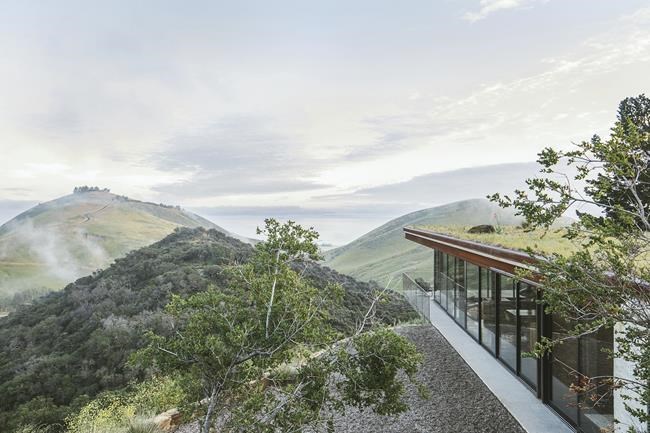
Such homes also are carefully designed to take advantage of the site’s landscape features with an eye to sustainability. For example, one of the firm’s homes is built into a hillside and has a green roof (with plantings). Strategic landscaping can minimize the need for watering.
“For those with means, it opens up building sites that cannot be connected to local grids, and allows for a quieter kind of life, grounded in nature without neighbors nearby,” Bang says.
For those without the means to hire architects, there are numerous recent books, blogs, YouTube videos and more dedicated to the subject.
“A lot of people are interested in it now. They contact me after watching something on TV or on YouTube and I tell them, `If you learned everything you know on YouTube, you are never going to survive,’” says Collins.
Growing up poor in a rural area, he says, helped him succeed at off-grid living, first in Washington state and now in Arizona. He makes regular grocery runs, but also grows some of his own food and hunts wild game. He has his own septic system and well. While his previous home was entirely off-grid, with solar panels and a wind turbine for power, his current home is hooked up to an electrical grid, mainly, he says, because the bills are too low to warrant the cost of solar panels.
If you want to be totally self-sufficient, he says, it takes a lot of time and physical effort. You won’t have time to hold down a job. If you’re living in a remote location, you need to consider access to medical care, and whether you are mentally prepared for that much isolation.

“People confuse homesteading with off-grid living. You can be homesteading but still be connected to a grid. But if you live off-grid and do that, that’s your life,” says Collins. “Your wood won’t cut itself. You’ll have to haul water. The more successful people tend to be those who grew up on ranches, people who grew up doing demanding chores.”
He warns, “People die off-grid all the time, because of things like chainsaw accidents. You have to be very careful and think everything through. No EMS will get to you in time.”
Anyone interested in living off-grid should try dry camping in an RV or living in a remote area first to see if the lifestyle fits, he says.
And depending on how it’s done, he says, off-grid living is not necessarily environmentally sustainable — not if you’re driving a fuel-guzzling truck and relying on a gas-powered generator, for example.
Still, improved alternative energy sources and construction techniques are making off-grid living more thinkable for more people, including those who don’t want to haul buckets of water from a well or live by candlelight.