Tipping point? Experts say the Paris agreement changed the climate on climate
Advertisement
Read this article for free:
or
Already have an account? Log in here »
To continue reading, please subscribe:

Digital Subscription
One year of digital access for only $205*
- Enjoy unlimited reading on winnipegfreepress.com
- Read the E-Edition, our digital replica newspaper
- Access News Break, our award-winning app
- Play interactive puzzles
*First annual payment billed as $205.00 + GST for one year. This annual subscription will automatically renew at $233.00 + GST every 52 weeks (10% off the regular annual price of $259.35). Offer available to new and qualified returning subscribers only. Cancel any time.
To continue reading, please subscribe:
Add Free Press access to your Brandon Sun subscription for only an additional
$1 for the first 4 weeks*
- Enjoy unlimited reading on winnipegfreepress.com
- Read the E-Edition, our digital replica newspaper
- Access News Break, our award-winning app
- Play interactive puzzles
*Your next Brandon Sun subscription payment will increase by $1.00 and you will be charged $17.95 plus GST for four weeks. After four weeks, your payment will increase to $24.95 plus GST every four weeks.
Read unlimited articles for free today:
or
Already have an account? Log in here »
Hey there, time traveller!
This article was published 11/12/2020 (2067 days ago), so information in it may no longer be current.
Five years after it was passed, the Paris agreement may finally be changing the climate on climate change.
“I’ve always known we’re not going to act as soon as we could have,” said Mark Jaccard, a widely consulted energy economist at Simon Fraser University.
“I also know that when we do start to act, it’ll be very fast. It’ll be one of those tipping points and it could be that we’re at one right now.”
On Dec. 12, 2015, 196 countries met in Paris and put their signatures on a legally binding treaty to do what it took to limit global warming to below two degrees Celsius and to create carbon-neutral economies by 2050.
Progress on those promises has been spotty.
The United Nations annual emissions gap report released this week points out that greenhouse gas emissions have continued to grow and reached record levels in 2019. Even with a seven per cent decline in emissions expected this year because of the COVID-19 pandemic, atmospheric concentrations are expected to rise.
The Liberal government has committed Canada to being carbon neutral by 2050. But it has released no plan for the three to four per cent annual cuts that it would take to get there. Canada has never met any of its previous climate goals and is one of five G20 countries behind on its Paris commitments.
And yet …
“We have a much stronger climate movement that we did,” said Keith Stewart of Greenpeace. “A lot of the big forces in the world are starting to line up behind the transition.”
More and more financial institutions — including, just this week, the $225-billion New York state pension fund — are divesting from fossil fuels or decarbonizing. The UN says 126 countries, including China, have either adopted binding net-zero goals or are considering them.
The cost of renewable energy is plummeting — 90 per cent for solar power, says an Oxford University publication. Some countries — again, including China — are putting end dates on the sale of gas-powered vehicles.
“The effort is picking up speed,” Jaccard said.
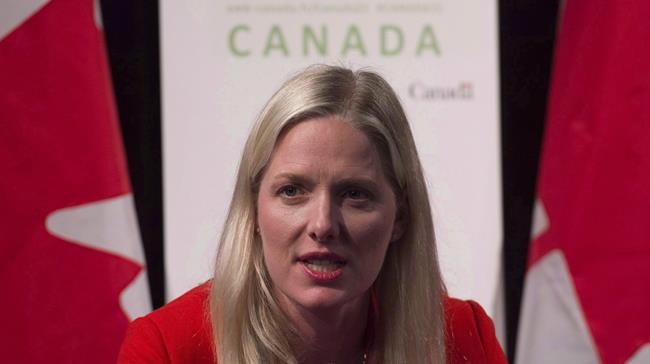
Without Paris, Canada wouldn’t have achieved what it has, federal Environment Minister Jonathan Wilkinson told an online webinar Thursday.
“Canadians were really tired of inaction,” he said. “The pan-Canadian framework was something that came out of the Paris agreement.”
The federal Liberals have implemented a carbon tax, signed agreements to reduce methane releases, promised a clean-fuel standard to cut vehicle emissions, announced $1.5 billion in funding for electric buses and charging stations, and helped phase out coal-generated power.
“The Trudeau government is the only federal government Canada’s had that is implementing the pricing and regulations that actually reduce emissions,” Jaccard said.
Wilkinson promises even more.
“We know that more ambition will be required.”
More is needed than just a new set of targets, Stewart said. Canadians who depend on the fossil fuel industry need help with the transition.
“There’s a whole bunch of people who are going to be hurt badly if we don’t do this properly,” he said. “The rest of the country is going to be supporting Alberta, Saskatchewan and Newfoundland.”
Jaccard said some way may be needed to prevent countries that aren’t limiting emissions from having a trade advantage. Tariffs that penalize products from high-carbon jurisdictions are being discussed both at home and abroad, he said.

“How do you get any kind of collective action when there are easy rewards for cheating? You have to have penalty mechanisms.”
Paris made a real difference and progress is out there, said Jaccard.
“I react strongly to people who say it’s too late. The evidence doesn’t support it.
“It’s harder, which means we’ve taken longer to act on it, but I always knew we would act.”
This report by The Canadian Press was first published Dec. 11, 2020.