Trudeau says time for blockades to end, Indigenous leaders to work with government
Advertisement
Read this article for free:
or
Already have an account? Log in here »
To continue reading, please subscribe:

Digital Subscription
One year of digital access for only $205*
- Enjoy unlimited reading on winnipegfreepress.com
- Read the E-Edition, our digital replica newspaper
- Access News Break, our award-winning app
- Play interactive puzzles
*First annual payment billed as $205.00 + GST for one year. This annual subscription will automatically renew at $233.00 + GST every 52 weeks (10% off the regular annual price of $259.35). Offer available to new and qualified returning subscribers only. Cancel any time.
To continue reading, please subscribe:
Add Free Press access to your Brandon Sun subscription for only an additional
$1 for the first 4 weeks*
- Enjoy unlimited reading on winnipegfreepress.com
- Read the E-Edition, our digital replica newspaper
- Access News Break, our award-winning app
- Play interactive puzzles
*Your next Brandon Sun subscription payment will increase by $1.00 and you will be charged $17.95 plus GST for four weeks. After four weeks, your payment will increase to $24.95 plus GST every four weeks.
Read unlimited articles for free today:
or
Already have an account? Log in here »
Hey there, time traveller!
This article was published 21/02/2020 (2406 days ago), so information in it may no longer be current.
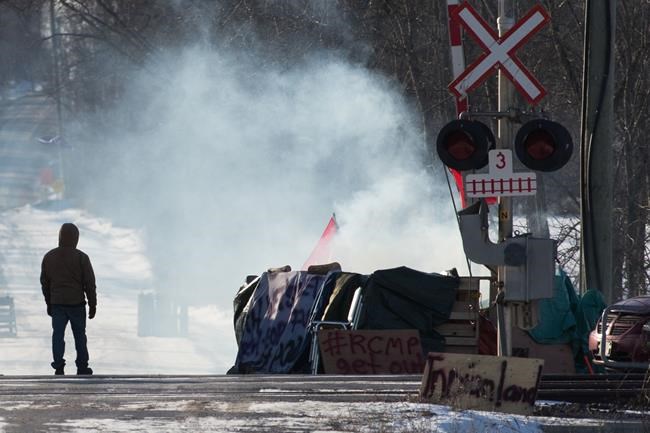
OTTAWA – Protesters have left a site south of Montreal where they had been blockading railway tracks since Wednesday.
The end of the blockade Friday night followed the arrival of riot police in the afternoon who were dispatched to enforce an injunction ordering protesters off Canadian National Railway tracks in St-Lambert, Que.
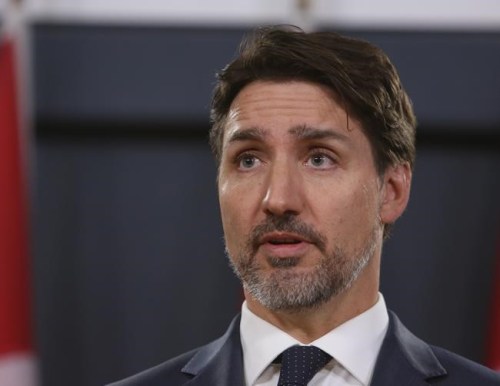
The development came hours after a stern-faced Prime Minister Justin Trudeau emerged from high-level meetings in Ottawa saying that barricades on rail lines and other major transportation routes must come down after two weeks of calls for patience and stalled attempts at negotiation.
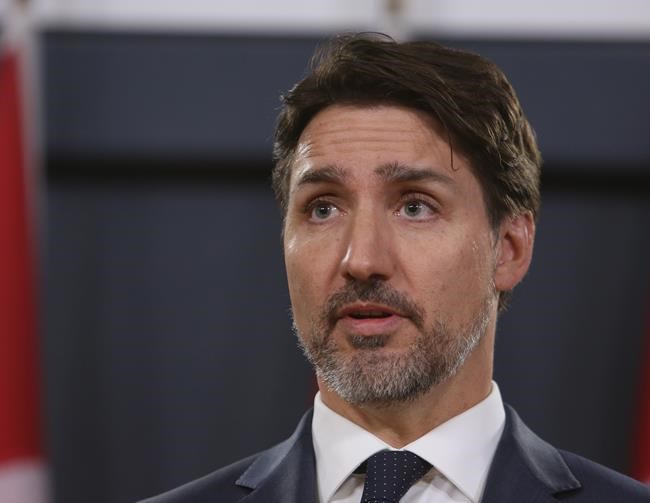
“We are waiting for Indigenous leadership to show that it understands,” he said in a news conference. “The onus is on them.”
Injunctions to clear tracks must be obeyed and the law must be upheld, he said, adding that it is pointless to continue making overtures to Indigenous leaders if they aren’t accepted.
“Let us be clear: all Canadians are paying the price. Some people can’t get to work, others have lost their jobs,” Trudeau said. “Essential goods … cannot get where they need to go.”
The situation “is unacceptable and untenable,” he said.
The blockades, particularly one on a critical east-west rail line in Ontario, are responses by Indigenous people and supporters to a move by the RCMP to clear protesters who had been blocking access to a worksite for a major natural-gas pipeline project in British Columbia. Hereditary chiefs of the Wet’suwet’en Nation oppose the work on their traditional territory, despite support from elected band councils along the pipeline route.
On Thursday, the RCMP in B.C. sent a letter to the traditional Wet’suwet’en leaders, telling them the force intends to move its officers off the access road and station them instead in the nearby town of Houston.
In response, one of the traditional chiefs of the Wet’suwet’en Nation said Friday his people are willing to engage in nation-to-nation talks with the B.C. and federal governments, but not until the RCMP in B.C. have left traditional Wet’suwet’en territory entirely and Coastal GasLink, the pipeline company, ceases work in the area.
Hereditary Chief Woos, also known as Frank Alec, said the B.C. RCMP have not yet left the Wet’suwet’en territory and charged they have also “increased harassment, made illegal arrests, increased surveillance and monitoring of Wet’suwet’en people and their invited guests.”
“This is completely unacceptable and far from a show of good faith and contradicts the announcement of the RCMP,” Woos said.
Until their demands are met, the barricade in Ontario erected by the Mohawks at Tyendinaga will not come down, said Kanenhariyo, who also goes by Seth LaFort, of the Mohawks of Tyendinaga.
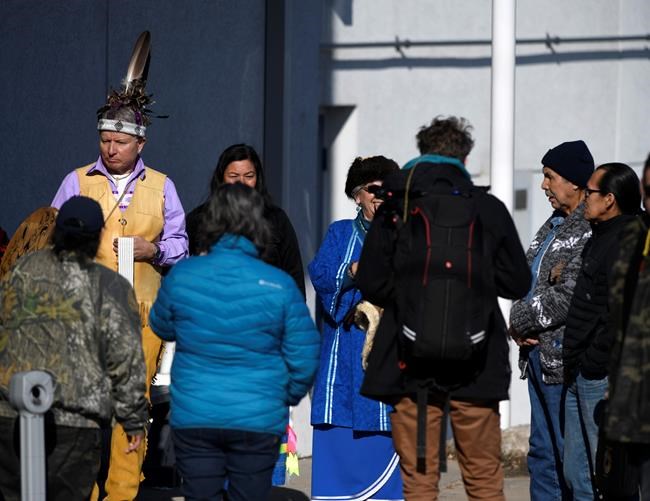
The Wet’suwet’en hereditary chiefs were visiting their supporters at Tyendinaga to thank them and held a news conference afterward.
Woos took issue with Trudeau’s comments that the blockades are causing trouble for Canadians, suggesting the Wet’suwet’en are facing injustice.
“There is a difference between inconvenience and injustice — total difference. Don’t confuse one with the other,” Woos said.
Meanwhile, the prime minister is contending with pressure from several premiers to take more swift and decisive action to end the blockades.
“We’ve sent a message clearly with our willingness to say, quite publicly, that we don’t believe it’s in the best interests of protesters or the general public to stand back in respect of the laws being broken, that it can endanger people’s lives and endanger their well-being,” Manitoba’s Brian Pallister said Friday.
Ontario Premier Doug Ford issued a statement Friday saying “enough is enough.”
“The illegal blockades must come down. This is a national emergency and innocent people from coast to coast are being hurt. The federal government must co-ordinate action to take down these illegal blockades across the country.”
Quebec Premier Francois Legault made it clear Thursday that provincial police in his province would dismantle the blockade in a suburb south of Montreal.
Earlier Friday evening, the roughly two dozen protesters began dismantling their encampment, taking down tents and hauling their supplies to the edge of a security perimeter established by police.
A spokesman for the protesters, who had been blocking the rail line in a show of solidarity with Wet’suwet’en hereditary chiefs in British Columbia, vowed that other blockades would appear.
Alberta’s Jason Kenney, a former federal Conservative cabinet minister, pulled no punches in a Friday press conference. He said he made it clear to the prime minister on a conference call with the other premiers Thursday evening that the blockades are having devastating impacts on people across the country.
He said it is scaring away investment and giving the impression that Canada can’t operate as a modern democratic country.
This is just the latest in an increasing pile-on of federal, provincial and business leaders pressing Trudeau and the federal government to end the blockades.
Conservative Leader Andrew Scheer said Friday he doesn’t believe Trudeau’s ultimatum will work and warned that making concessions to the Wet’suwet’en will embolden future activists who oppose resource development projects.
“For days, he’s been basically telling these illegal protesters that he’s taking the use of police forces off the table. He’s basically been giving them a signal that they can act with impunity. He’s also talked about offering concessions to people who are breaking the law,” Scheer said.
“This is a very dangerous precedent to set. And as we face developments in the future, as it relates to other energy projects, these protesters will continue to be emboldened as they pursue their anti-free market, anti-energy development agenda.”
Despite his firmer tone Friday, Trudeau stressed that his government remains committed to dialogue and reconciliation with the Wet’suwet’en hereditary leadership, but the ball is now in their court to make that happen.
“Our government has kept engaged at all levels, we repeated our calls for collaboration, we showed respect,” Trudeau said.
“But Canadians who are feeling the very real impacts of these blockades are running out of patience.”
He also made a point to draw a line between the Wet’suwet’en protesters and their allies — those upset at the long history of abuse perpetrated against Indigenous peoples in Canada — and others who “use or engage with Indigenous protests to call out a particular project with which they disagree.”
While these “other” protesters may be advancing a view that is deeply felt, their concerns are “not anchored in the deep wrongs that have been done in ignoring and marginalizing Indigenous leadership and Indigenous voices in this country,” Trudeau said.
B.C.’s John Horgan struck a more understanding note than some of the other premiers Friday. He said his government continues to be ready to engage in talks with Wet’suwet’en hereditary chiefs.

But Horgan said more people from the community, other than the hereditary chiefs, have begun to speak out, including the matriarchs who have historically been the keepers of the traditional practices of the Wet’suwet’en people.
Horgan said he expects Na’moks, a hereditary chief who also goes by John Ridsdale, will be hearing from people in the community about his refusal to meet with the province, because that’s “not how you have respectful dialogue with your neighbours.”
He said he believes the vast majority of northern B.C. residents and Wet’suwet’en people want to find a way forward and his government remains “at the ready” to help reach that outcome.
This report by The Canadian Press was first published Feb. 21, 2020.
—With files from Steve Lambert in Winnipeg, Liam Casey in Tyendinaga Mohawk Territory, Bill Graveland in Calgary and Laura Kane in Vancouver