Ham it up
As its 100th anniversary approaches, the Winnipeg Amateur Radio Club is showing why in an age of instant communication, there is still room to kick it old school
Advertisement
Read this article for free:
or
Already have an account? Log in here »
To continue reading, please subscribe:

Digital Subscription
One year of digital access for only $205*
- Enjoy unlimited reading on winnipegfreepress.com
- Read the E-Edition, our digital replica newspaper
- Access News Break, our award-winning app
- Play interactive puzzles
*First annual payment billed as $205.00 + GST for one year. This annual subscription will automatically renew at $233.00 + GST every 52 weeks (10% off the regular annual price of $259.35). Offer available to new and qualified returning subscribers only. Cancel any time.
To continue reading, please subscribe:
Add Free Press access to your Brandon Sun subscription for only an additional
$1 for the first 4 weeks*
- Enjoy unlimited reading on winnipegfreepress.com
- Read the E-Edition, our digital replica newspaper
- Access News Break, our award-winning app
- Play interactive puzzles
*Your next Brandon Sun subscription payment will increase by $1.00 and you will be charged $17.95 plus GST for four weeks. After four weeks, your payment will increase to $24.95 plus GST every four weeks.
Read unlimited articles for free today:
or
Already have an account? Log in here »
Hey there, time traveller!
This article was published 01/06/2019 (2626 days ago), so information in it may no longer be current.
Generators off and hands up if you remember where you were and what you were doing during the Y2K fiasco, the global digital apocalypse that was widely anticipated but, in the end, completely failed to materialize.
Two people who know precisely what they were up to on that less than eventful evening are Cary Rubenfeld and Barry Malowanchuk, associates of the Winnipeg Amateur Radio Club, a group of — as its name implies — local amateur radio operators, more commonly referred to as hams.
Besides their home club, Rubenfeld and Malowanchuk also belong to a volunteer organization called Amateur Radio Emergency Service (ARES) that, according to its website, “assists civil authorities with emergency communications in times of disaster and when existing communications are inadequate.” That explains why, at precisely 12:01 a.m. Jan. 1, 2000, Rubenfeld was situated inside a fire and paramedic station on McGregor Avenue, while Malowanchuk was holed up at Manitoba Hydro’s system control centre.
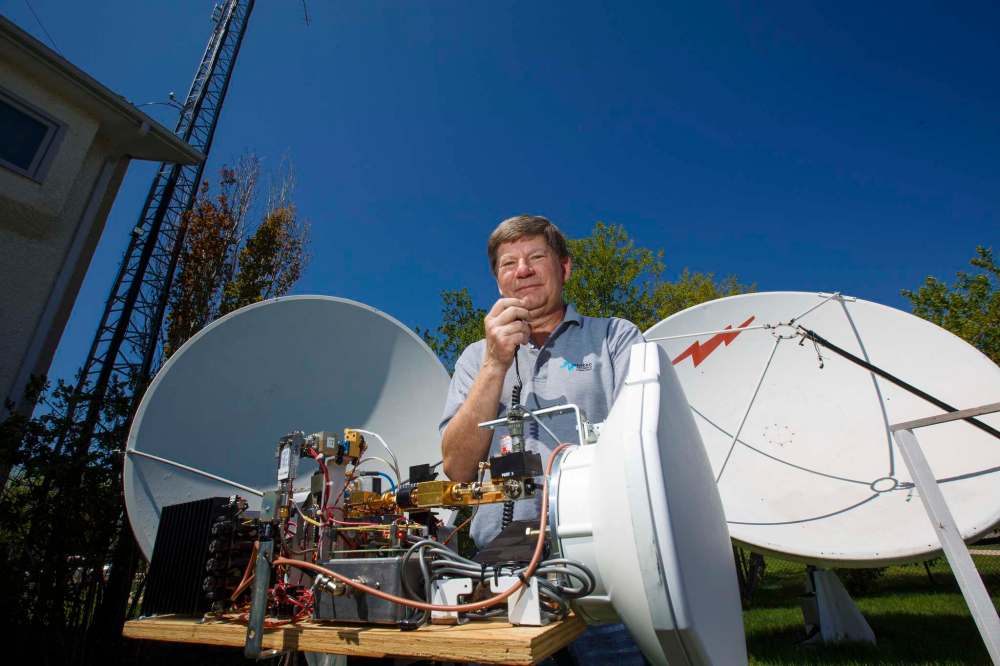
“The City of Winnipeg asked ARES to have a ham operator at every fire hall and police station, just in case everything went wrong when their computers were supposed to turn over (to the year 2000) at midnight, “ Rubenfeld says, seated in Malowanchuk’s living room, alongside his host and another club member, Bill Fleury. “At around 2 a.m., when it was clear the world wasn’t going to end, they sent everybody home.”
“We’d done our homework — we knew there wasn’t going to be a problem,” says Malowanchuk, who built his first transmitter in the 1960s at the age of 12, after catching the radio bug watching his dad, a professional broadcast engineer, transmit messages via Morse code from a primitive ham radio set-up in their basement. “But just in case, the province asked us to set up an amateur radio station with a shortwave radio to contact other utilities in the northern States, and a VHF radio to contact the Manitoba Emergency Measures.”
The three men laugh when a scribe wonders aloud why, in a day and age when every Tom, Dick and Huawei carries a cellphone, anybody would have to rely on a ham radio operator to let them know whether it was OK to emerge from their bunker.
“During real disasters — like (Hurricane) Katrina in New Orleans or what happened in Puerto Rico last year (Hurricane Maria) — there’s almost always physical damage to the infrastructure, including cell towers,” says Fleury, 38, who got into the hobby about three years ago. “With radio it’s point-to-point. There’s no middle man, so to speak.”
—
Ham radio has been around for over 100 years, and the Winnipeg Amateur Radio Club almost as long. A Winnipeg Tribune article dated Nov. 13, 1922 attests to that: beneath a headline reading “Manitoba Radio Assn. Will Meet Tonight,” it’s reported, “The general meeting of the Manitoba Radio association will be held as usual in room 114 Science building on Broadway at 8 p.m. sharp tonight.”
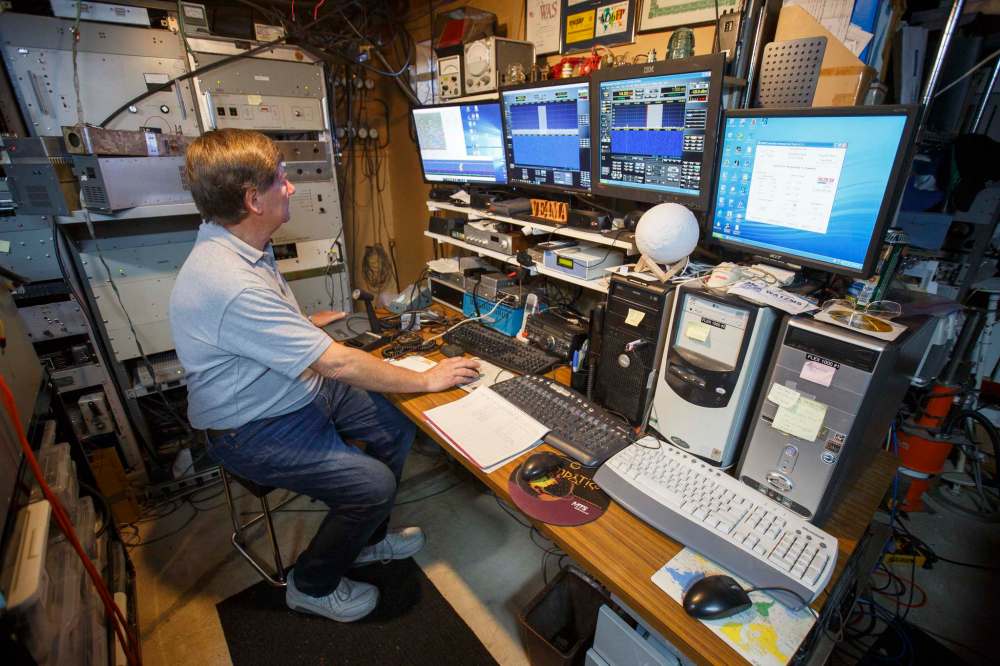
“We’ve had a few different names over time — I believe the club was called Manitoba Radio Communicators at one point — but except for maybe a club in southern Ontario, we’re probably the oldest in the country,” says Rubenfeld, who transmitted his first official message in 1970 at the age of 16.
On Sunday, the club will toast its 100th anniversary at Dakota Community Centre. From 10 a.m. to 2 p.m., members of the public will be able to ask questions, seek advice if they’re interested in attaining a licence of their own through Industry Canada as well as purchase start-up equipment. Even better, they’ll be able to witness seasoned radio operators such as Malowanchuk and Rubenfeld, who have over 100 years of combined experience, in action, as they reach out to other hams around the world to rag-chew, their term for general conversation such as, “So, how’s the weather in your neck of the woods?”
Dubbed Hamfest, Rubenfeld expects the two-day affair — there is also an invitation-only, Centennial Celebration Supper scheduled for Saturday night — to draw operators from Alberta, Saskatchewan, Minnesota and North Dakota.
“There are a number of people I’ve been in contact with for decades, including a fellow I’ll be talking to later tonight or first thing tomorrow,” Malowanchuk says. “He lives near Grand Forks on the Minnesota side of the border — we’ve been in touch at least once a week since 1966 — and I’m pretty sure he’s coming up for the show.”
Rubenfeld, who recently attended a similar event in Dayton, Ohio, is very much looking forward to Hamfest, in part because he recently returned to the hobby, after taking an extended break from ham radio in order to raise his family.
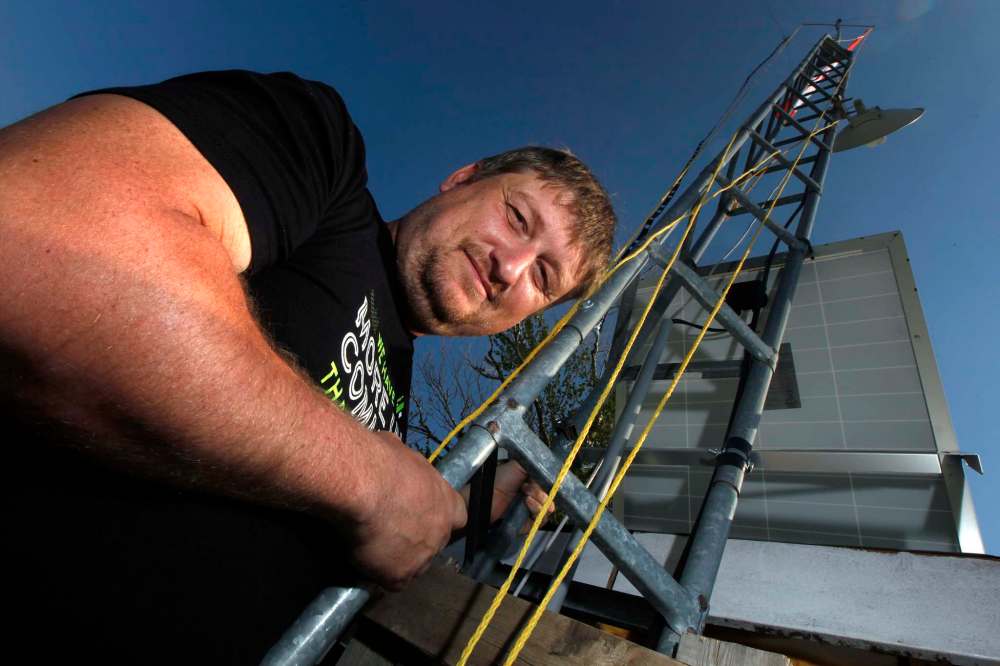
“My main interest nowadays is something called radiosport, and I’m hoping to teach others what it’s all about,” he says.
“Basically, it’s an activity where amateur radio stations attempt to make as many two-way contacts with other stations as possible, within a defined period of time. Usually, it involves being on air for 48 hours straight, with very limited sleep.”
Describing radiosport as the “Le Mans of ham radio,” Rubenfeld says he’ll be doing a presentation on it during Hamfest, offering tips to interested parties how to “optimize their bodies to survive something that is potentially dangerous.” (Hey, where do we sign up?)
Besides its centennial convention, the Winnipeg Amateur Radio Club has a couple other events planned in the near future. On June 16, somewhere in the neighbourhood of 80 hams will graciously give up their Father’s Day morning to provide communication at various checkpoints throughout the 26-mile Manitoba Marathon course.
“We’ll be relaying things like runners’ times and health information,” says Fleury, noting his 7-year-old son has just recently started to ask when he can “play with daddy’s stuff.”
“The good thing about doing that via ham radio is everybody on the system can hear what we’re saying; we’re not relaying information to one person at a time, and getting them to pass it along to the next checkpoint. It’s instantaneous.”
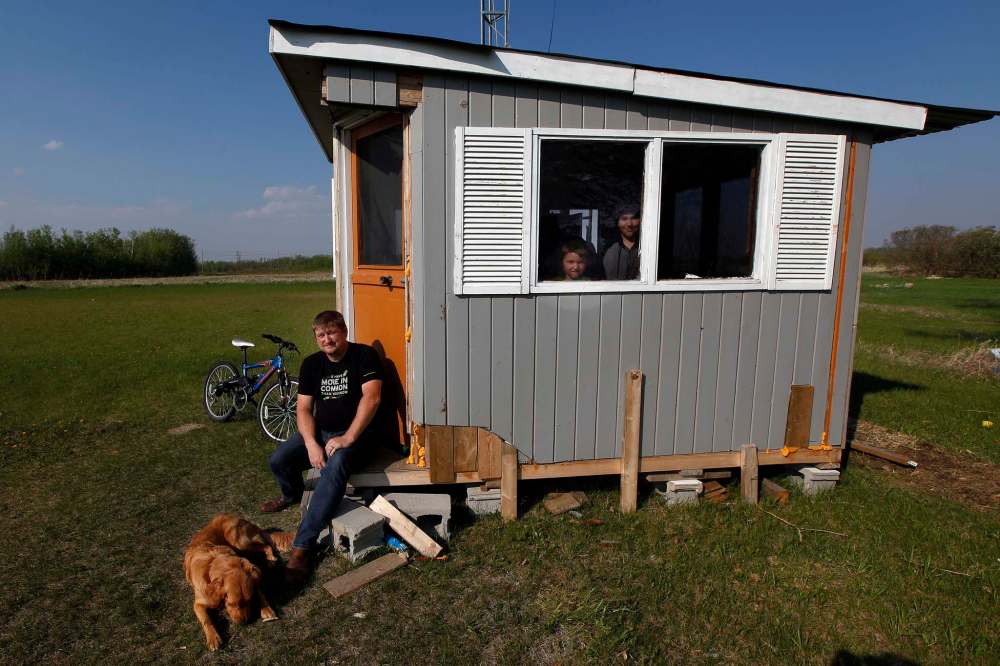
The following weekend, June 22 and 23, the club will host its summer field day at St. Vital Park.
“We’ll set up under total non-electrical power, and use solar generators for 24 hours to operate — the same way we would if there was a real emergency,” says Rubenfeld. “There are thousands of amateur radio operators right across North America doing it on that same day, many of whom we’ll be making contact with. It’s a test, yes, but at the same time, a whole lot of fun.” (Passersby will be able to put ham operators to the test; one station will host a challenge to see who’s faster: you sending a text by phone or a ham radio operator firing off a similar message via Morse code.)

Malowanchuk hopes getting ham radio operators out of their “ham shacks” and “into plain sight” with events such as the marathon and field day will help attract new — and by new he means younger — people to the hobby. While their club does include a couple of members in their 20s, the vast majority of ham radio operators in the city and province are retirees, he admits.
“That’s something else to consider about belonging to our club,” says Rubenfeld. “Because many of us are getting up there in age, whenever something bad happens, we tend to get involved, helping the widow disperse of her husband’s equipment and getting a reasonable return for it.”
Mind you, that sometimes leads to another dilemma, Fleury says, noting the hobby can definitely set you back a few bucks, depending how involved you want to get, and what it is you want to do.
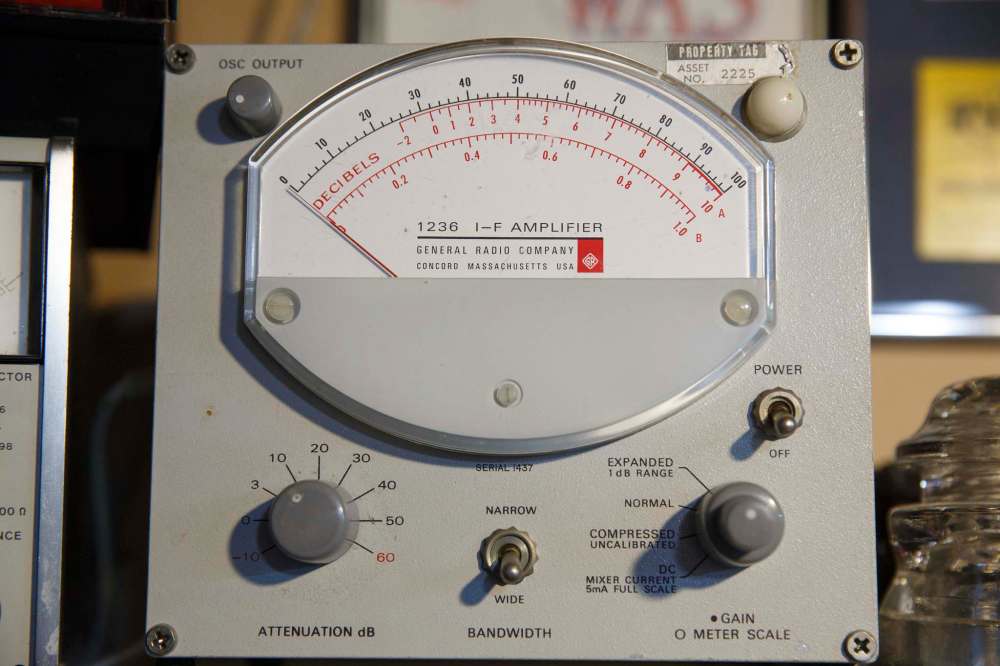
“Some guys’ worst fear is they’re going to die and their wife is going to sell their equipment for what he told her it’s worth.”
For more information about WARC’s Centennial Hamfest, including admission prices, go to http://www.winnipegarc.org.
Dave Sanderson was born in Regina but please, don’t hold that against him.
Our newsroom depends on a growing audience of readers to power our journalism. If you are not a paid reader, please consider becoming a subscriber.
Our newsroom depends on its audience of readers to power our journalism. Thank you for your support.