Headlines and health
What do the lessons weve learned from 2011 mean for the new year?
Advertisement
Read this article for free:
or
Already have an account? Log in here »
To continue reading, please subscribe:

Digital Subscription
One year of digital access for only $205*
- Enjoy unlimited reading on winnipegfreepress.com
- Read the E-Edition, our digital replica newspaper
- Access News Break, our award-winning app
- Play interactive puzzles
*First annual payment billed as $205.00 + GST for one year. This annual subscription will automatically renew at $233.00 + GST every 52 weeks (10% off the regular annual price of $259.35). Offer available to new and qualified returning subscribers only. Cancel any time.
To continue reading, please subscribe:
Add Free Press access to your Brandon Sun subscription for only an additional
$1 for the first 4 weeks*
- Enjoy unlimited reading on winnipegfreepress.com
- Read the E-Edition, our digital replica newspaper
- Access News Break, our award-winning app
- Play interactive puzzles
*Your next Brandon Sun subscription payment will increase by $1.00 and you will be charged $17.95 plus GST for four weeks. After four weeks, your payment will increase to $24.95 plus GST every four weeks.
Read unlimited articles for free today:
or
Already have an account? Log in here »
Hey there, time traveller!
This article was published 02/01/2012 (5358 days ago), so information in it may no longer be current.
From a pregnant runner giving birth just hours after completing the Chicago Marathon to the revelation that cellphones are as toxic as lead or chloroform, 2011 saw a plethora of mind-boggling health headlines.
Here are a few of my top health news stories from the past year and how those developments will affect us in 2012.
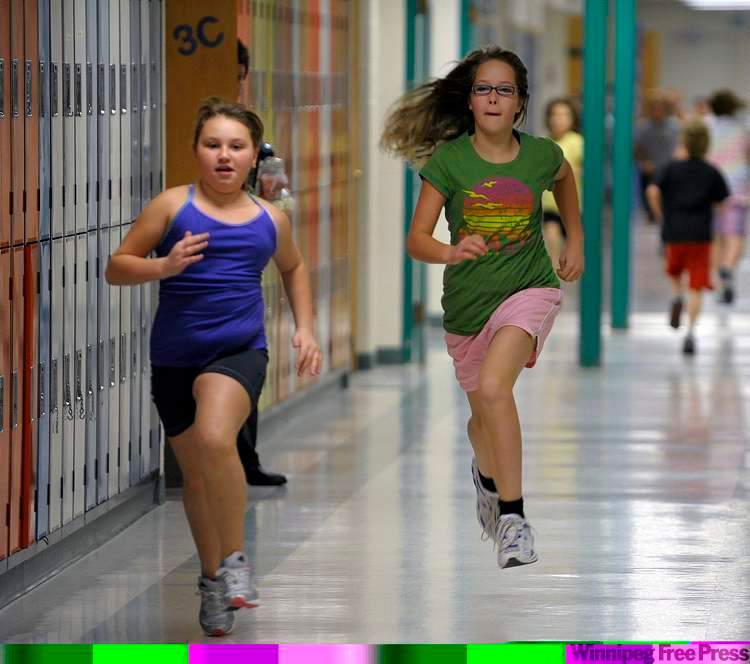
Story: Back in January, the Canadian Society for Exercise Physiology (CSEP) said kids need at least 60 minutes of exercise daily. Researchers weighed in and reminded Canadians that the recommended hour of activity should be vigorous — leaving exercising kids out of breath. A soccer game a couple of times a week doesnt cut it, said some exercise researchers, noting that kids arent necessarily constantly active, out of breath and sweating during an organized sports game.
What this means for 2012: Parents and educators will encourage kids to be more active. More exercise programs designed just for kids will pop up at fitness facilities in Winnipeg and elsewhere.
Story: In October, Amber Miller, 27, gave birth to a baby just hours after running the Chicago Marathon. (She actually ran half of the race and walked the other half.) The story made headlines across the globe as audiences were shocked and fascinated by Millers achievement. Media reports here in Canada highlighted that exercise during pregnancy is safe for most women — and even essential in a healthy pregnancy. While its true that decades ago doctors warned pregnant women to lay off exercise during pregnancy, they have now changed their position. For example, the Canadian Society for Exercise Physiology and the Society of Obstetricians and Gynaecologists of Canada encourage pregnant women with low-risk pregnancies to engage in cardio and strength training. Researchers note that exercise during pregnancy can prevent gestational diabetes and help keep mother and baby healthy.
What this means for 2012: Look for more prenatal exercise programs taught by fitness leaders especially trained in the area of exercise and pregnancy.
Story: In August, a Winnipeg boutique-owner tells the Free Press that she lost at least 50 pounds using the controversial HCG Diet and that she feels stronger and healthier than ever. The diet consists of prescription injections of the hormone human chorionic gonadotropin along with an initial 500-calorie-a-day diet, supervised by a local physician. Meanwhile, the HCG Diet was booming in the United States despite reports of adverse reactions and warnings that HCG can fuel some cancers. Health Canada told the Free Press that HGC has been approved for women undergoing fertility treatments and is not recommended for weight loss and may even cause “painful” ovarian cysts.
What this means for 2012: After several years of fairly tame fad diets, extreme dieting is back in the form of fasting and regimens such as the HGC diet. The lesson to be learned? Do your research and check with your physician before trying any extreme diet. Better yet, stick with a more sensible approach to eating.
Story: Last January, a group of Wildwood residents banded together to stop MTS from building a cellphone tower behind a community centre. Then in May, the Word Health Organization (WHO) classified cellphones as “possibly carcinogenic to humans,” saying that radiation from cellphones could, perhaps, cause cancer. The new classification put cellphones on the same WHO list as lead, exhaust and chloroform. Meanwhile, the mobile phone industry declared that cellphones do not cause cancer. They said that the WHO conclusion was based on a peer review of existing studies rather than on new research. (Researchers released results of the largest international study on cellphone use in 2010. That study found that people who used cell hones for a decade had twice the rate of a certain kind of brain tumour).
What this means for 2012: Consumers are more aware of the possible health effects of cellphone use and will use their speaker functions more often. The wireless industry will come out with more products (headsets and handsets) that promise to offer a “safer” cellphone.

Story: In January, National Hockey League superstar Sidney Crosby was forced off the ice after suffering a concussion — the result of two blows to the head. It was only in November that he returned to the game, after which he was sidelined again. In between that time, a slew of media reports have examined concussions and the detrimental effect they can have on hockey and football players brains.
What this means for 2012: Before Crosbys well-chronicled concussions, few people in hockey talked about head injuries in sport. Things will change in the upcoming year as hockey, football and other sports organizations crack down on preventing, detecting and treating head injuries.
Follow Shamona on Twitter: @ShamonaHarnett
Have an interesting idea youd like Shamona to write about? Contact her at shamona.harnett@freepress.mb.ca;