Even elite athletes sometimes feel depressed after completing a marathon
Advertisement
Read this article for free:
or
Already have an account? Log in here »
To continue reading, please subscribe:

Digital Subscription
One year of digital access for only $205*
- Enjoy unlimited reading on winnipegfreepress.com
- Read the E-Edition, our digital replica newspaper
- Access News Break, our award-winning app
- Play interactive puzzles
*First annual payment billed as $205.00 + GST for one year. This annual subscription will automatically renew at $233.00 + GST every 52 weeks (10% off the regular annual price of $259.35). Offer available to new and qualified returning subscribers only. Cancel any time.
To continue reading, please subscribe:
Add Free Press access to your Brandon Sun subscription for only an additional
$1 for the first 4 weeks*
- Enjoy unlimited reading on winnipegfreepress.com
- Read the E-Edition, our digital replica newspaper
- Access News Break, our award-winning app
- Play interactive puzzles
*Your next Brandon Sun subscription payment will increase by $1.00 and you will be charged $17.95 plus GST for four weeks. After four weeks, your payment will increase to $24.95 plus GST every four weeks.
Read unlimited articles for free today:
or
Already have an account? Log in here »
Hey there, time traveller!
This article was published 17/06/2013 (4838 days ago), so information in it may no longer be current.
While some Manitoba Marathoners are basking in the glow of victory today, the day after the big race, others may be feeling something else.
Shame, depression and disillusionment are often part of the post-marathon experience — especially if you hit a wall Sunday, endured a painful injury or just didn’t meet your time expectations.
“A lot of people are disappointed when they get numbers in their head as far as goals go,” says Erik Oland, a running coach who owns City Park Runners.
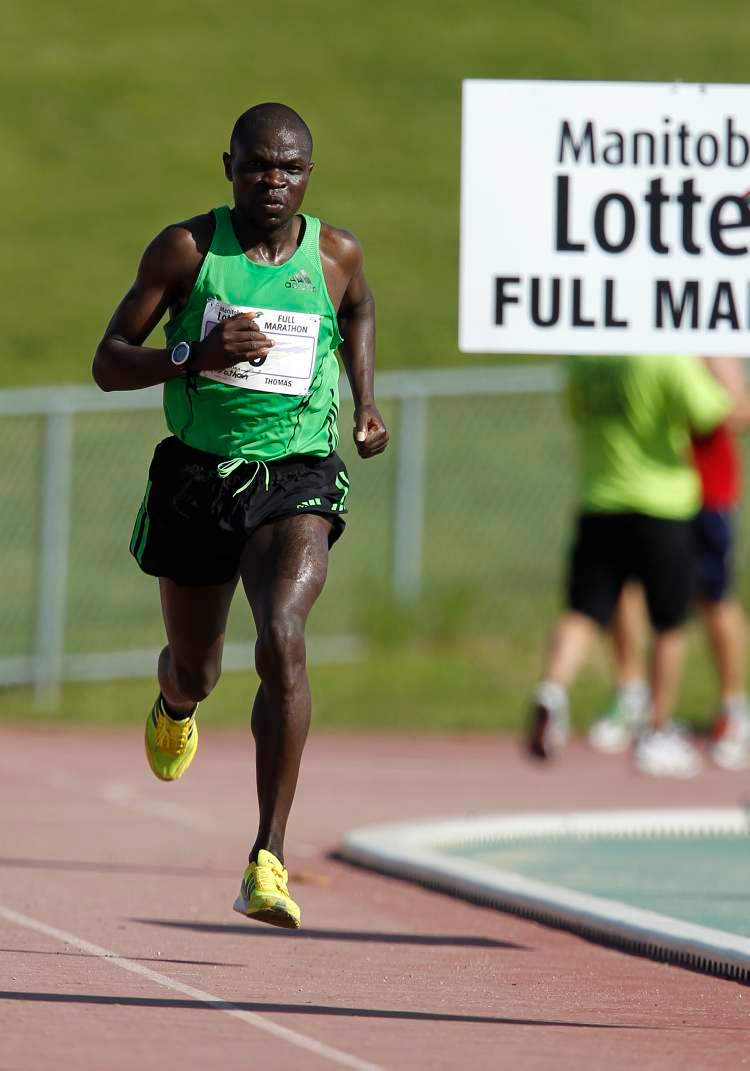
Feeling blue the morning after? You’re not alone, says Oland.
Read on to find out how three seasoned runners coped with their worst marathon experiences:
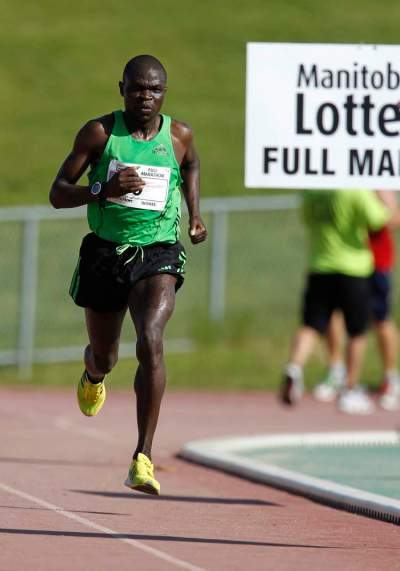
Thomas Omwenga,
last year’s Manitoba Marathon champion
Worst marathon experience: Vancouver Marathon, 2007
What happened: Omwenga — who had run nine marathons before the 2007 race — felt great when he left the start line. But when kilometre 27 hit, so did the dreaded feeling that something was wrong.
“I started to feel tired, hungry. I felt thirsty,” says Omwenga, who runs to support his family in his small village in Kenya. During the race, he considered stopping, but decided against it. When he finally made it across the finish line at a winning time of 2:25:27, he says he couldn’t walk or talk. He knew he was seriously dehydrated — and lucky not to have collapsed.
“I was totally tired and dizzy.” He says race volunteers saw he was in trouble and brought him water, watermelon and a banana to get his energy levels back up.
How he coped: Omwenga says he’s never hard on himself after his marathon mishaps. Rather, he looks each mistake — such as the fact he didn’t consume enough water during the 2007 Vancouver race — as a valuable lesson. “I wasn’t angry. I learned a lesson from experience not to repeat it again,” he says.
What he learned: Drink enough water the night before a race and obviously on race day. He’s also learned to make sure he consumes enough water after the race — often in the form of water-packed fruit. He says eating two or three bananas also boosts his energy. (Bananas contain electrolytes, which replace the valuable minerals lost during a marathon. These also ease symptoms of dehydration.)
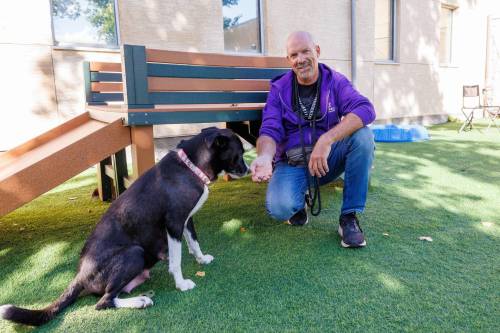
Erik Oland,
running coach and owner of City Park Runners
Worst marathon experience: Victoria Marathon, 2010
What happened: “I’ve only done a few. My worst one, believe it or not, was still my PB (personal best). I never hit the wall like that before. It was right around the 30-kilometre mark,” says Oland, who has run numerous half-marathons, but only three fulls. “It really started playing with my mind. All these negative feelings were creeping into my head about how I couldn’t handle the pain. I had some knee problems. And my back was starting to bug me. I couldn’t get my mind away from it. I thought, ‘Why am I doing this?’ And there’s people who you think shouldn’t be passing you that are. Talking away. Happy. People in good moods put you really in a worse mood. Little things get at you,” recalls Oland.
How he coped: The morning after, Oland admits he had the blues. “I was feeling I had enough of marathons. ‘I have no reason do those again,’ I told myself.”
What he learned: Oland, an elite cyclist who has experienced his share of athletic hurdles, says his more recent sport of choice is different. “With cycling, you can just glide. You don’t have to pedal. With running, you have to continue and carry your own body weight. You feel like you weigh 400 pounds when you hit the wall.” He’s learned that feeling heavy during the race is part of the game. He wants others to know that the negativity they may feel after a marathon doesn’t last. “Certainly that feeling goes away,” says Oland, who plans to run in the Twin Cities Marathon in October.
Len Rolfson,
retired provincial government employee who has run in every Manitoba Marathon. Sunday’s race marked his 100th marathon.
Worst marathon experience: Austin Marathon, 2013
What happened: Rolfson was determined to run enough marathons over the past year-and-a-half — about one marathon a month — to make sure that this year’s Manitoba Marathon was his 100th. “My body was paying the price,” says Rolfson, who completed the Austin race in about five-and-a-half hours. That was a big difference from the 3:30 and four-hour times he had achieved in the past.
How he coped: Rolfson admits he felt embarrassed for a week or so after the marathon — ashamed of the result. He got over it quickly, though. His method? “To put it bluntly for myself — just suck it up and move on.”
What he learned: Don’t blow a marathon mishap out of proportion. Only he pays attention to his running time; friends and family aren’t concerned with those details. Also: spend time in the days after the marathon gently stretching and doing activities other than running. This gives the body a chance to rest and works out other muscles you may not usually use.
Have an interesting story you’d like Shamona to write about? Contact her at shamona.harnett@freepress.mb.ca.


Advertisement Advertise With Us
Advertisement Advertise With Us
History
Updated on Monday, June 17, 2013 6:51 AM CDT: replaces photo, changes headline, formats text, removes gibberish characters