Experts from across North America gather in city for professional conference on diabetes
Advertisement
Read this article for free:
or
Already have an account? Log in here »
To continue reading, please subscribe:

Digital Subscription
One year of digital access for only $205*
- Enjoy unlimited reading on winnipegfreepress.com
- Read the E-Edition, our digital replica newspaper
- Access News Break, our award-winning app
- Play interactive puzzles
*First annual payment billed as $205.00 + GST for one year. This annual subscription will automatically renew at $233.00 + GST every 52 weeks (10% off the regular annual price of $259.35). Offer available to new and qualified returning subscribers only. Cancel any time.
To continue reading, please subscribe:
Add Free Press access to your Brandon Sun subscription for only an additional
$1 for the first 4 weeks*
- Enjoy unlimited reading on winnipegfreepress.com
- Read the E-Edition, our digital replica newspaper
- Access News Break, our award-winning app
- Play interactive puzzles
*Your next Brandon Sun subscription payment will increase by $1.00 and you will be charged $17.95 plus GST for four weeks. After four weeks, your payment will increase to $24.95 plus GST every four weeks.
Read unlimited articles for free today:
or
Already have an account? Log in here »
Hey there, time traveller!
This article was published 20/10/2014 (4335 days ago), so information in it may no longer be current.
Insulin-producing stem cells that reverse Type 1 diabetes.
Gut bacteria that control blood-sugar levels.
Prenatal clues about why certain people are more likely to develop diabetes over others.
New types of insulin that could decrease diabetes-related complications.
More than 1,500 diabetes experts from around North America will be in Winnipeg this week to hear about such breakthroughs in diabetes research and treatment.
It’s all part of the Canadian Diabetes Association/Canadian Society of Endocrinology and Metabolism professional conference and annual meetings at the RBC Convention Centre, from Wednesday to Friday. It’s the first time the conference has come to Winnipeg since its inception 17 years ago.
The CDA’s chief science officer, Dr. Jan Hux, says it’s about time the conference arrived in the city, considering some of the world’s top diabetes researchers work here. Such researchers include renowned pediatric endocrinologist Dr. Heather Dean.
“Her work in documenting and then studying the early emergence of Type 2 diabetes in children has been groundbreaking,” says Hux, who’s based in Toronto.
In the 1980s, Dean was one of the first doctors in North America to discover Type 2 diabetes in kids. Before then, it was considered an adult disease.
“She has certainly been a leader and has put Canada and Winnipeg on the map because of that leadership.”
Diabetes is a condition caused by a lack of insulin, a vital hormone produced in the pancreas that helps the body metabolize carbohydrates, a macronutrient in foods such as grains, fruits and vegetables.
More than nine million people have diabetes, according to the CDA.
Most have Type 2 diabetes, which is linked to excess body weight and a high-carbohydrate diet. In these cases, the disease can often be controlled by diet and exercise, since the pancreas still produces insulin. Children can also develop Type 2 diabetes, a relatively new phenomenon.
Type 1 diabetes, on the other hand, is an autoimmune condition in which patients do not produce any insulin and require daily injections or an insulin pump to survive. About 10 per cent of all cases of diabetes in Canada are Type 1. Most are diagnosed as children or young adults.
All people with diabetes must practise strict blood-sugar control in order to prevent vascular complications such as heart disease, kidney problems, blindness and limb amputations.
Dean says the conference is unlikely to dramatically change how doctors advise and treat patients with diabetes. “But there will be many ‘a-ha’ moments for diabetes health professionals,” says Dean, who will speak about the three decades since she discovered Type 2 diabetes in children.
“The first decade was a decade of skepticism. People didn’t believe us that we were seeing children with Type 2 diabetes,” she says, noting that today there is intense global interest surrounding the reasons why kids are developing Type 2 diabetes.
Approximately 300 children from the Manitoba region have Type 2 diabetes, says Dean, whose clinic sees all of the diagnosed pediatric diabetes cases in Manitoba and northwestern Ontario.
Manitoba’s pediatric Type 2 cases are at least 10 times greater than anywhere else in the country, and the highest in North America, she says.
Dean says it’s more than just about diet and exercise.
“Breastfed babies have different bacteria in their gut, so the gut microbiome may have an impact on your risk of Type 2 diabetes, says Dean, noting that breastfed babies seem to be less obese.
Hamilton biochemist Jonathan Schertzer will present his findings about how certain gut bacteria can lead to inflammation and so-called pre-diabetes.
“One of the key things that happens during obesity is that your body has an increased level of inflammation in various parts… the fat tissue, the liver tissue, the pancreas — all the tissues that are involved in diabetes. What we’re really interested in is the trigger for that inflammation,” says Schertzer, an assistant professor at McMaster University.
Exercise science will also take the stage at this week’s conference.
Jonathan McGavock, a Winnipeg exercise physiologist who specializes in how exercise affects Type 2 diabetes, will talk about his work using the psychologically based “Circle of Courage” model to help kids with Type 2 diabetes find the motivation to exercise.
He says many of Manitoba’s Type 2 diabetes patients are economically disadvantaged, aboriginal and without a strong support system.
“So before you start talking about trying to increase the number of steps you get a day or trying to reduce your sugar intake, it’s more important to sit down and say, ‘Do you have a group that you belong to that you feel comfortable with that you can talk about your problems with?'”
McGavock says the Circle of Courage model has been shown to increase self-esteem and decrease waist circumference in the kids he’s worked with.
While most of the conference is designed for doctors, researchers and diabetes educators, the public is invited to a forum on Saturday to ask experts questions and hear talks about diabetes care, says Lori Berard, a nurse educator and conference co-chair.
Dr. Vincent Woo, a Winnipeg endocrinologist and diabetes researcher, will receive the CDA’s Gerald. S. Wong Service Award for his contribution to the diabetes community.
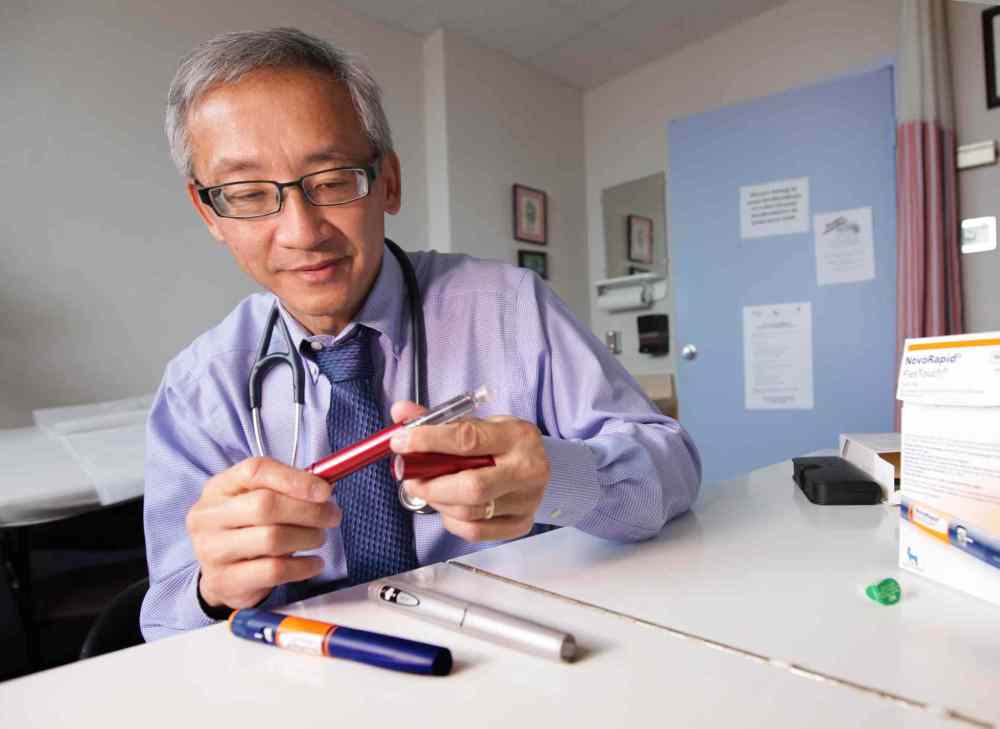
Woo, who has published more than 100 journal articles on diabetes, will also speak about what’s new in diabetes care, including some of the latest types of insulin in development.
Woo says oral and inhaled insulins could become a reality. Currently, the only way to take insulin is through injections.

Other new advances include new injectable insulins that offer patients more flexibility so that if they miss a dose, their overall blood sugars will remain stable.
“In the long term, you just want better control for longer, so it would be an improvement in quality of life with less complications,” says Woo.
For more information about the conference, call the Canadian Diabetes Association, Manitoba chapter at 204-925-3800 or visit diabetes.ca online.
Have an interesting story idea you’d like Shamona to write about? Contact her at shamona.harnett@freepress.mb.ca.
History
Updated on Monday, October 20, 2014 6:53 AM CDT: Replaces photo, changes headline
Updated on Monday, October 20, 2014 11:29 AM CDT: Corrects reference to Circle of Courage