Heartburn pills may increase infection risk
Advertisement
Read this article for free:
or
Already have an account? Log in here »
To continue reading, please subscribe:

Digital Subscription
One year of digital access for only $205*
- Enjoy unlimited reading on winnipegfreepress.com
- Read the E-Edition, our digital replica newspaper
- Access News Break, our award-winning app
- Play interactive puzzles
*First annual payment billed as $205.00 + GST for one year. This annual subscription will automatically renew at $233.00 + GST every 52 weeks (10% off the regular annual price of $259.35). Offer available to new and qualified returning subscribers only. Cancel any time.
To continue reading, please subscribe:
Add Free Press access to your Brandon Sun subscription for only an additional
$1 for the first 4 weeks*
- Enjoy unlimited reading on winnipegfreepress.com
- Read the E-Edition, our digital replica newspaper
- Access News Break, our award-winning app
- Play interactive puzzles
*Your next Brandon Sun subscription payment will increase by $1.00 and you will be charged $17.95 plus GST for four weeks. After four weeks, your payment will increase to $24.95 plus GST every four weeks.
Read unlimited articles for free today:
or
Already have an account? Log in here »
Hey there, time traveller!
This article was published 17/04/2017 (3429 days ago), so information in it may no longer be current.
The pills you take to control heartburn and suppress stomach acid may be linked to increased risk of a serious gut infection. A study published late last month in JAMA Internal Medicine reports that people who take commonly used prescription and over-the-counter indigestion medicines such as Prilosec and Zantac are at risk of repeat infection with the bacteria Clostridium difficile.
C. difficile can cause swelling of the colon. Symptoms range from mild diarrhea lasting a few days to life-threatening bleeding and leaking of the gut.
Previous studies have shown that one class of medicines known as proton pump inhibitors, which are used to suppress stomach acid, can increase risk of a first episode of C. difficile infection.
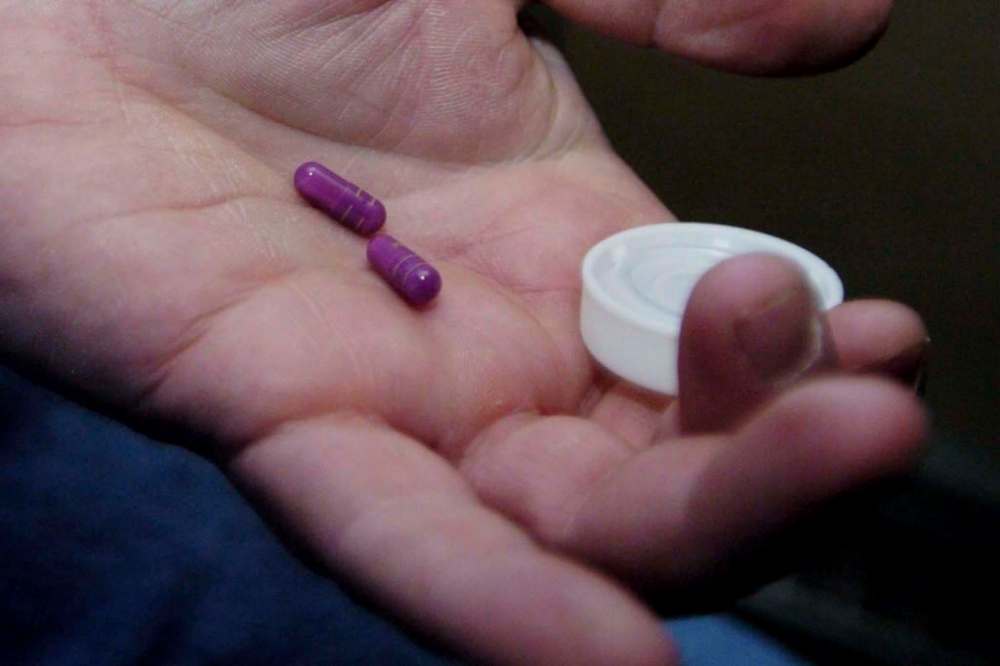
Proton pump inhibitors include medicines such as Prevacid, Prilosec and Nexium.
The new study adds that another class of indigestion medicines called H2 blockers can also increase risk of infection with C. difficile. H2 blockers include Pepcid, Zantac and Tagamet.
Researchers at the Mayo Clinic in Rochester, Minn., analyzed data from 16 older studies that included 7,703 patients with C. difficile. Of these, about one in five patients suffered recurrent infection.
They found that the rate of recurrent C. difficile infection was 22.1 per cent among people taking medicines to suppress gastric acid. The rate of recurrent C. difficile infection was 17.3 per cent in people not taking those medicines.
This doesn’t mean that you should stop taking medicines to treat heartburn and reflux.
There are some important caveats of the new study to consider, including the fact that the researchers didn’t take into account exactly why patients were using proton pump inhibitors and H2 blockers in the first place. That underlying pathology, if investigated, could turn out to be the link to recurrent C. difficile infection.
The type of study conducted is called a meta-analysis. While powerful in its ability to combine data from thousands of patients across many studies, meta-analyses lump together findings, and the final conclusions sometimes miss important differences in the individual studies.
In this case, the findings show that it might be worth stopping treatment with PPIs and H2 blockers in patients suffering or at high risk of C. difficile.

Rates of the infection have skyrocketed over the past decade and are linked to the overuse of antibiotics, which disrupt the balance of good and bad bacteria.
In the U.S., C. difficile caused half a million infections in 2011, according to the Centers for Disease Control and Prevention. That year, 29,000 people died of C. difficile within the first month of their diagnosis.
Older studies have shown links between PPIs and the risk of pneumonia in ICU patients. One study published earlier this year found an increased risk of heart failure in patients with coronary artery disease. Again, there were important caveats in that study, including the fact that patients who were taking a PPI were older.
This new study highlights that there are risks associated with the seemingly most benign pills. It’s always worth evaluating your medicines with your doctor and ditching the unnecessary pills.
— Dallas Morning News