deep breathing
These poses will get you ready to exhale
Advertisement
Read this article for free:
or
Already have an account? Log in here »
To continue reading, please subscribe:
Monthly Digital Subscription
$1 per week for 24 weeks*
- Enjoy unlimited reading on winnipegfreepress.com
- Read the E-Edition, our digital replica newspaper
- Access News Break, our award-winning app
- Play interactive puzzles
*Billed as $4.00 plus GST every four weeks. After 24 weeks, price increases to the regular rate of $19.95 plus GST every four weeks. Offer available to new and qualified returning subscribers only. Cancel any time.
Monthly Digital Subscription
$4.99/week*
- Enjoy unlimited reading on winnipegfreepress.com
- Read the E-Edition, our digital replica newspaper
- Access News Break, our award-winning app
- Play interactive puzzles
*Billed as $19.95 plus GST every four weeks. Cancel any time.
To continue reading, please subscribe:
Add Free Press access to your Brandon Sun subscription for only an additional
$1 for the first 4 weeks*
*Your next subscription payment will increase by $1.00 and you will be charged $16.99 plus GST for four weeks. After four weeks, your payment will increase to $23.99 plus GST every four weeks.
Read unlimited articles for free today:
or
Already have an account? Log in here »
Hey there, time traveller!
This article was published 22/07/2017 (3208 days ago), so information in it may no longer be current.
All yoga asanas (poses) are intended to be practised with sthira (steadiness) and sukha (ease) because these qualities of being are primary health indicators. One of the foremost means of bringing about sthira and sukha in our bodies, minds and spirits is to focus our awareness on our breath.
Initially, it is helpful to merely watch your breath enter and exit from the tips of your nostrils. In this way, you become aware of the qualities of your breath on a day-to-day basis and familiar with how your daily interactions and experiences alter your breath’s rhythm, speed and depth.
With ongoing practise in breath awareness, you can begin to identify when you are reacting negatively to emerging circumstances as your breath is likely to sharpen, shorten and become more shallow or you may even hold your breath. In these moments, you can bring steadiness and ease back into your being by returning to a deeper, gentler breath pattern. The steadiness and ease gained from regulating your breath in this fashion also allow you increased understanding and, thus, a more positive response to whatever discomfort was initially registering within you.
The shoulderstand sequence illustrated will also aid you in becoming more familiar with your breath pattern and provide the opportunity for you to regulate it.
In each pose, use the outlined breath actions to help you find the two essential qualities of steadiness and ease. You may also discover why shoulderstand is referred to the as “mother” of all asanas. When practised safely, wisely and with mindful breathing, it creates harmony and happiness in all the body’s systems.
Because of shoulderstand’s holistic benefits, this full-body pose can be practised every day as long as there is no strain on the neck, jaw, ears, eyes and shoulders. If you experience strain or have an injured neck or shoulders, back away from the deeper expressions of shoulderstand and practise the modified variations instead — half shoulderstand, supported shoulderstand, Viparita Karani. Remember, your breath will tell you whether any of the poses are too challenging for you. The more shallow and sharper your breath is, the further away from steadiness and ease you are. If this is the case, back off from how deeply you are in the pose until you are able to steady and ease your breathing.
Action: As you inhale, feel your lungs fill evenly, front and back; as you exhale, extend out through your arms and legs. For more advanced practitioners, as you exhale, lengthen from behind your breastbone in two directions — up and out through your arms and down and out through your legs.
Shoulder opener as prep for SARVANGASANA (Prep for shoulderstand)
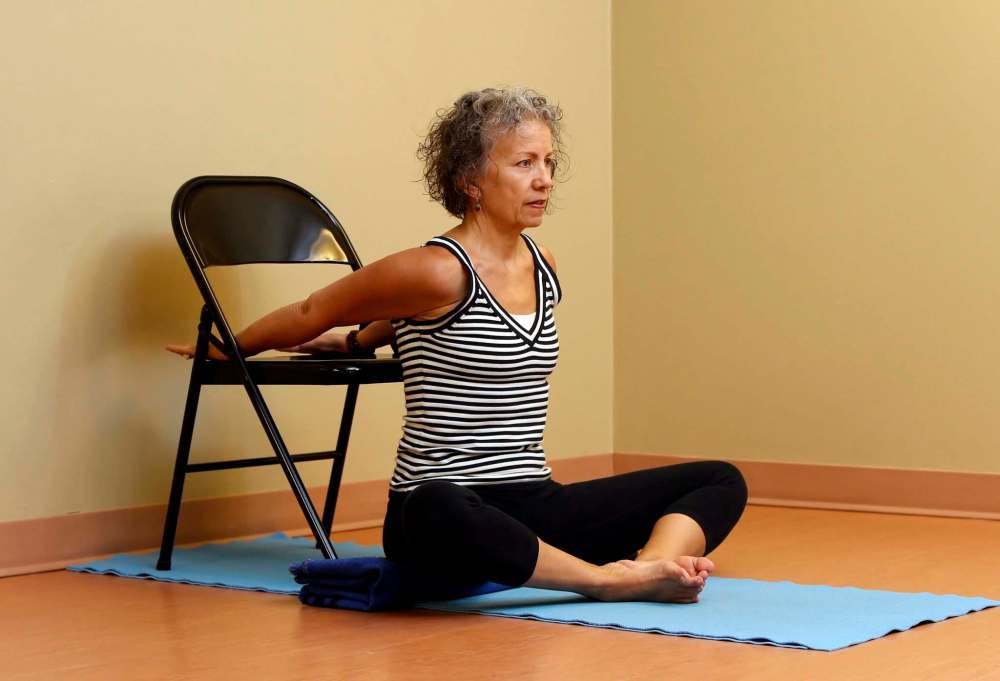
Sit in front of a chair on as much height as you need to comfortably bring the back of your wrists onto the chair seat without rounding your spine. Keep the top of your shoulders relaxing away from your ears, and the head of your humerus bone in its shoulder socket. Stay for 10 to 15 breaths finding the action with each breath. If you are more advanced in your practice, stay for two to three minutes, finding the actions with each breath.
SARVANGASANA Variation (Shoulderstand pose variation)
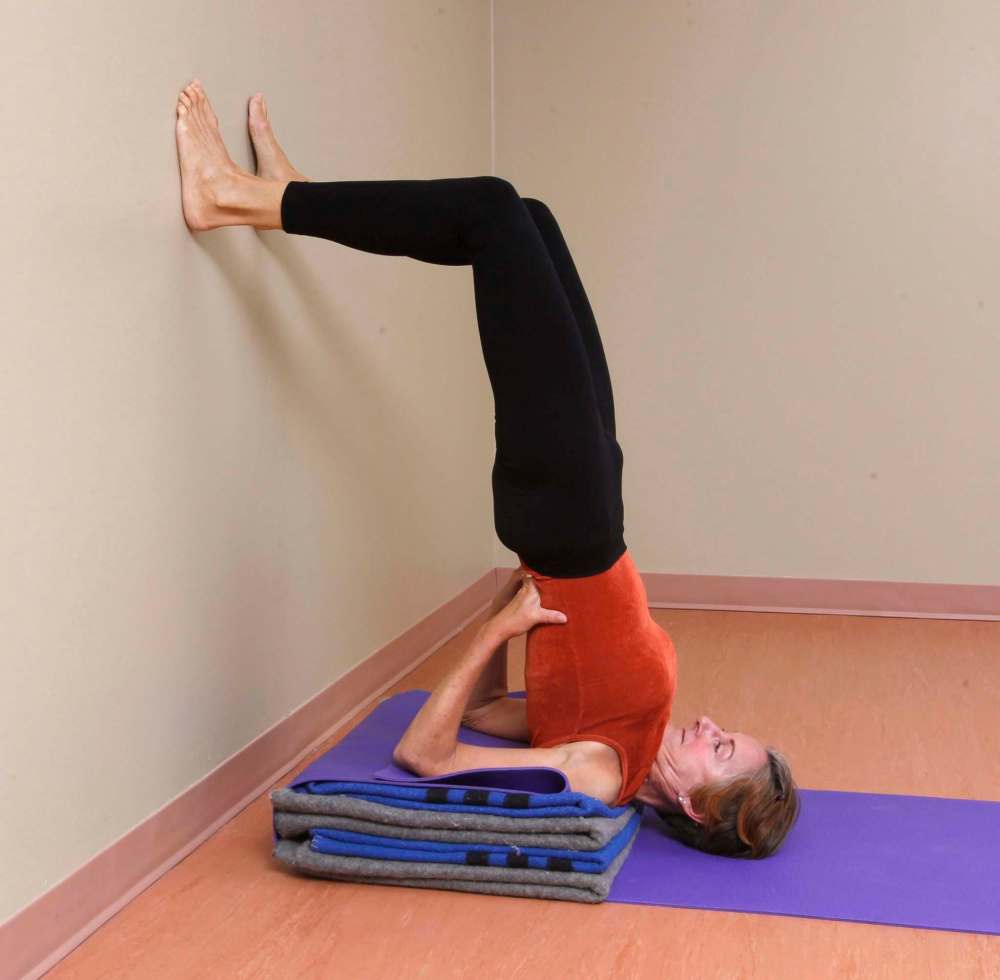
Using one to four blankets, stacked as shown, place an end of your mat on top. From a sitting position, lie with your shoulders on the edge of the blankets. Lift your pelvis and place your hands into your back body for support. Your body weight will rest on your upper arms and elbows. If your elbows splay outward when you begin to lift up, place a belt around your upper arms just above the elbows. With your feet into the wall, walk your legs up the wall until your ankles and knees align. If you find it difficult to lift your hips, set up a little farther away from the wall. Begin with five to 10 repetitions in synchronicity with the breath — lift into the pose on the exhale and lower your hips on the inhale. On the final rep, stay in the pose for 10 to 15 more breaths finding the action with each breath. Again, if you are more advanced in your practice, stay for one to three minutes, finding the actions with each breath.
ARDHA SARVANGASANA (Half-shoulderstand pose)
Using one to four blankets, stacked as shown (blanket under your head is optional), place an end of your mat on top. Sit in front of the blankets and then lie back with your shoulders on the edge of the blankets. Bend your knees, draw your legs toward your chest and place your hands into your back body. With your toe mounds into the wall, straighten your legs up the wall. Stay in the pose for 10 to 15 breaths, finding the action with each breath. For more advanced practitioners, stay for one to three minutes, finding the actions with each breath.
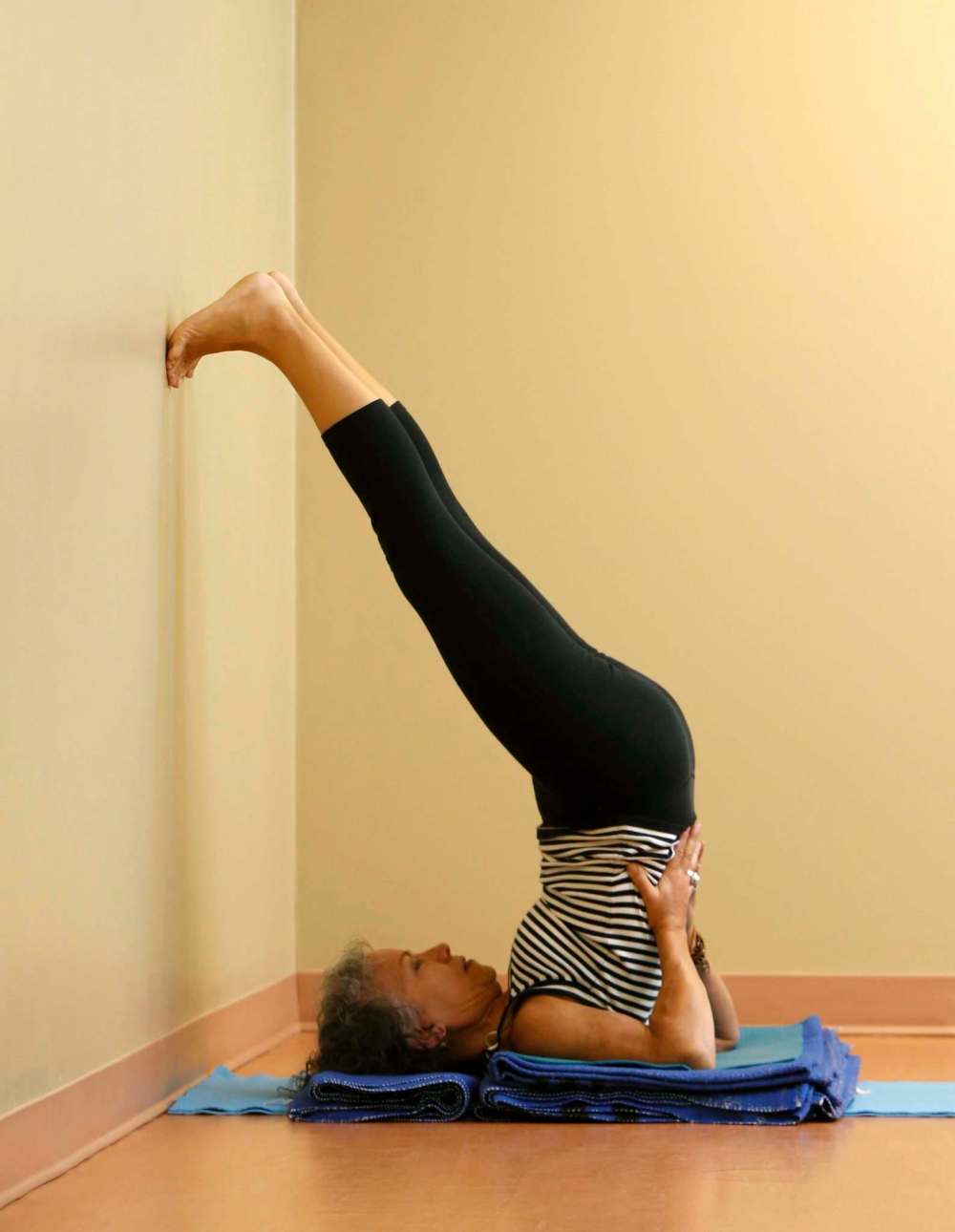
SARVANGASANA (Shoulderstand pose)
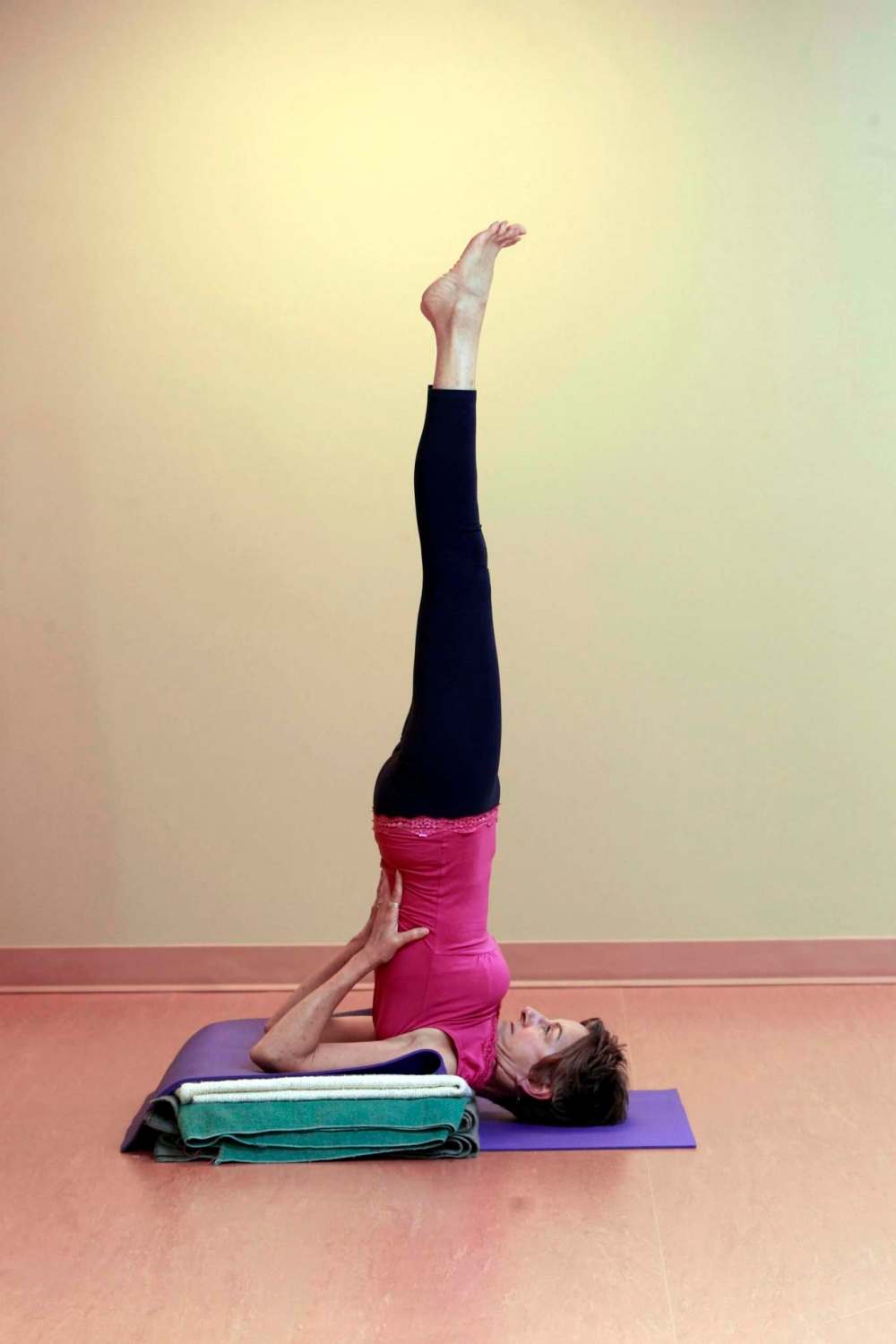
Using one to four blankets stacked as shown, place an end of your mat on top. Sit in front of the blankets and lie back with your shoulders on the edge of the blankets. Bend your knees and draw your legs in. Place your hands into your back body for support and then straighten your legs upward, aligning your ankles over your shoulders. Stay in the pose for 10 to 15 breaths, finding the action with each breath. More advanced yogis can work toward one to three minutes.

SALAMBA SARVANGASANA (Supported shoulderstand)
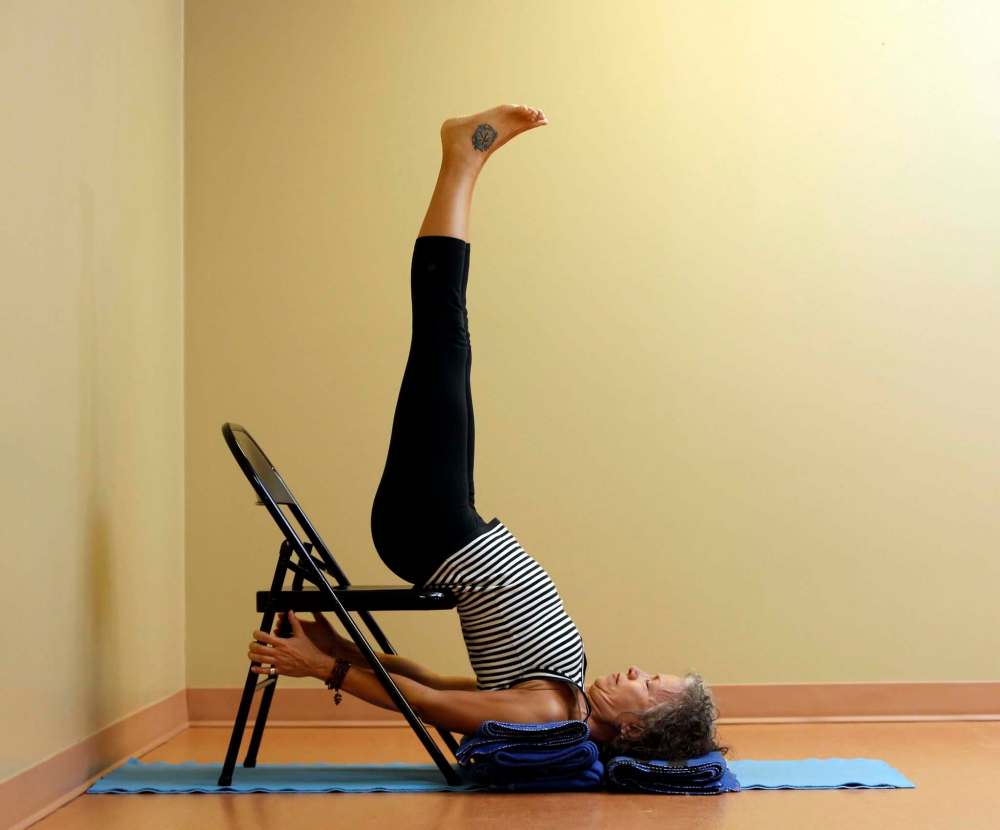
Double-fold two to three blankets and place them in front of the chair legs. Double fold one blanket for your head. Start by sitting sideways on the chair seat; hold onto the chair as you swing your legs over the chair back. Bend your knees to hold you on the chair. Gradually move your pelvis toward the front of the chair seat and lower your shoulders onto the blankets. Once there, change the position of your hands to hold the back legs of the chair. Now lift your legs up. Hold for 15 to 20 breaths, finding the action with each breath. More advanced yogis can work toward one to three minutes.
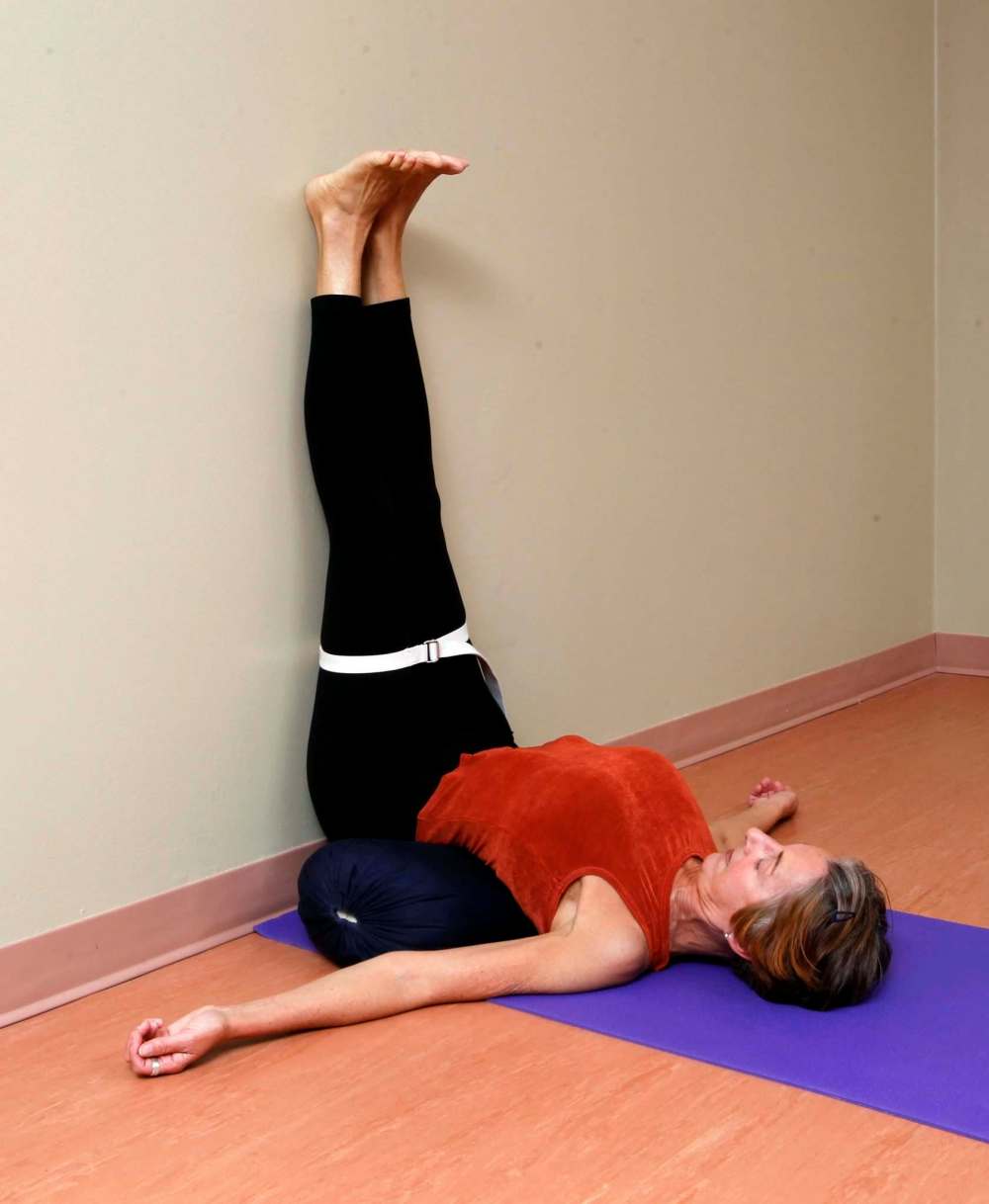
VIPARITA KARANI (Legs Up Wall pose)
This is a wonderful alternative to shoulderstand. Begin by sitting on one end of a bolster or stacked blankets with your pelvis sideways to the wall. Lower the side of your torso toward the floor, keeping it perpendicular to the wall. Once your torso is in contact with your mat, roll onto your back and lift your legs up the wall. Belt your legs either before getting in or once there. Stay for three to five minutes. Release the actions, but keep your focus on your breath.
Winnipeggers Helen Maupin (righttojoy.com) and Candace Propp (natureofcontentment.ca) are 500-hour certified yoga teachers and authors of the Creating Space: Yoga Actions book series. To purchase these print or ebooks, visit their websites. For yoga teacher training with them and Stacy Schroder, go to sereneyogastudio.com.