Unlocking Alzheimer’s code
Israeli neuroscientist in city to talk about breaking new ground in understanding neuro-degenerative disease
Advertisement
Read this article for free:
or
Already have an account? Log in here »
To continue reading, please subscribe:

Digital Subscription
One year of digital access for only $205*
- Enjoy unlimited reading on winnipegfreepress.com
- Read the E-Edition, our digital replica newspaper
- Access News Break, our award-winning app
- Play interactive puzzles
*First annual payment billed as $205.00 + GST for one year. This annual subscription will automatically renew at $233.00 + GST every 52 weeks (10% off the regular annual price of $259.35). Offer available to new and qualified returning subscribers only. Cancel any time.
To continue reading, please subscribe:
Add Free Press access to your Brandon Sun subscription for only an additional
$1 for the first 4 weeks*
- Enjoy unlimited reading on winnipegfreepress.com
- Read the E-Edition, our digital replica newspaper
- Access News Break, our award-winning app
- Play interactive puzzles
*Your next Brandon Sun subscription payment will increase by $1.00 and you will be charged $17.95 plus GST for four weeks. After four weeks, your payment will increase to $24.95 plus GST every four weeks.
Read unlimited articles for free today:
or
Already have an account? Log in here »
Hey there, time traveller!
This article was published 06/06/2018 (2965 days ago), so information in it may no longer be current.
Every second of every day, your brain is getting damaged.
More specifically the genetic makeup — the DNA — inside the brain cells that control your bodily functions, thoughts, speech and just about everything else you can think of are under perpetual bombardment from external and internal forces.
And research by a leading neuroscientist out of Israel suggests that it’s this unending onslaught that ultimately leads to neuro-degeneration as we age, and the many diseases that can arise as a result, including Alzheimer’s.
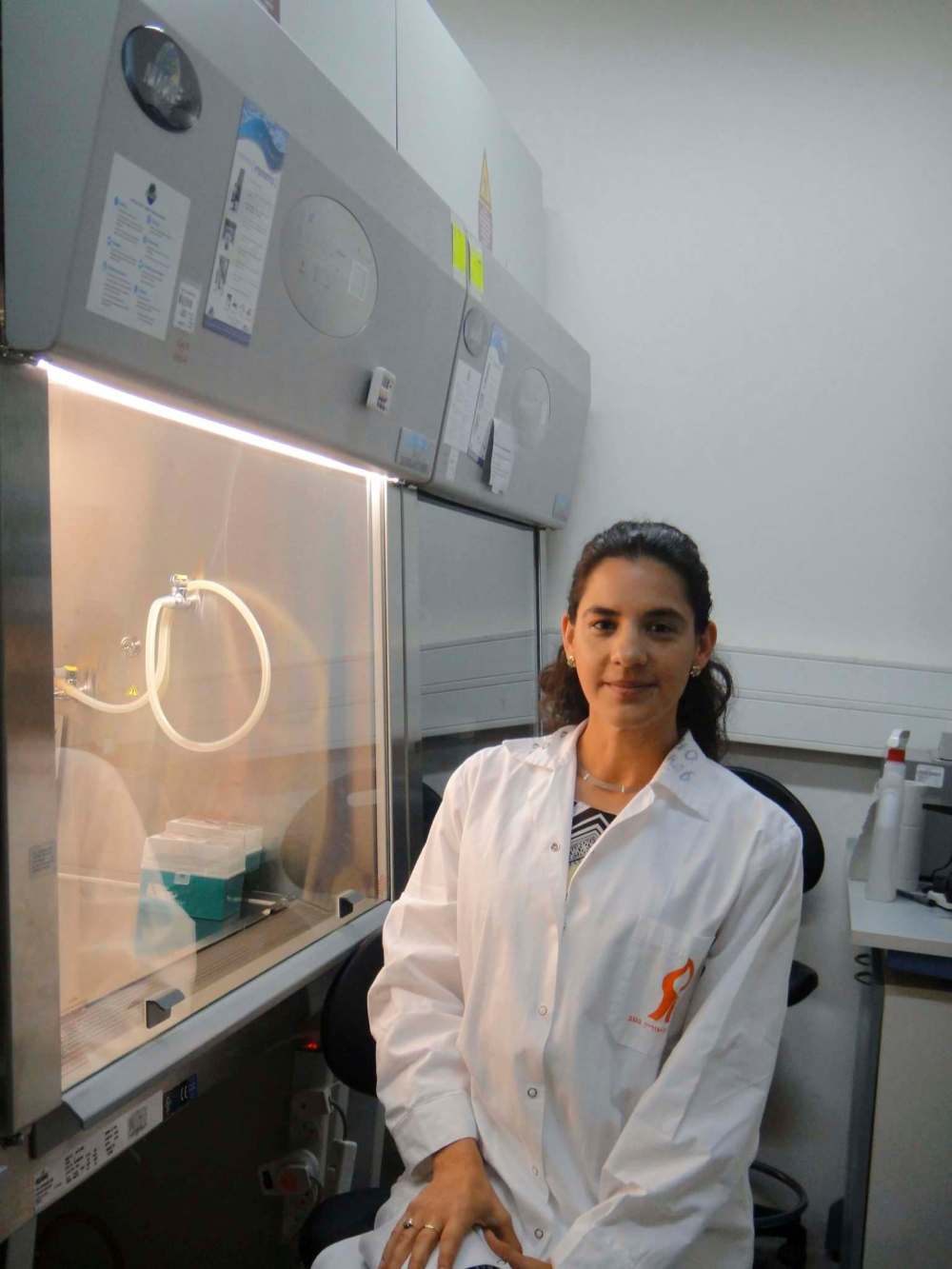
“Our focus is aging because we see that 95 per cent of the people that get Alzheimer’s disease and neuro-degeneration are older people; therefore we try to understand what is happening at the molecular level as we age that is different and can lead to disease,” says Dr. Deborah Toiber, senior lecturer and scientist at the department of life sciences at Ben-Gurion University of the Negev.
“Particularly one of the main causes of aging is DNA damage and (its) accumulation.”
Toiber is in Winnipeg this week to discuss her research, offering insights into the brain, aging and neurodegenerative disease, at an event hosted by Jewish Child and Family Service, Winnipeg Jewish Business Council and the Canadian Associates of Ben-Gurion University of the Negev. (See fact box for details).
“We regularly bring in keynote speakers from the university to share their findings with the public,” says Zach Ostrove, executive director of the Manitoba chapter of the fundraising organization for the Israeli university.
He adds Toiber’s work is particularly interesting given neurological, age-related illness touches the lives of so many Manitobans.
Moreover it’s an opportunity for the public to get up to speed “on all the work done around the world — especially in Israel — to further medical research into neurodegenerative diseases.”
If you can’t make the lecture today, don’t fret. Toiber spoke with the Free Press late last month about her research, focused on the fast-growing field of epigenetics, to understand the causes of neuro-degenerative disease and, more importantly, to develop a treatment for Alzheimer’s, for which there is no effective medication available.
“Everybody knows that our DNA is our genetic code,” Toiber says.
This blueprint is found in every cell in our body, but how parts of it are expressed — which genes are activated, and which ones aren’t — determines a cell’s function.
“This is one of the functions of the epigenetic code.”
For example, epigenetic coding for a neuron in your brain involves different genes being activated and silenced than those switched on or off in a cell in your intestines.
Yet the epigenetic code is also flexible and can be modified to alter the function of a cell.
Toiber says her work focuses on epigenetics’ role regarding DNA repair in a neuron, and how it can be manipulated.
Neurons are highly specialized and, unlike most other cells, cannot divide and replenish themselves as they become damaged over time, she adds.
But they also have the ability to repair damaged DNA. The problem is that, with age, this mechanism works less and less, until it doesn’t. Damage accumulates and eventually damaged neurons die off.
“This also leads to the formation of pathological markers we see in Alzheimer’s disease and other neurological diseases.”
These markers are deformed tau proteins, which normally support the neuron’s role transmitting signals to other neurons. As DNA damage builds up, so too do these defective proteins.
Over time, the malformed tau proteins develop into neurofibrillary tangles, causing the neuron to malfunction, wither and die. The presence of these tangles is now widely considered the essential hallmark of most Alzheimer cases, “along with 17 other neurological diseases,” Toiber says.
Previous to this discovery (which Toiber did not make), researchers believed the presence of beta-amyloid plaques — a buildup of another protein — was thought to be the key marker of Alzheimer’s disease, and hence a target for potential drug therapies.
“But if you analyze the brains of people with Alzheimer and without Alzheimer, you will not see any correlation between the disease and the plaques,” she says.
“A brain can be completely full of them and that person is healthy, and the brain can be empty of them, and that person has Alzheimer.”
The reason amyloid plaques had long been suspected as an indicator of disease was that they were consistently present in people with a hereditary predisposition for early onset Alzheimer.
But about 19 out of every 20 cases are sporadic with no familial link. “We don’t know what is causing the disease, but one of the things we’re investigating is DNA damage accumulation as the cause.”
So far, her research on brain tissue has revealed that an enzyme — Sirt6 — repairs damage to DNA. Moreover, the Toiber Lab’s work on mice and flies has shown a lack of this enzyme leads to neurodegeneration.
“That gives you hope,” Toiber says, adding that if the effects are the same in flies and mice, which are obviously very different organisms, then it is possible the system works the same way in humans, which are more similar to mice than mice are to insects.
For reasons that remain unknown in humans, genes controlling this repair mechanism become silenced and cause neurodegeneration. With this pathway identified, however, Toiber is now able to look at compounds that could alter the epigenetic code to activate these genes.
However, she says it is likely not every Alzheimer patient’s disease is caused by the same mechanism. After all, despite DNA being highly similar among humans, small differences still account for tremendous diversity.
“That’s why we are trying to move forward with this idea of personalized medicine in Alzheimer’s disease, because in cancer, we recognize that every person’s cancer is different and each person should receive treatment accordingly.”
By the same token, no two Alzheimer’s cases are the same.
Still, identifying this one epigenetic mechanism, understanding how it works and how it can be manipulated represent hope in a field that has yet to develop an effective treatment after several decades of intense research.
Toiber says that by finding a compound that can manipulate the epigenetic code of the neuron’s DNA to switch the identified repair gene back on, perhaps a treatment could be developed that at least would slow down or even stop Alzheimer’s progress.
“We are not there yet,” she says. “But this is our goal for the future.”
History
Updated on Wednesday, June 6, 2018 10:04 AM CDT: Adds to list of sponsors