Ex-prisoner says no addiction help available as he feared return behind bars

Advertisement

Advertise with us

VANCOUVER - Memories of vomiting, diarrhea and unrelenting stomach pain as he withdrew from opioids in prison had Rob MacDonald repeatedly asking for addiction treatment before he left a maximum-security facility but despite dozens of formal complaints, he says he didn't get any help.

Read this article for free:


or

Already have an account? Log in here »

To continue reading, please subscribe:

Subscribe and receive a limited-edition Free Press branded hat or tote.

Digital Subscription

One year of digital access for only $205*

  • Enjoy unlimited reading on winnipegfreepress.com
  • Read the E-Edition, our digital replica newspaper
  • Access News Break, our award-winning app
  • Play interactive puzzles

*First annual payment billed as $205.00 + GST for one year. This annual subscription will automatically renew at $233.00 + GST every 52 weeks (10% off the regular annual price of $259.35). Offer available to new and qualified returning subscribers only. Cancel any time.

To continue reading, please subscribe:

Add Free Press access to your Brandon Sun subscription for only an additional

$1 for the first 4 weeks*

  • Enjoy unlimited reading on winnipegfreepress.com
  • Read the E-Edition, our digital replica newspaper
  • Access News Break, our award-winning app
  • Play interactive puzzles
Start now

*Your next Brandon Sun subscription payment will increase by $1.00 and you will be charged $17.95 plus GST for four weeks. After four weeks, your payment will increase to $24.95 plus GST every four weeks.

Hey there, time traveller!
This article was published 20/03/2019 (2740 days ago), so information in it may no longer be current.

VANCOUVER – Memories of vomiting, diarrhea and unrelenting stomach pain as he withdrew from opioids in prison had Rob MacDonald repeatedly asking for addiction treatment before he left a maximum-security facility but despite dozens of formal complaints, he says he didn’t get any help.

“I was thinking, ‘Wow, I can’t believe I’m going out onto the street with this addiction,'” MacDonald said recently a week after being released on supervision from the Atlantic Institution in Renous, N.B., his fourth facility in over a decade behind bars.

MacDonald, 41, said he feared his 15-year opioid addiction would cause him to returned to crime while using illicit drugs on the outside so he tried desperately to get treatment from the federal prison service.
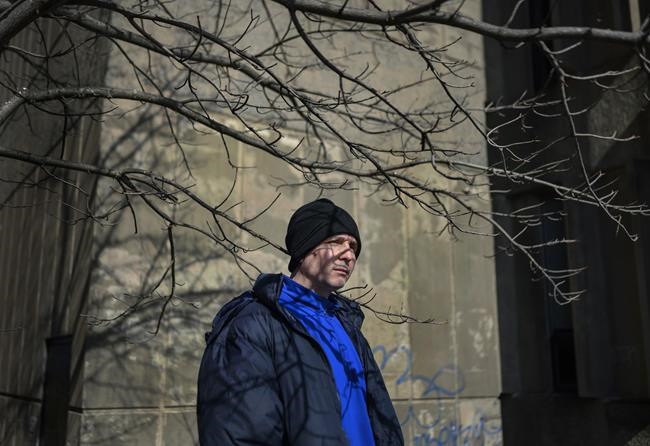
Rob MacDonald, who was released last week on supervision from the Atlantic Institution maximum security facility in New Brunswick after a 10-year stint in four facilities, poses outside of a clinic where he is receiving addiction treatment in Halifax on Friday, March 15, 2019. Memories of vomiting, diarrhea and unrelenting stomach pain as he withdrew from opioids in prison had Rob MacDonald repeatedly asking for addiction treatment before he left a maximum-security facility but despite dozens of formal complaints, he says he didn't get any help. THE CANADIAN PRESS/Darren Calabrese

“I put 150 requests in, probably 70 complaints, for a 15-month period, trying to tell them, ‘Put me on it. I need it before I get out. I want to get help, I don’t want to go back into the community in a high-risk situation, I don’t want to re-offend,’ ” he said from Halifax, where he lives in a halfway house.

He said he complained to the warden and then appealed to the commissioner of the Correctional Service of Canada. One of his complaints to the commissioner was upheld but he said he was placed on a wait list because there was a limit on the number of inmates receiving treatment.

When he was incarcerated at British Columbia’s Kent Institution between 2017 and 2019 for drug-related offences and robbery, MacDonald said debilitating withdrawal symptoms had him seeking potentially deadly fentanyl-laced drugs that were smuggled into the prison.

“At least eight guys died in the 17, 18 months I was at Kent,” he said.

The Correctional Service linked MacDonald to a clinic in Halifax upon his release nearly two weeks ago and he is now prescribed the opioid substitute Suboxone. But he said he should have received the medication in prison as part of the agency’s treatment program, which also includes methadone, so he could focus on finding a construction job to get his life back on track.

Ivan Zinger, Canada’s ombudsman for offenders, said the Correctional Service has failed to provide adequate addiction treatment, programs and staff at a time when more drugs are contaminated with fentanyl.

“I think when you’re dealing with a large inmate population that has such a long history of substance abuse you should be providing an awful lot more treatment and programming in addition to opioid substitution therapy,” said Zinger, who called for the reallocation of funding to provide those services.

“It’s unclear to me why the budget has remained the same and decreased in the past when clearly the number of incidents is increasing,” he said of overdoses that caused 41 deaths between 2010 and 2018.

Zinger said programs such as counselling are provided just before offenders are released instead of throughout their incarceration.

“That’s a problem when you have a highly addicted inmate population that has a lot of time on their hands and are in sometimes difficult conditions of confinement. They will find ways to bring in drugs.”

The Correctional Service said in a statement that 66 per cent more prisoners have accessed treatment in the last two years, but a jump of 115 per cent has been recorded in the Pacific region, where the opioid crisis is most acute.

It did not respond to requests for information on whether its budget will be increased to meet the demand for more treatment.

Kent Elson, a lawyer for an offender at Joyceville Institution in Kingston, Ont., said the Correctional Service did not accommodate his client’s disability of addiction so he filed a complaint with the Canadian Human Rights Commission last November.

Elson said his 50-year-old client, who is serving a four-year sentence, had been on methadone but alleges the medication was withheld without explanation for five days when he was transferred from another facility in November 2017.

“He needed medical help and he got forced, cold-turkey withdrawal in a feces-smeared segregation cell and cruel mistreatment from guards. And it was so unbearable that he tried to kill himself three times,” Elson said from Toronto.

While Correctional Service guidelines state a doctor is required to interview offenders before they are involuntarily tapered or cut off from methadone or Suboxone, Elson said his client was not seen by a physician.

“This whole experience was incredibly traumatic and he ended up with PTSD,” he said.

“The impact on him was terrible but everybody wins if prisoners get the right treatment. Suffering from PTSD is not going to make them easier to integrate back into society.”

The Correctional Service did not respond to a request for comment on the human rights complaint filed by Elson or another from the Prisoners’ Legal Services. The B.C. group’s complaint was filed in June 2018 on behalf of offenders who accused the Correctional Service of discriminating against them.

Nicole Kief, an advocate for the group, said about 100 inmates reported three main concerns: long wait lists for treatment, being cut off Suboxone after false accusations of diverting it and not receiving addiction counselling.

“Of the people that I’ve talked to there has been a real sense of urgency, with people calling me and saying, ‘I’m worried about dying,'” she said.

— Follow @CamilleBains1 on Twitter.

Report Error Submit a Tip

More Stories

Former Bombers linebacker Gauthier enjoying career as electrician

Taylor Allen 6 minute read Preview

Former Bombers linebacker Gauthier enjoying career as electrician

Taylor Allen 6 minute read Yesterday at 12:44 PM CDT

Most professional football players don’t ride off into the sunset on their own terms.

Shayne Gauthier was well aware of that, but it didn’t make it sting any less when the Winnipeg Blue Bombers informed the veteran linebacker that they weren’t bringing him back for 2026.

“I was really hoping to play one more (season) because it would have been my 10th season, so, I’d say it didn’t really end the way I wanted,” Gauthier recently told the Free Press.

“It left a little sour taste in my mouth, but that’s part of pro sports. If everybody got the ending that they wanted, then it wouldn’t really work.”

Read
Yesterday at 12:44 PM CDT

A quick look at where provinces and territories stand on time changes

The Canadian Press 2 minute read Preview

A quick look at where provinces and territories stand on time changes

The Canadian Press 2 minute read Updated: Yesterday at 6:28 AM CDT

WINNIPEG - Manitoba's government said Thursday the province will be sticking with daylight time year-round, making it the latest jurisdiction to move away from twice-annual time changes. Here's a look at where things stand across Canada:

British Columbia said in March that it was moving to permanent Pacific daylight time. The change also means that parts of northeastern B.C., which have been on mountain standard time year round, are now in alignment with the rest of the province.

Alberta also switched to permanent daylight time this year in what it calls Alberta time. The change means it now has the same time as Saskatchewan year round.

Saskatchewan has been on permanent central standard time since 1966.

Read
Updated: Yesterday at 6:28 AM CDT

Family account spiced with magic realism, geopolitical intrigue and a ghost story

Reviewed by Zilla Jones 4 minute read Preview

Family account spiced with magic realism, geopolitical intrigue and a ghost story

Reviewed by Zilla Jones 4 minute read 2:01 AM CDT

Tom Lin’s second novel Babylon, South Dakota moves beyond a historical account of an immigrant family’s struggle, delightfully blending and bending genres.

Lin is a Chinese-born novelist whose family emigrated to the U.S. when he was four years old. His debut novel, The Thousand Crimes of Ming Tsu, won the 2022 Andrew Carnegie Medal for Excellence in Fiction, making him the youngest ever recipient of that award. He earned a PhD in English from the University of California Davis and is currently an assistant professor of English and creative writing at the University of Iowa.

Babylon, South Dakota takes place in an unspecified time period that can be understood to be during the Mao era — likely the 1950s or ’60s. A young Chinese couple, the Hsuis, immigrate to the rural community that gives the book its title. They take the names Saul and Mei and settle on a 160-acre homestead left to them by a distant relative.

Saul’s dream is to breed and sell chrysanthemums from seeds he brought from China, while Mei wants to raise livestock. They speak no English, know nothing of life in the United States, are unprepared for the harshness of winter and the isolation of the farm and bring nothing with them except some gold, which Mei hides around the house for emergencies. Their only link to the outside world is a discarded and marginally functioning TV set, which Saul rescues and rigs up.

Read
2:01 AM CDT

Grieving child builds backyard rocket ship

Harriet Zaidman 4 minute read 2:01 AM CDT

I Built a Rocket Ship (Kids Can Press, 32 pages, hardcover, $22) by Winnipegger Anna Lazowski is a tender story for children ages 4-8 about a little girl trying to make sense of her mother’s death. The child engages in conversation with her late mom, agreeing and disagreeing about things said as she carries objects (and of course, the cat) to the backyard. There, she is building a rocket ship she will pilot into the skies to find her mom again.

Jennica Lounsbury’s varied perspectives show the range of emotions the little girl experiences.

● ● ●

Northwoods Lullaby by Mary Casanova (University of Minnesota Press, 32 pages, hardover, $25) is a bedtime book for readers up to age eight, perfect to bring a busy, happy day to a close. Just like children who are listening to adults reading the book, all the animal babies are being tucked into their nests and burrows by loving parents: “Thump and scamper,/nimble clover./ Soon it’s time to rest. Baby loon/ nestles in/as Papa floats along.”

Not falling back means time loop remains unclosed

Jen Zoratti 4 minute read 2:01 AM CDT

I demand restitution. Where’s my hour?

In the traditional fall-back, spring-forward time change set up — you know, ol’ trusty that’s been effect for lo these 63 years — we lost an hour in the spring that we got back in the fall.

That was the social contract: you commit to feeling like you’re on cold medication for a week in March because you know a glorious extra hour of sleep will be returned to you in November. (Unless, of course, you have little kids, but look: we all make our choices.)

Well, that transaction, flawed as it was, isn’t happening this year. That hour you sacrificed to the sun gods in the spring? Gone. Not coming back. We’ve sprung forward and we shan’t be falling back — not in November, and (possibly) not ever. The scale shall remain unbalanced and the loop shall remain unclosed as Manitoba has adopted permanent daylight time.

Puzzles Palace

1 minute read Monday, Jul. 27, 2026

To solve our puzzles, please subscribe with this special offer: |