Mandatory quarantines in effect for returning travellers, Freeland says
Advertisement
Read this article for free:
or
Already have an account? Log in here »
To continue reading, please subscribe:

Digital Subscription
One year of digital access for only $205*
- Enjoy unlimited reading on winnipegfreepress.com
- Read the E-Edition, our digital replica newspaper
- Access News Break, our award-winning app
- Play interactive puzzles
*First annual payment billed as $205.00 + GST for one year. This annual subscription will automatically renew at $233.00 + GST every 52 weeks (10% off the regular annual price of $259.35). Offer available to new and qualified returning subscribers only. Cancel any time.
To continue reading, please subscribe:
Add Free Press access to your Brandon Sun subscription for only an additional
$1 for the first 4 weeks*
- Enjoy unlimited reading on winnipegfreepress.com
- Read the E-Edition, our digital replica newspaper
- Access News Break, our award-winning app
- Play interactive puzzles
*Your next Brandon Sun subscription payment will increase by $1.00 and you will be charged $17.95 plus GST for four weeks. After four weeks, your payment will increase to $24.95 plus GST every four weeks.
Read unlimited articles for free today:
or
Already have an account? Log in here »
Hey there, time traveller!
This article was published 25/03/2020 (2354 days ago), so information in it may no longer be current.
WASHINGTON – With the COVID-19 pandemic accelerating in the United States, the federal government lowered the boom Wednesday on renegade globetrotters, ordering any non-essential travellers who recently returned to Canada to self-quarantine for 14 days, regardless of whether they have symptoms.
Those who defy the order, which went into effect in the wee hours of Wednesday, could face fines or arrests, Deputy Prime Minister Chrystia Freeland told a news conference in Ottawa.
Freeland and other ministers at Wednesday’s midday briefing initially said the order wouldn’t take effect until midnight. Health Minister Patty Hajdu said the same in the Senate during an appearance there.
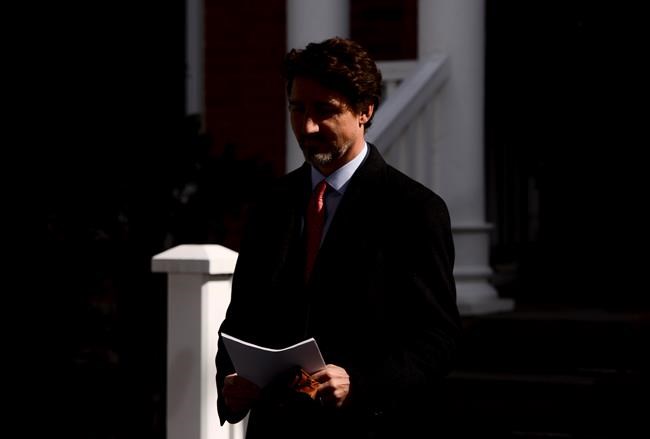
But several hours later, government officials began making the rounds to clarify that the quarantine order had been in effect for more than 12 hours already. And late Wednesday, Hajdu’s office issued further clarification: maximum penalties include a fine of up to $750,000 and six months in jail.
“It is in fact in place now. I do concede there was a bit of confusion,” Hajdu’s spokesman Matt Pascuzzo said in an email.
The new restrictions, which make compulsory what the government has been strenuously urging people to do voluntarily, do not apply to so-called “essential” travellers who are exempt from an ongoing mutual ban on travel between Canada and the U.S.
“We have decided that now is the time to make that measure mandatory,” Freeland said. “I think we all really appreciate that it is so important to have this self-isolation to protect the health and safety of Canadians.”
While the federal Quarantine Act gives Hajdu sweeping powers to control the spread of a viral contagion, including steep fines, arrest and even jail time, it wasn’t clear Wednesday precisely how the government intended to enforce the new restrictions.
“We will have mechanisms in place to enforce the quarantine,” Freeland said, without elaborating beyond calling it a “legal obligation” for any non-essential traveller returning from outside the country. Hajdu’s release said “spot checks” would be conducted by the government “to verify compliance.”
The measure comes amid growing apprehension about the widening scope of the pandemic south of the border, which the World Health Organization has warned is becoming the outbreak’s new focal point, and where President Donald Trump has been musing about reopening parts of the country on the April 12 Easter long weekend, to the horror of public-health experts.
The U.S. added more than 8,500 new reports to its total of more than 63,000 active cases Wednesday, a pace that now outstrips the spread in European hotspots like Italy and Spain. The hardest hit region is New York, which comprises nearly half the American total and which added more than 4,400 cases on Wednesday alone, mostly in New York City.
Even so, “there are large sections of our country probably that can go back to work sooner than other sections,” Trump told the daily White House briefing.
“I’m not going to do anything rash, or hastily — I don’t do that,” he added. “It could be we’ll do sections of our country. There are big sections of our country that are very little affected by what’s taken place.”
If indeed parts of the country are able to go back to work, people would still be able to defend against the virus by practising social distancing, hand-washing and “all the things you’re supposed to do,” Trump said.
“They’re not going to walk around hugging and kissing each other in the office when they come back, even though they may feel like it.”
Freeland pointed to the new mandatory quarantine when asked about Canada’s contingency plans in the event the U.S. outbreak risks spilling over the border. But she made a point of noting that essential travellers — truckers, cross-border health workers, airline crews and others keeping trade and commercial arteries open — are considered essential for a reason.
“We need to be really thoughtful about what we do there,” Freeland said, citing the specific example of long-haul truck drivers who are ferrying critical goods and supplies between the two countries.
In the same breath, however, she acknowledged the “fluid and evolving” situation both around the world “and on our continent” — a suggestion that the government may need to constrict the border even more if the circumstances demand.
“As the situation evolves, we are constantly — and by constantly I mean every single hour — reviewing additional measures, including measures at the border.”
Keeping store shelves fully stocked is as much about keeping people from panicking as it is about the provisions themselves, said Jenifer Bartman, a business adviser and consultant based in Winnipeg.
Bare shelves “can create a sense of panic, of insecurity,” Bartman said — an especially dangerous circumstance among people who are supposed to be self-isolating at home to prevent spreading the virus.
“All of a sudden people are running out — and it’s not even just getting this stuff, but it’s running around trying to find it, too.”
The number of air travellers from the United States is down 80 per cent from the same time a year ago, and land crossings are down 71 per cent, Public Safety Minister Bill Blair told senators Wednesday as he acknowledged the “challenge” of keeping trade moving through a partial travel ban.
Truck traffic is also down slightly, but that’s a symptom of production stops in the U.S. as workers stay home to combat the spread of the virus.
“It remains a challenge to maintain those supply lines but we are monitoring on a daily basis and I can tell you truck traffic is moving very freely and readily across our border,” he said.
“I am confident at this point that we have been able to maintain those supply chains.”
Drivers are being asked to rigorously self-monitor for any COVID-19 symptoms, to keep their distance from others, and use appropriate hygiene techniques, including frequent hand washing.
This report by The Canadian Press was first published March 25, 2020.