COVID-19 spreads to vulnerable communities as new provinces report deaths
Advertisement
Read this article for free:
or
Already have an account? Log in here »
To continue reading, please subscribe:

Digital Subscription
One year of digital access for only $205*
- Enjoy unlimited reading on winnipegfreepress.com
- Read the E-Edition, our digital replica newspaper
- Access News Break, our award-winning app
- Play interactive puzzles
*First annual payment billed as $205.00 + GST for one year. This annual subscription will automatically renew at $233.00 + GST every 52 weeks (10% off the regular annual price of $259.35). Offer available to new and qualified returning subscribers only. Cancel any time.
To continue reading, please subscribe:
Add Free Press access to your Brandon Sun subscription for only an additional
$1 for the first 4 weeks*
- Enjoy unlimited reading on winnipegfreepress.com
- Read the E-Edition, our digital replica newspaper
- Access News Break, our award-winning app
- Play interactive puzzles
*Your next Brandon Sun subscription payment will increase by $1.00 and you will be charged $17.95 plus GST for four weeks. After four weeks, your payment will increase to $24.95 plus GST every four weeks.
Read unlimited articles for free today:
or
Already have an account? Log in here »
Hey there, time traveller!
This article was published 30/03/2020 (2376 days ago), so information in it may no longer be current.
COVID-19 continued its unforgiving march into new areas of the country on Monday, sweeping through long-term care homes and religious communities, as two provinces reported their first deaths linked to the virus.
Ontario reported its largest single-day increase by far, while hard-hit Quebec soared well past the 3,000-case mark. Newfoundland and Labrador, as well as Saskatchewan, added to the country’s death toll for the first time. Meanwhile, Alberta added five more deaths to bring the province’s total to eight.
Tragedy struck one nursing home in Ontario, where seven people have died of COVID-19 and at least 24 staff members are infected, a local health unit said.
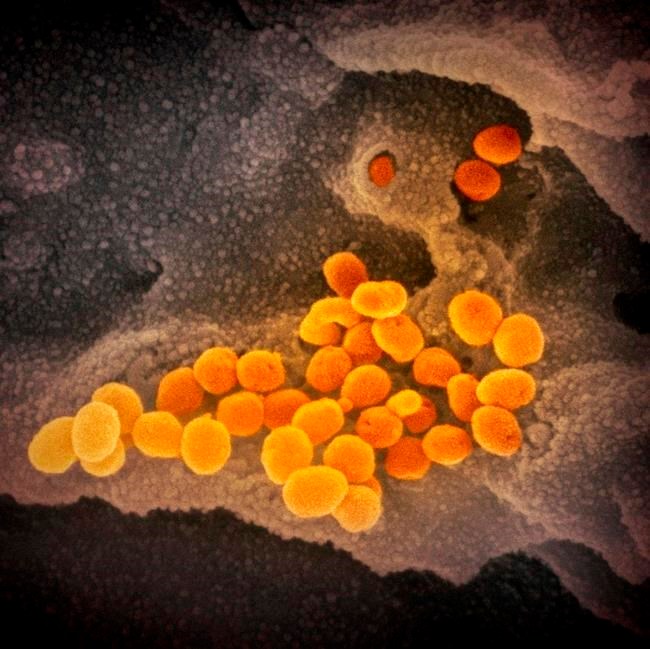
The Haliburton, Kawartha, Pine Ridge District Health Unit has said the outbreak at Pinecrest Nursing Home in Bobcaygeon, Ont., is believed to be the largest in the province.
Dr. Theresa Tam, Canada’s top public health official, said there have been more cases reported in areas at high risk of “devastating outcomes.” That includes the first case in Nunavik, in northern Quebec, over the weekend, and outbreaks in long-term care facilities.
“It is crucial to prevent the acceleration of spread in enclosed environments where persons with underlying medical conditions reside,” she said in a news conference on Monday.
In Quebec, a reclusive Orthodox Jewish community north of Montreal was placed under lockdown after about 15 people tested positive for the virus.
Leadership of the 4,000-person Tosh Jewish community of Boisbriand, Que., asked for police help in enforcing a 14-day quarantine after some members tested positive, ostensibly after travelling to New York two weeks ago.
The regional health director said the number of positive cases is expected to rise in the community, where large families live together and many couples have between six and eight children.
Two inmates also tested positive for COVID-19 at the Port-Cartier maximum-security prison in Quebec, the first confirmed cases involving prisoners in a federal institution.
New restrictions on domestic air and inter-city passenger rail traffic were set to go into effect, requiring staff at airlines and railways to screen passengers and bar those exhibiting any symptoms of COVID-19 from boarding.
Tam reiterated the need to respect physical distancing measures, and emphasized that all travellers returning from abroad must isolate themselves for 14 days.
“Head directly home, do not stop for groceries or other essential supplies,” she said.
Prime Minister Justin Trudeau announced Monday that a wage subsidy unveiled last week would cover all businesses, non-profits and charities where revenue has dropped by at least 30 per cent because of the COVID-19 pandemic.
He said the government will cover 75 per cent of salary on the first $58,700 a person earns, up to about $847 a week.
By Monday evening, there were more than 7,400 confirmed and presumptive cases in Canada, including 85 deaths and 925 resolved. However, health officials in some provinces such as Quebec have said the number of resolved cases is likely much higher.
Government officials in Quebec and B.C. said over the weekend there are indications social distancing efforts may be paying off in slowing the spread of the virus, but Tam warned it’s still too early to make that call. She has said this week will be “very, very important” in terms of looking at those trends.
But, the weekend optimism was tempered slightly as a number of provinces recorded their highest case increases on Monday.
Saskatchewan’s Ministry of Health announced two patients in their 70s died from complications related to the virus in different parts of the province, marking the province’s first COVID-19 deaths.
Meanwhile, Newfoundland and Labrador, which has one of the highest per-capita rates of infection, reported a 78-year-old man with underlying health conditions had died, making him the first COVID-19 related fatality in the Atlantic region.
The new total of cases in Ontario rose by 351 to 1,706, which health officials attributed, in part, to clearing a backlog of pending test results. There are also 431 resolved cases. While the province reported 23 deaths in its morning update, public health officials later added 10 more.
In Quebec, the number of cases spiked to 3,430, while three new deaths brought the total to 25. Premier Francois Legault said the one encouraging statistic was the number of COVID-19 patients in intensive care, which rose by just six to 78 and remains well below the system’s capacity.
The Manitoba government followed other provinces’ lead and closed non-essential businesses on Monday after the province reported 24 new cases of COVID-19, for a total of 96 probable and confirmed cases.
In B.C., authorities announced two more people had died and another 86 people had tested positive for COVID-19 since Saturday.
But despite the province recording far fewer cases than Quebec and Alberta, the provincial health officer urged British Columbians not to lower their guards.
Dr. Bonnie Henry said the next two weeks mark a second incubation period for the coronavirus as she urged people to follow public health advice at what she describes as a critical time in the fight against the pandemic.

Tam said 220,000 people have been tested for COVID-19 in Canada thus far, with three per cent confirmed positive and 93 per cent confirmed negative.
She said of the more than 6,000 cases, seven per cent have required hospitalization, three per cent are critical and one per cent have been fatal.
This report by The Canadian Press was first published March 30, 2020
— With files from Sidhartha Banerjee in Montreal and Allison Jones in Toronto
Note to readers: This is a corrected story. A previous version stated an incorrect figure for the number of new patients in intensive care in Quebec.