Donated organs not being used as hospitals scale back transplants for COVID-19

Advertisement

Advertise with us

OTTAWA - Transplant centres across the country have massively scaled back organ transplants as hospitals try to make sure they are able to accommodate COVID-19 cases.

Read this article for free:


or

Already have an account? Log in here »

To continue reading, please subscribe:

Subscribe and receive a limited-edition Free Press branded hat or tote.

Digital Subscription

One year of digital access for only $205*

  • Enjoy unlimited reading on winnipegfreepress.com
  • Read the E-Edition, our digital replica newspaper
  • Access News Break, our award-winning app
  • Play interactive puzzles

*First annual payment billed as $205.00 + GST for one year. This annual subscription will automatically renew at $233.00 + GST every 52 weeks (10% off the regular annual price of $259.35). Offer available to new and qualified returning subscribers only. Cancel any time.

To continue reading, please subscribe:

Add Free Press access to your Brandon Sun subscription for only an additional

$1 for the first 4 weeks*

  • Enjoy unlimited reading on winnipegfreepress.com
  • Read the E-Edition, our digital replica newspaper
  • Access News Break, our award-winning app
  • Play interactive puzzles
Start now

*Your next Brandon Sun subscription payment will increase by $1.00 and you will be charged $17.95 plus GST for four weeks. After four weeks, your payment will increase to $24.95 plus GST every four weeks.

Hey there, time traveller!
This article was published 30/03/2020 (2378 days ago), so information in it may no longer be current.

OTTAWA – Transplant centres across the country have massively scaled back organ transplants as hospitals try to make sure they are able to accommodate COVID-19 cases.

Living-donor surgeries have largely shut down across the country, and deceased-donor transplants are happening only when the case is urgent.

Dr. Atul Humar, past president of the Canadian Society of Transplantation, said that means many organs are not going to good use.
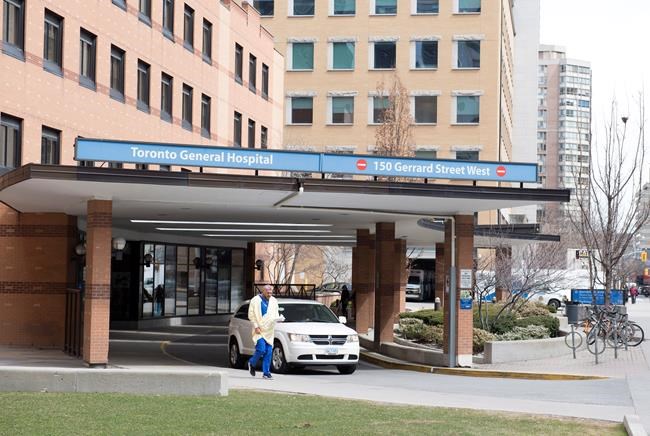
Toronto General Hospital in Toronto is shown on Thursday April 5, 2018. Transplant centres across the country have massively scaled back organ donation surgeries as hospitals try to make sure they are able to accommodate COVID-19 cases. THE CANADIAN PRESS/Doug Ives

“There’s some donors, deceased organ donors, and we’re not sending teams to procure those organs,” said Humar, who is also the director of the transplant program at Toronto General Hospital.

“It’s quite tragic.”

Patients who go through certain types of organ donation often require time in the intensive care unit on a ventilator — resources desperately needed by patients with serious cases of COVID-19.

At Humar’s hospital, organ transplant surgeries have decreased by about 80 per cent, though the numbers vary from province to province.

The slowdown in transplant surgeries also protects patients, because they must be put on drugs to suppress their immune systems after their surgeries to prevent their bodies from rejecting the new organ.

“Basically transplant recipients are forced to become immunocompromised,” said Dr. Sam Shemie, the medical advisor for organ donation at Canadian Blood Services.

That puts them at much greater risk if they come into contact with the novel coronavirus, Shemie said, so that needs to be weighed against the benefit of the transplant in each case.

Still, he said that unlike countries such as Spain or the United Kingdom, Canada’s health system is not so overloaded that it can’t perform urgent transplants when needed.

More than 200 people died on the waiting list for organ donation in Canada in 2018, according to the latest statistics from the Canadian Organ Replacement Register, which is managed by the Canadian Institute for Health Information.

“My biggest fear is that our patients who are waiting for a transplant will die because they’ve waited too long,” Humar said.

People who need kidney transplants are most affected by the reduction in surgeries. While kidneys are by far the most in-demand organ, and transplants are far preferred to dialysis as treatment, people can survive on dialysis for a long time.

“Even in the best of times, there was a long waiting list for kidney donations,” he said. “On average a recipient will wait for five years or longer.”

One reason is patients need to wait not only for an organ to become available, one that is the right match for them.

If a needed organ comes up for someone who is difficult to match, they will likely still get their surgery because it could be that person’s only chance, he said.

Doctors also need to be careful about transplants that could transfer the virus to the recipient along with the new organ.

That means that all donors must be screened for COVID-19 to avoid infecting the recipient.

Restrictions on organ donations will ease as things start to get back to normal, Shemie said.

All these delays could mean longer waits for those patients when the pandemic ends and surgeries ramp up again.

Living-donor surgeries can be planned for and scheduled in advance when the pandemic is finally clear, Shemie said. But hospitals and patient who need transplants from deceased donors are largely at the mercy of whatever donated organs are available at the time.

Shemie said there was a massive response to Canadian Blood Services’ call for blood donations.

He hopes people show the same willingness to give when it comes to registering for organ donation, once the COVID-19 crisis is over.

This report by The Canadian Press was first published March 30, 2020.

Report Error Submit a Tip

More Stories

Mayoral candidate Vogiatzakis criticized for living outside Winnipeg

Malak Abas 4 minute read Preview

Mayoral candidate Vogiatzakis criticized for living outside Winnipeg

Malak Abas 4 minute read Updated: Yesterday at 6:03 PM CDT

A mayoral hopeful took heat from other candidates Friday for living outside Winnipeg while running in the civic election.

Mike Vogiatzakis’s primary residence is in the Rural Municipality of St. Andrews, about 25 kilometres north of Winnipeg — a community with its own mayor and councillors.

But the funeral director said he owns a home in Winnipeg where he divides his time, and he would move to the city full-time if elected mayor.

“It doesn’t matter where a person lives. Why are we dividing St. Andrews and Manitoba and Winnipeg? I’ve met the criteria to run for mayor,” Vogiatzakis said Friday morning.

Read
Updated: Yesterday at 6:03 PM CDT

Blown lead spoils Jets opener

Mike McIntyre 7 minute read Preview

Blown lead spoils Jets opener

Mike McIntyre 7 minute read Yesterday at 11:09 PM CDT

Younger. Faster. Stronger.

They may still be a long ways from a finished product, but it’s safe to say the new-look Winnipeg Jets made a mostly favourable first impression on Friday night in front of a sold-out crowd at Canada Life Centre.

Sure, a 4-3 overtime loss to a hard-nosed Boston Bruins outfit is going to sting a little, especially since the home team was just 98 seconds away from a regulation victory.

But if the Jets can bottle up this kind of energy and effort, they should enjoy plenty of success over the course of the 84-game campaign.

Read
Yesterday at 11:09 PM CDT

J’accuse!: Kinew uses French to fry interim Tory leader over alleged caucus subterfuge

Chris Kitching and Maggie Macintosh 4 minute read Preview

J’accuse!: Kinew uses French to fry interim Tory leader over alleged caucus subterfuge

Chris Kitching and Maggie Macintosh 4 minute read Thursday, Oct. 1, 2026

NDP Premier Wab Kinew took a dig at the Progressive Conservatives’ leadership change while facing off with Obby Khan’s short-term replacement for the first time in question period Thursday.

Read
Thursday, Oct. 1, 2026

Free Press staff 2 minute read 2:01 AM CDT

Advance voting for civic and school board elections begins next week.

Voters can cast early ballots for the Oct. 28 election in certain locations from Monday through Oct. 23.

Eligible voters can use their address to search for a convenient location.

Early votes can be cast at the council building at city hall (510 Main St.) every day, except weekends and Thanksgiving, from Monday to Oct. 23.

Brandonmeat packer thriving on its own

Abiola Odutola 3 minute read Preview

Brandonmeat packer thriving on its own

Abiola Odutola 3 minute read 2:01 AM CDT

BRANDON — Canada Packers has strengthened its business and laid the foundation for future growth during its first year as an independent company, its president says.

The Brandon-based pork producer, separated from Maple Leaf Foods in October 2025, established its own leadership, strategy, systems, culture and identity while continuing operations across its hog production farms and regional hog barns in southern and eastern Manitoba.

The company’s first year was focused on building a successful standalone business while continuing to serve customers, communities and shareholders, president Dennis Organ said.

“Market conditions over the past year have been more challenging than we anticipated when we became a separate entity,” he said in an email. “Despite that, we continued to execute against our priorities, including increasing processing volumes, maintaining disciplined operations and strengthening the business.”

Read
2:01 AM CDT

Six high school hockey programs ceased operations following new Hockey Manitoba policy

Joshua Frey-Sam 7 minute read Preview

Six high school hockey programs ceased operations following new Hockey Manitoba policy

Joshua Frey-Sam 7 minute read Updated: Yesterday at 8:19 PM CDT

She lived the best of both worlds.

For the last three years, the 17-year-old wore a sweater for two different hockey programs — her high school team and AAA club in the Manitoba Female Hockey League — and was preparing to flourish in both colours again this winter.

Recently, however, the blue-liner was disappointed to learn she is no longer eligible to play her Grade 12 season with her school owing to a new policy imposed by Hockey Manitoba that bans players from participating in the Manitoba Women’s High School Hockey League if they are rostered on a U18 AAA team.

The rule applies to all athletes who play for both Winnipeg-based and rural AAA teams.

Read
Updated: Yesterday at 8:19 PM CDT