Doctors say governments should released as many inmates as possible amid COVID

Advertisement

Advertise with us

VANCOUVER - Government medical professionals say Canada's jails and prisons don't meet with physical distancing guidelines for COVID-19 and they want as many inmates as possible to be released.

Read this article for free:


or

Already have an account? Log in here »

To continue reading, please subscribe:

Subscribe and receive a limited-edition Free Press branded hat or tote.

Digital Subscription

One year of digital access for only $205*

  • Enjoy unlimited reading on winnipegfreepress.com
  • Read the E-Edition, our digital replica newspaper
  • Access News Break, our award-winning app
  • Play interactive puzzles

*First annual payment billed as $205.00 + GST for one year. This annual subscription will automatically renew at $233.00 + GST every 52 weeks (10% off the regular annual price of $259.35). Offer available to new and qualified returning subscribers only. Cancel any time.

To continue reading, please subscribe:

Add Free Press access to your Brandon Sun subscription for only an additional

$1 for the first 4 weeks*

  • Enjoy unlimited reading on winnipegfreepress.com
  • Read the E-Edition, our digital replica newspaper
  • Access News Break, our award-winning app
  • Play interactive puzzles
Start now

*Your next Brandon Sun subscription payment will increase by $1.00 and you will be charged $17.95 plus GST for four weeks. After four weeks, your payment will increase to $24.95 plus GST every four weeks.

Hey there, time traveller!
This article was published 07/04/2020 (2357 days ago), so information in it may no longer be current.

VANCOUVER – Government medical professionals say Canada’s jails and prisons don’t meet with physical distancing guidelines for COVID-19 and they want as many inmates as possible to be released.

In an open letter to the federal, provincial and territorial governments, more than 100 doctors, nurses and other health professionals say inmates are already medically vulnerable and are likely to have infectious diseases, such as hepatitis C and HIV.

The letter calls on the governments “to stop admitting people to jails and prisons unless absolutely necessary.” The medical professionals who work for the governments also want assurances that inmates who are released get the housing, food and health care they need in the community.
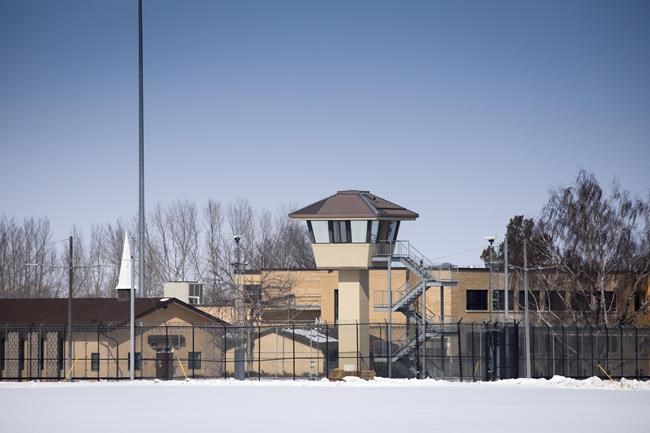
The Bowden Institution medium security facility near Bowden, Alta., Thursday, March 19, 2020. Government medical professionals say Canada's jails and prisons don't meet with physical distancing guidelines for COVID-19 and they want as many inmates as possible to be released. THE CANADIAN PRESS/Jeff McIntosh

Ontario, British Columbia and the Northwest Territories have freed some inmates because of the pandemic.

Kristy Denette, a spokeswoman the Ministry of the Solicitor General in Ontario, said the government has been working with the courts and police to reduce the number of people in custody while ensuring public safety isn’t compromised.

Since March 16, the population at all facilities across Ontario has dropped from 8,344 to 6,148, she said. Nine low-risk offenders close to the end of their sentences were also released under temporary absence passes, she added.

In B.C., 95 inmates have been granted early release under a temporary absence, which can be rescinded if necessary, said the Public Safety Ministry.

Justice Minister Caroline Wawzonek of the Northwest Territories said seven inmates have been granted temporary absences. Prisoners on intermittent sentences have also been given temporary absences.

Public Safety Minister Bill Blair has asked the commissioner of the correctional service and the chair of the Parole Board to determine if certain offenders could be released early, says a statement from his office released Tuesday.

“Our greatest responsibility is keeping Canadians safe. That includes all correctional staff, inmates and the Canadian public. We know the unique risks inherent to prisons,” it says.

The correctional service is taking steps to restrict the spread of COVID-19, the statement says.

Iulia Pescarus Popa of the Parole Board said it is steamlining its processes to respond to the pandemic.

The board is processing exceptional cases as quickly as possible for those offenders who are terminally ill or whose physical or mental health is likely to be affected while in prison, Popa said in a statement.

She said when making conditional release decisions, the board considers all relevant information related to an offender’s case, including the gravity of the offence and the individual’s health.

Figures from the correctional service show 21 inmates in federal penitentiaries have tested positive for the virus as of Monday: 12 in Quebec, seven in Ontario and two in B.C.

The letter from the medical professionals says if people in prison become infected, it would be essentially impossible to stop the spread of COVID-19 in a correctional facility.

Conditions are crowded, prisoners share cells, they must be frisked and handcuffed by officers, line up daily for medication, share common spaces and dining halls, and use the same telephones and washrooms, it says.

“They also lack access to some of the critical supplies people in the community are using to keep themselves safe, such as hand sanitizer, cleaning products and sometimes soap.”

The Union of Canadian Correctional Officers, which represents federal prison guards, said last week that it has put measures in place to protect its members and limit the spread of the virus.

“The release of a few inmates would not solve the potential spread of COVID-19 in our facilities; it would only increase the risk for Canadians,” the union says in a statement.

One inmate has also tested positive for the virus in a provincial jail in B.C.

Stephanie Smith, president of the B.C. Government and Service Employees’ Union, said her members have concerns about the safety of themselves and the inmates.

She said the union, which represents about 1,700 guards in provincial jails, is doing a risk assessment and has called for a ban on the double bunking of inmates.

— With files from Bob Weber in Edmonton.

This report by The Canadian Press was first published April 7, 2020.

Report Error Submit a Tip

More Stories

Give-and-take relationship of Roman leaders takes centre stage in Harris’s historical fiction

Reviewed by Kathryne Cardwell 4 minute read Preview

Give-and-take relationship of Roman leaders takes centre stage in Harris’s historical fiction

Reviewed by Kathryne Cardwell 4 minute read 2:01 AM CDT

British novelist Robert Harris’s latest work is a reflection on tyranny, corruption and betrayal among all-powerful political leaders.

You might be forgiven for thinking it’s a contemporary thriller — it’s actually historical fiction set in ancient Rome.

A former BBC journalist, Harris debuted as a novelist in 1992 with Fatherland, an alternative history where Nazi Germany won the Second World War.

Since then, the prolific author has become best-known for his works of historical fiction, especially his ancient Rome trilogy released from 2006-2015 and the novel Conclave, which was published in 2016 and was made into the film of the same name in 2024.

Read
2:01 AM CDT

American Hostage stars recall warmth of Winnipeggers during brutal winter

Randall King 7 minute read Preview

American Hostage stars recall warmth of Winnipeggers during brutal winter

Randall King 7 minute read Yesterday at 6:13 PM CDT

TORONTO — When you stream the eight-part series American Hostage, a sense of familiarity may strike.

That’s because the show was shot in Winnipeg — especially in the Exchange District — from November of last year to the beginning of February, with Winnipeg portraying Indianapolis circa 1977.

The whole world seemed to be watching that midwest American city that year as a hostage crisis unfolded involving one Tony Kiritsis, an angry man who goes ballistic when a mortgage brokerage was poised to foreclose on property he had dreamed of developing into a shopping centre.

Kiritsis kidnapped his mortgage broker, Richard Hall, wiring a shotgun to the back of his head, and demanded a public airing of his grievances, with the reluctant help of popular radio broadcaster Fred Heckman.

Read
Yesterday at 6:13 PM CDT

A quick look at where provinces and territories stand on time changes

The Canadian Press 2 minute read Preview

A quick look at where provinces and territories stand on time changes

The Canadian Press 2 minute read Updated: Yesterday at 6:28 AM CDT

WINNIPEG - Manitoba's government said Thursday the province will be sticking with daylight time year-round, making it the latest jurisdiction to move away from twice-annual time changes. Here's a look at where things stand across Canada:

British Columbia said in March that it was moving to permanent Pacific daylight time. The change also means that parts of northeastern B.C., which have been on mountain standard time year round, are now in alignment with the rest of the province.

Alberta also switched to permanent daylight time this year in what it calls Alberta time. The change means it now has the same time as Saskatchewan year round.

Saskatchewan has been on permanent central standard time since 1966.

Read
Updated: Yesterday at 6:28 AM CDT

Siloam Mission, WFPS discussing on-site paramedic to reduce staggering number of emergency calls

Scott Billeck 4 minute read Preview

Siloam Mission, WFPS discussing on-site paramedic to reduce staggering number of emergency calls

Scott Billeck 4 minute read Yesterday at 2:00 AM CDT

Winnipeg’s fire-paramedic service and its largest homeless-serving organization are discussing what it would look like to station at least one paramedic at Siloam Mission, as emergency calls to the downtown facility surge.

The ongoing discussions come as Winnipeg Fire Paramedic Service crews were dispatched 1,771 times during the first eight months of the year to the two adjacent Siloam properties at 303 Stanley St. and 300 Princess St.

WFPS said most of the calls were related to overdoses or other consequences of substance use, with the total nearly double the 854 calls recorded over the same period last year. By comparison, there were 831 calls during the same span in 2024, and 591 in 2023.

“The number of emergency calls isn’t sustainable for us as a service, but it’s certainly not sustainable for them as an agency trying to provide services,” WFPS chief Ryan Sneath told the Free Press. “And they recognize that they’re impacting emergency services, not them specifically, but the site in a significant way.”

Read
Yesterday at 2:00 AM CDT

Steinbach Credit Union member warns others after scammer steals $10K

Scott Billeck 5 minute read Preview

Steinbach Credit Union member warns others after scammer steals $10K

Scott Billeck 5 minute read Yesterday at 5:19 PM CDT

A Winnipeg single mother whose bank account was drained of nearly $10,000 says Steinbach Credit Union needs to warn its members about what she believes is a broader security problem.

The woman, who is not being named to protect her identity, said a scammer gained access to her account earlier this week after calling SCU’s contact centre, claiming to be her and successfully completing the credit union’s authentication process.

She said she knows of at least six others who have experienced similar incidents in which callers impersonate SCU account holders and pass the authentication checks.

The woman discovered something was wrong when her minor son asked why money had been transferred out of an account they jointly hold.

Read
Yesterday at 5:19 PM CDT

Puzzles Palace

1 minute read Monday, Jul. 27, 2026

To solve our puzzles, please subscribe with this special offer: |