Key events in Canada since WHO declared the COVID-19 pandemic
Advertisement
Read this article for free:
or
Already have an account? Log in here »
To continue reading, please subscribe:

Digital Subscription
One year of digital access for only $205*
- Enjoy unlimited reading on winnipegfreepress.com
- Read the E-Edition, our digital replica newspaper
- Access News Break, our award-winning app
- Play interactive puzzles
*First annual payment billed as $205.00 + GST for one year. This annual subscription will automatically renew at $233.00 + GST every 52 weeks (10% off the regular annual price of $259.35). Offer available to new and qualified returning subscribers only. Cancel any time.
To continue reading, please subscribe:
Add Free Press access to your Brandon Sun subscription for only an additional
$1 for the first 4 weeks*
- Enjoy unlimited reading on winnipegfreepress.com
- Read the E-Edition, our digital replica newspaper
- Access News Break, our award-winning app
- Play interactive puzzles
*Your next Brandon Sun subscription payment will increase by $1.00 and you will be charged $17.95 plus GST for four weeks. After four weeks, your payment will increase to $24.95 plus GST every four weeks.
Read unlimited articles for free today:
or
Already have an account? Log in here »
Hey there, time traveller!
This article was published 11/04/2020 (2366 days ago), so information in it may no longer be current.
Saturday marks one month since the World Health Organization declared COVID-19 a global pandemic.
Here are some key developments for Canada since then:
March 11: Prime Minister Justin Trudeau promises $1 billion for COVID-19 to help the health-care system and workers force to self-isolate … Canada has more than 100 cases … Stock market plunges … A Utah Jazz player tests positive for COVID two days after a game against the Toronto Raptors, causing the NBA to suspend its season.
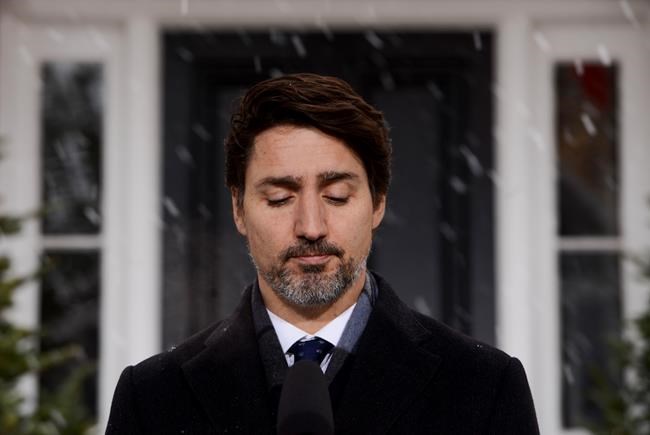
March 12: Trudeau self-isolates after his wife tests positive for COVID … Social distancing ramps up … Stocks continue falling … The NHL and most other sports leagues suspend seasons … The Juno Awards are shelved … Minor hockey across the country is cancelled … Schools in Ontario announce they’ll be closed for two week after March break … Manitoba and Saskatchewan report their first cases.
March 13: Trudeau promises more direct aid to Canadians … Government announces parliament will go on break … Supermarkets see panic buying. Mosques announce closures.
March 14: Government scrambles to get stranded Canadians home … Ottawa opens first assessment centre … Quebec tells seniors to stay home.
March 15: Trudeau urges against panic buying … Nova Scotia gets its first three cases.
March 16: Apart from Americans and a few exceptions, Canada announces it is closing its borders to non-Canadians … Trudeau addresses the nation as governments and businesses take drastic measures to stem the spread of COVID-19.
March 17: Ontario and Alberta declare states of emergency … Feds say they will isolate irregular border-crossers for COVID-19.
March 18: Trudeau promises $82 billion in financial aid … Governments announce Canada-U.S. border to close to non-essential traffic … The country’s six big banks announce they are going to let customers defer mortgage payments for up to six months … B.C. and Saskatchewan declare states of emergency.
March 19: Feds roll out $27 billion in new spending and $55 billion in credit to help families and businesses … New Brunswick declares state of emergency.
March 20: COVID-19 cases pass 1,000 … Trudeau says asylum seekers crossing into Canada on foot from the U.S. will be turned back as part of the border shutdown … About 4,000 Canadians are trapped on cruise ships … Manitoba declares state of emergency
March 21: U.S.-Canada border officially closes to non-essential travel … Provinces start backing up isolation measures with police.
March 22: Quebec closes shopping malls, restaurants and salons … Canada says it won’t compete in Tokyo Olympics or Paralympics if held this summer
March 23: Federal government rolls out $30-million advertising campaign focuses on social distancing and personal hygiene … Canada announces repatriation flights for those stranded.
March 24: Olympics officially postponed until next year … Political fight starts in Ottawa to pass COVID emergency aid legislation … Community transmission overtakes travel-related spread.
March 25: Emergency aid bill passes … Canada makes 14-day quarantine for arrivals mandatory.
March 26: Feds ask banks and credit card companies to lower interest rates … Report says U.S. President Donald Trump might put troops at Canadian border … Federal Conservatives announce suspension of leadership race.
March 27: Bank of Canada cuts key rate to 0.25 per cent … Canadian Forces put on war footing.
March 28: Trudeau announces ban on air travel for those with COVID symptoms … Sophie Gregoire Trudeau says she has recovered.
March 29: Trudeau says he’ll be staying home another two weeks … Trudeau says thousands of medical masks, gowns, gloves and goggles expected to arrive from China will be thoroughly inspected by Health Canada before being distributed to hospitals.
March 30: Defence Minister Harjit Sajjan says 24,000 Canadian troops ready to help deal with COVID-19 … Trudeau says new wage subsidy program will cover all businesses whose revenue has dropped by at least 30 per cent because of COVID-19.
March 31: Ventilator production ramps up.
April 1: Trudeau says length of the lockdowns will depend on the behaviour of Canadians … Ottawa warns of possible drug shortages … Trudeau says it appears U.S. will not put troops at border.
April 2: Canada, NATO allies discuss COVID-19 response … COVID-19 death toll passes 100.
April 3: Ontario projects COVID-19 death toll could reach 15,000 … Big banks allow mortgage deferrals … Quebec calls in the Armed Forces.
April 4: 3M told by the White House to stop exporting N95 respirators to Canada.
April 5: Federal government announces more financial aid for the most vulnerable Canadians … Dr. Theresa Tam, Canada’s leading doctor, says hospitals should not throw out face masks and other protective equipment.
April 6: 3M makes deal with the White House to provide N95 masks to Canada … Canadians start applying for emergency aid … Tam says wearing masks is a way for people who might have COVID-19 without realizing it to keep from spreading the illness.
April 7: A seniors home in Montreal reports more than 100 infections and eight deaths … Ottawa orders 30,000 ventilators.

April 8: Quebec becomes the province with the most COVID-19 fatalities — at 175 … Canada’s deputy minister of foreign affairs, Marta Morgan, tests positive for COVID-19.
April 9: Ottawa projects 4,400 to 44,000 Canadians could die of COVID-19. Government announces more than one million people lost their jobs in March.
April 10: RCMP warns people it could make home visits to enforce the Quarantine Act. Trudeau says it’s possible some restrictions will be lifted by the summer.
April 11: Wage Subsidy Bill is passed, helping businesses impacted by the COVID-19 crisis … Quebec says 31 people have died in a Montreal-area long-term care home since March 13.
This report by The Canadian Press was first published April 11, 2020.
Related Articles
Political leaders mark Easter amid COVID-19
Advertisement Advertise With Us
Advertisement Advertise With Us