‘This is a war’: Military fight against COVID-19 will be anything but easy
Advertisement
Read this article for free:
or
Already have an account? Log in here »
To continue reading, please subscribe:

Digital Subscription
One year of digital access for only $205*
- Enjoy unlimited reading on winnipegfreepress.com
- Read the E-Edition, our digital replica newspaper
- Access News Break, our award-winning app
- Play interactive puzzles
*First annual payment billed as $205.00 + GST for one year. This annual subscription will automatically renew at $233.00 + GST every 52 weeks (10% off the regular annual price of $259.35). Offer available to new and qualified returning subscribers only. Cancel any time.
To continue reading, please subscribe:
Add Free Press access to your Brandon Sun subscription for only an additional
$1 for the first 4 weeks*
- Enjoy unlimited reading on winnipegfreepress.com
- Read the E-Edition, our digital replica newspaper
- Access News Break, our award-winning app
- Play interactive puzzles
*Your next Brandon Sun subscription payment will increase by $1.00 and you will be charged $17.95 plus GST for four weeks. After four weeks, your payment will increase to $24.95 plus GST every four weeks.
Read unlimited articles for free today:
or
Already have an account? Log in here »
Hey there, time traveller!
This article was published 11/04/2020 (2369 days ago), so information in it may no longer be current.
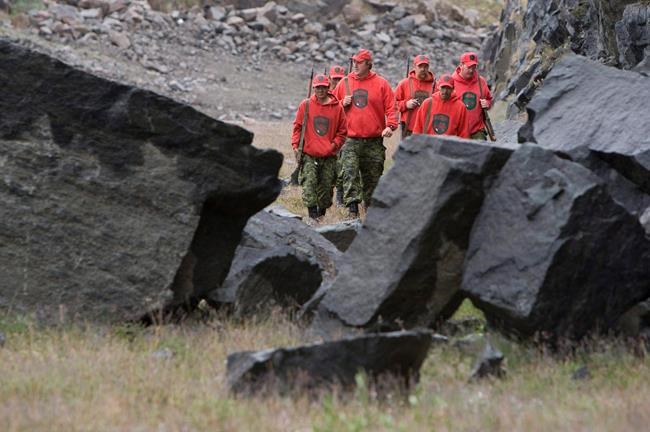
OTTAWA – When 40 Canadian Rangers swung into action in northern Quebec this week to set up heated tents for COVID-19 screening and conduct other tasks in their local communities due to the pandemic, they formed the most visible military response to the crisis to date.
The Rangers were mobilized in response to a request for assistance from provincial authorities, the first to the federal government because of COVID-19. Thousands more troops are standing by in case it isn’t the last.
But what exactly can the Canadian Armed Forces bring to bear in a fight with a pandemic? And how will commanders decide how to use troops who, once committed, could find themselves infected, or quarantined, and taken out of the fight?
Defence Minister Harjit Sajjan announced last month that the military was mobilizing up to 24,000 troops so it would be able to respond to COVID-19 as well as floods and forest fires that have become commonplace in the spring in recent years.
Equipment is being gathered at key military bases such CFB Borden in Ontario, but the majority of troops have been ordered to self-isolate to ensure they are clean of COVID-19 — to preserve their own health and so they don’t infect those they are tasked with helping.
Warships have also been ordered to wait off each coast until called into action for the same reason: to ensure their crews remain clean of COVID-19. And while aircrew continue to transport equipment and supplies here and to missions overseas, only essential staff are working.
The Forces is expected to largely play a support role when it comes to COVID-19. While that may include helping enforce quarantines, it is more likely to entail helping with transportation, building shelters and facilities, setting up communications and some medical support.
“We have limited medical capabilities,” said retired lieutenant-general Guy Thibault. “The capabilities we have in the Canadian Forces are designed for the Canadian Forces. They are not designed for providing significant augmentation to the medical services of the country.”
It remains unclear exactly how many troops will be pulled into the fight against COVID-19. Sajjan indicated last week that the level of support will be based on individual requests from provinces and territories for assistance.
Where military commanders are expecting to need large numbers of troops is to deal with spring floods and wildfires. Such disasters have been increasing in size and scope, and COVID-19 makes dealing with them especially hard this year.
Not only will communities be hard-pressed to respond while practising physical distancing, military insiders say senior commanders worry that once troops are committed to a certain mission, they could be unavailable for other tasks for a significant period of time.
Retired lieutenant-general and former Liberal MP Andrew Leslie says the reality is that the current situation has many similarities to a traditional war — including the need for military commanders to account for a certain number of casualties that will affect a unit’s future ability to conduct operations.
“This is a war,” Leslie said. “Don’t kid yourself. This is a war. There’s a silent, unseen enemy that’s trying to kill us. And you have to think clearly, you have to organize yourself.”
Chief of defence staff Gen. Jonathan Vance has said the military is developing plans for having up to 25 per cent of the force out of commission, sick or isolated.
Commanders will need to assume that once troops are deployed into the field, they’ve become “dirty” in the same way as those sent into a war zone where chemical, biological or nuclear weapons have been used, Leslie said.
“But in this case, the greatest carrier is actually the human body,” he said.
“And because there’s no visible signs that are necessarily presenting themselves for up to five, six, seven days while you can still infect other people … you’re going to have to put them through the 14-day (isolation) cycle.”
Vance has said one of the military’s priorities is to limit the spread of COVID-19 in Canada.
The Department of National Defence said Friday that it would be “premature” to discuss what will happen to troops who are deployed on a future mission to help deal with COVID-19 or a natural disaster.
“That said, any post-deployment measures will be taken based on the advice and recommendations of official health authorities and will largely be task-dependent,” spokesman Daniel Le Bouthillier said in an email.
However, more than 100 Canadian troops who returned from Ukraine this week are in mandatory quarantine at CFB Trenton for the next two weeks to ensure they don’t have COVID-19, and are expected to return to duty when they are released.
While COVID-19 sets up a situation where senior commanders will need to weigh where and when to send the troops, retired lieutenant-general Michael Day said military personnel will have been directed to take necessary measures to minimize their exposure in the field.
And he strongly rejected suggestions the military might try to hold back from jumping into the fray when asked.
“This is not our first rodeo,” he said. “We understand what it means to go into high-risk areas with little materiel support. We have been doing that for decades around the world.”
This report by The Canadian Press was first published April 11, 2020.
Related Articles
Province announces 13 new cases of COVID-19 Saturday
Advertisement Advertise With Us
Advertisement Advertise With Us