Genetic detectives begin work to trace spread of COVID-19 in Canada

Advertisement

Advertise with us

OTTAWA - For the last four months, Canada's public health experts have been racing to stop the spread of COVID-19 by trying to figure out how everyone is getting it, and whom they may have given it to.

Read this article for free:


or

Already have an account? Log in here »

To continue reading, please subscribe:

Subscribe and receive a limited-edition Free Press branded hat or tote.

Digital Subscription

One year of digital access for only $205*

  • Enjoy unlimited reading on winnipegfreepress.com
  • Read the E-Edition, our digital replica newspaper
  • Access News Break, our award-winning app
  • Play interactive puzzles

*First annual payment billed as $205.00 + GST for one year. This annual subscription will automatically renew at $233.00 + GST every 52 weeks (10% off the regular annual price of $259.35). Offer available to new and qualified returning subscribers only. Cancel any time.

To continue reading, please subscribe:

Add Free Press access to your Brandon Sun subscription for only an additional

$1 for the first 4 weeks*

  • Enjoy unlimited reading on winnipegfreepress.com
  • Read the E-Edition, our digital replica newspaper
  • Access News Break, our award-winning app
  • Play interactive puzzles
Start now

*Your next Brandon Sun subscription payment will increase by $1.00 and you will be charged $17.95 plus GST for four weeks. After four weeks, your payment will increase to $24.95 plus GST every four weeks.

Hey there, time traveller!
This article was published 12/07/2020 (2271 days ago), so information in it may no longer be current.

OTTAWA – For the last four months, Canada’s public health experts have been racing to stop the spread of COVID-19 by trying to figure out how everyone is getting it, and whom they may have given it to.

But even the best efforts have left doctors stymied about the source of more than one-third of this country’s known COVID-19 infections. Not knowing where cases come from makes outbreaks that much harder to stamp out.

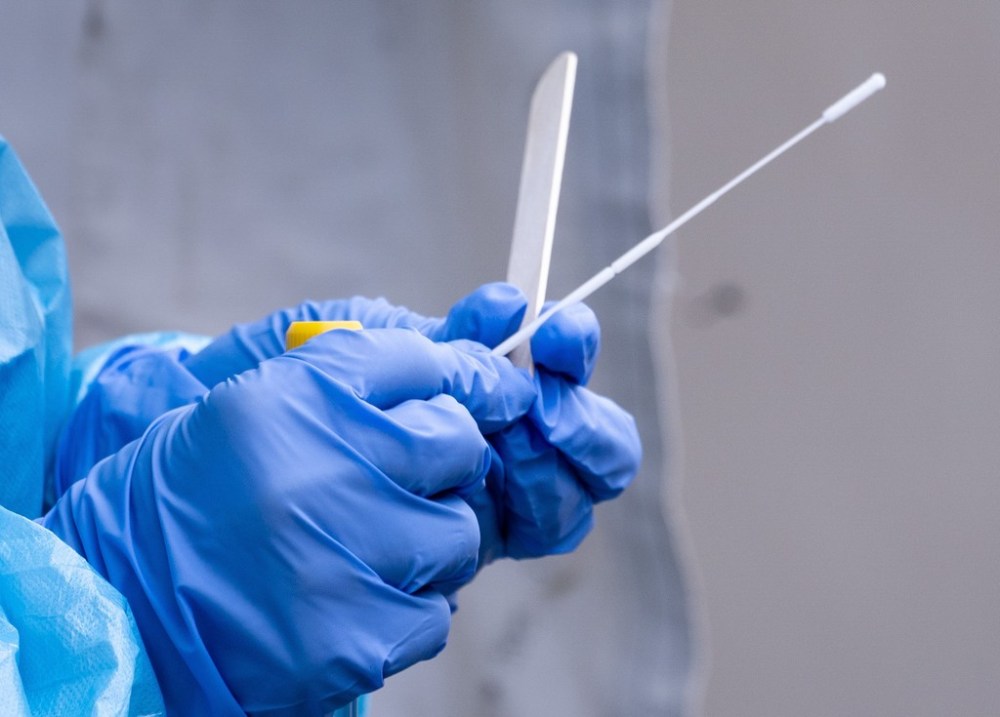
Now medical researchers and supercomputers are turning genetics labs into virus detective agencies, looking first to find the novel coronavirus itself within blood samples from thousands of infected patients, and then comparing all of those isolated viruses to each other looking for places they differ.
THE CANADIAN PRESS/Paul Chiasson

Every close match will draw a line from patient to patient, ultimately painting a picture of how the virus spread.

“This is the big effort over the next four weeks,” said Andrew McArthur, director of the biomedical discovery and commercialization program at McMaster University.

“What’s going to come out of there pretty soon is a glimpse of what just happened, how did it move around the province, how did it move between provinces or how big was Pearson (airport) in the early days of the airport being open.”

Knowing how the virus spread will show where there were weaknesses in public health measures early on, said McArthur. Being able to keep divining genetic codes from samples will mean when there are flare-ups of cases, they can be quickly compared to each other to see if they’re all related or are coming from multiple sources.

It means, for example, a long-term care centre should be able to quickly know if its 10 new cases are because one case spread widely or arose from multiple carriers coming into the facility.

“That’s a very different infection-control problem,” said McArthur.

It also means that maybe, just maybe, the second COVID-19 wave most think is coming won’t be as bad, or as hard to control, as the first, because the sources can be isolated very quickly.

“A second wave is likely,” McArthur said. “But we’ve never spent this kind of money and effort before, either, so maybe we’ll beat it.”

The kinds of genetic technology being used for this project did not exist when SARS hit Canada in 2003.

This genetic mapping is constantly on the look-out for mutations. Thus far, SARS-CoV-2, the official name for the virus that causes COVID-19, has not mutated as quickly as many others do. Influenza, for instance, changes so much over a year the vaccine has to be retooled every summer to keep up.

But there are enough subtle changes still happening among the 28,000 individual markers that make up a genome for SARS-CoV-2 that cases can be traced backward and linked to the ones that came before. McArthur said it takes a lot of data storage, a lot of high-capacity computer analysis, and a lot of money, to run the comparisons among them all.

The federal government put $40 million on the table in April for genetic research on COVID-19. Half is to keep tabs on the virus as it spreads, look for any changes it undergoes, and map its pathway across the country. The other half is to look at the genetic structures of the patients who get infected, trying to answer the puzzling question of why some people die and others have symptoms so mild they never even know they are sick.

Genome Canada is administering the project, with six regional genomics agencies overseeing the work locally and labs like McArthur’s doing the testing and analysis. The funding is intended to create genetic maps from 150,000 patients. Canada thus far has had about 108,000 positive cases, and the expectation is that almost every one of them will be gene-mapped.

The results will be loaded into a global site comparing all known infections of COVID-19, but also be analyzed for national and regional reports.

In New York, genetic sequencing was used to figure out that COVID-19 in Manhattan wasn’t coming from China and Iran as imagined, but from Europe. In Canada, it is suspected that much of the virus came into this country from travellers returning from the United States in early March. But the work is only now beginning to confirm that belief.

McArthur estimates the first data will be available for Ontario in about four weeks, but warns it will take many more months to complete all of the tests. His lab sequenced 600 samples on Wednesday alone.

Overall, McArthur expects the genetics project to last for two years.

This report by The Canadian Press was first published July 12, 2020.
Report Error Submit a Tip

More Stories

Teacher barred for ‘repeated boundary-crossing conduct’

Maggie Macintosh 3 minute read Yesterday at 11:01 PM CDT

A disciplinary panel has ordered the cancellation of a Chinese-Canadian teacher’s certificate because of her “repeated boundary-crossing with a student” during her tenure at an international school with local ties.

Janice Wen Ying Ma is permanently barred from teaching on Manitoba soil or at a Manitoba-accredited institution as of Sept. 14.

The new ruling concludes that Ma engaged in inappropriate physical interaction and “emotionally intimate online messages” with a girl who attended Clifford International School in Guangzhou, China in 2024-25.

“This conduct represents a fundamental departure from the standards expected of a teacher,” the panel, chaired by public representative Gordon Schumacher, wrote in its 22-page decision.

Klein vows to freeze water, sewer rate for next two years

Joyanne Pursaga 5 minute read Preview

Klein vows to freeze water, sewer rate for next two years

Joyanne Pursaga 5 minute read 6:09 PM CDT

Mayoral candidate Kevin Klein is promising to cancel a water and sewer rate hike proposed for next year and freeze the fee for two years.

Klein said Winnipeggers are simply paying far too much for the utility.

“I think we have to freeze them right now because we’ve seen (a substantial increase) in the last four years. We are facing some of the most difficult financial times for families right now,” he said.

He would also ask the provincial Public Utilities Board to set Winnipeg’s future water and sewer rates, a power currently held by city council.

Read
6:09 PM CDT

Manitoba PCs choose Narth as interim leader; ‘deeply hurt’ Khan blasts former caucus colleagues

Carol Sanders 8 minute read Preview

Manitoba PCs choose Narth as interim leader; ‘deeply hurt’ Khan blasts former caucus colleagues

Carol Sanders 8 minute read Updated: 1:59 PM CDT

Manitoba’s Progressive Conservative caucus chose MLA Konrad Narth as interim party leader Tuesday to replace Obby Khan, who quit a day earlier after he said he was stabbed in the back by a small group of caucus members plotting in secret to oust him.

“I am deeply, emotionally hurt by this,” Khan told the Free Press Tuesday afternoon.

He announced late Monday afternoon that he was leaving the Tory caucus and will sit as an independent MLA. He was absent from the first question period in four months Tuesday as the legislature resumed sitting after the summer.

The former Winnipeg Blue Bombers offensive lineman said he prevailed in a confidence vote Friday; 13 caucus members voted for him to remain leader, six voted against and one person was absent.

Read
Updated: 1:59 PM CDT

Wab Kinew as ‘communicator in chief’

Paul G. Thomas 6 minute read Preview

Wab Kinew as ‘communicator in chief’

Paul G. Thomas 6 minute read Yesterday at 2:00 AM CDT

Premier Wab Kinew and his party have been riding high in the polls longer than normal for a government one year or less away from its first re-election contest. One reason is his ubiquitous, dominating communications presence as NDP leader and premier.

The argument here is that Kinew has supplemented his prerogatives as premier and party leader (such as appointing cabinet ministers and approving party nominations) with the skilful use of communications to advance his policy agenda, boost his personal popularity and maintain the competitive advantage of his party over the opposition Progressive Conservatives.

Communications has always been a significant part of politics and policy making. However, in the contemporary political and media environments, communications considerations have moved from the background to the foreground of decision-making by political parties, including when they are performing in the role of government. Campaigning and governing now overlap in what has been described as a permanent election campaign.

Political parties use communications strategies for several purposes: to establish an image of the leader which makes a positive emotional connection with voters; to promote a coherent message and to keep party members on message; and to gain favourable media coverage for its policies and other actions on almost a daily basis.

Read
Yesterday at 2:00 AM CDT

Manitoba PC leader Khan survives confidence vote

Carol Sanders 3 minute read Preview

Manitoba PC leader Khan survives confidence vote

Carol Sanders 3 minute read Updated: Yesterday at 8:33 PM CDT

Manitoba Progressive Conservative Leader Obby Khan survived a confidence vote last week.

Caucus communications director Alison Sutherland confirmed the vote was held Friday and that Khan still has “the full confidence” of the PC caucus.

She did not provide further details.

The party under Khan’s leadership is floundering, a recent poll suggests.

Read
Updated: Yesterday at 8:33 PM CDT

Furby Street residents fed up with inaction on drug houses

Carol Sanders 6 minute read Preview

Furby Street residents fed up with inaction on drug houses

Carol Sanders 6 minute read Updated: Yesterday at 8:39 AM CDT

Anxious Furby Street residents contacted the city and their elected officials Friday to — once again — report people coming and going from a boarded-up house they call a dangerous “drug centre” and “den of thieves” that’s just steps away from a house under construction.

Linda Zak, who was holding a yard sale with a group of neighbours Friday morning, described the trouble the home attracts, while a woman slumped on the front steps and a man standing in the yard yelled to someone inside it.

“It is a drug centre,” said Zak, 77. “We know that. A couple of days ago, a person lit the front on fire. Now, as you look at it, you can see where the facade was burning and they were trying to harm people inside.”

“We’re very concerned about it being next to the home this man is building,” she said, pointing to the two-storey that’s nearly completed. The boarded-up house is in the 500 block of Furby.

Read
Updated: Yesterday at 8:39 AM CDT