As Quebec rolls out COVID-19 ad campaign, experts wonder if it will reach target audience

Advertisement

Advertise with us

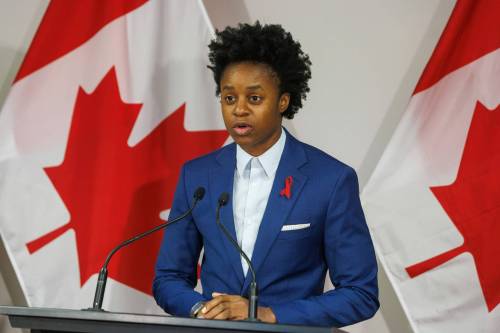
MONTREAL - Quebec has begun rolling out a COVID-19 advertising campaign aimed at putting a human face on the deadly virus and reaching those who discount its severity.

Read this article for free:


or

Already have an account? Log in here »

To continue reading, please subscribe:

Subscribe and receive a limited-edition Free Press branded hat or tote.

Digital Subscription

One year of digital access for only $205*

  • Enjoy unlimited reading on winnipegfreepress.com
  • Read the E-Edition, our digital replica newspaper
  • Access News Break, our award-winning app
  • Play interactive puzzles

*First annual payment billed as $205.00 + GST for one year. This annual subscription will automatically renew at $233.00 + GST every 52 weeks (10% off the regular annual price of $259.35). Offer available to new and qualified returning subscribers only. Cancel any time.

To continue reading, please subscribe:

Add Free Press access to your Brandon Sun subscription for only an additional

$1 for the first 4 weeks*

  • Enjoy unlimited reading on winnipegfreepress.com
  • Read the E-Edition, our digital replica newspaper
  • Access News Break, our award-winning app
  • Play interactive puzzles
Start now

*Your next Brandon Sun subscription payment will increase by $1.00 and you will be charged $17.95 plus GST for four weeks. After four weeks, your payment will increase to $24.95 plus GST every four weeks.

Hey there, time traveller!
This article was published 23/09/2020 (2200 days ago), so information in it may no longer be current.

MONTREAL – Quebec has begun rolling out a COVID-19 advertising campaign aimed at putting a human face on the deadly virus and reaching those who discount its severity.

The ads — the first of which was released Tuesday night — include testimonials of those impacted directly by COVID-19.

In the first spot, the camera focuses on Francis, a general contractor who recounts spending 45 days in hospital, including 12 in a coma. He underwent a tracheotomy and now breathes through an opening in his neck.

Quebec Premier Francois Legault responds to reporters questions during a news conference on the COVID-19 pandemic at the National Assembly in Quebec City on September 15, 2020. Quebec has begun rolling out its COVID-19 advertising campaign in the hopes of putting a human face on the deadly virus and reaching those who discount its severity. The ads -- the first of which was released Tuesday night -- include testimonials of those impacted directly by COVID-19. Premier Francois Legault shared the 30-second spot — the story of a man named Francis, a COVID-19 survivor in his 50s. THE CANADIAN PRESS/Jacques Boissinot

Francis explains the virus was contracted after chatting with a friend in a doorway. Three days later, symptoms set in: fever, fatigue and difficulty breathing, and now he’s no longer able to work.

“Believe me,” he concludes, “COVID-19 is serious.”

With public health officials saying the province hit hardest by COVID-19 is experiencing a second wave, efforts have intensified to reach a segment of the population that has felt the virus’s risk is overhyped.

But some marketing experts do not believe the government is striking the right tone or that the message will reach the right people.

“Fear is not a good motivator,” said Benoit Duguay, a professor in the Universite du Quebec a Montreal’s school of management.

“You’re going to scare the wrong people. You are going to scare the people who are already scared, and the people who are not scared, it will not change their attitude or behaviour in any way, form or fashion.”

Robert Soroka, a marketing professor at Concordia University’s John Molson School of Business, says the ad would have been more effective with an accompanying message at the end.

“Fear appeals work, but they are most effective when you provide the audience with a solution,” Soroka said.

The other issue is that the recent spike in infections has been most pronounced among younger people, who won’t necessarily see themselves in the first advertisement featuring a middle-aged contractor.

“They absolutely need to hear it from social influencers, from people who are respected by that segment of the population,” Soroka said. “Right now, for that group, they’re not drinking the Kool-Aid … and certainly their peers are not reinforcing the message the government is trying to convey.”

Those influencers or celebrities that would best reach those age groups don’t necessarily want to dilute their own brands and dissuade activities that generate income for them, Soroka said.

Premier Francois Legault shared the 30-second spot featuring Francis on Twitter, stressing that he is not an actor. “He is a Quebecer, like you and me, who caught COVID-19 and got very sick,” he wrote.

Laurette Dube, a marketing professor at McGill University’s Desautels faculty of management, noted that many of those skeptical of the government responded negatively to the premier’s tweet of the ad.

“The research on fear typically kind of says two things: not enough doesn’t get attention, too much, you get this reaction that is not processed,” Dube said.

She said that if attitudes are very polarized, people at one extreme are already convinced. And with those at the other extreme, “you can have the reaction I’ve read in those tweets (responding to Legault).”

Duguay said that if the province’s goal is to stop large gatherings, a more effective advertisement would show what gatherings that follow the rules look like.

“It is preferable to have positive than negative appeals in advertising,” he said. “Fear has never been a proven change factor.”

This report by The Canadian Press was first published Sept. 23, 2020.

Report Error Submit a Tip

More Stories

Kent Monkman debuts beaver sculpture in Toronto’s ambitious new waterfront park

Alex Nino Gheciu, The Canadian Press 2 minute read Preview

Kent Monkman debuts beaver sculpture in Toronto’s ambitious new waterfront park

Alex Nino Gheciu, The Canadian Press 2 minute read Wednesday, Sep. 30, 2026

TORONTO - Kent Monkman’s first-ever public art installation is dam good.

The celebrated Cree artist’s new permanent sculpture, dubbed “The Colony,” debuts Wednesday in Toronto’s east end.

The 15-foot-high bronze structure features beavers dancing, feasting and celebrating, evoking Indigenous ceremonies.

It highlights the vital role of beavers in the natural, Indigenous and colonial histories of Turtle Island, says a release.

Read
Wednesday, Sep. 30, 2026

Puzzles Palace

1 minute read Monday, Jul. 27, 2026

To solve our puzzles, please subscribe with this special offer: |

Face up to fact you blew it with ex-wife

Maureen Scurfield 4 minute read Yesterday at 2:01 AM CDT

DEAR MISS LONELYHEARTS: My ex-wife just moved back to town and looks like a changed woman. She spent years married to me, and our kids just graduated in a city where we once lived together. That was without help from me, other than minor financial stuff.

She has found a great new job back in Winnipeg and she’ll do very well. I admire her more than any other woman I ever met, but she’s not interested in me at all.

I once had a solid, responsible job and then got into drinking, and I cheated on her. That’s why she left town. Now I’ve been sober and sorry for many years.

I asked her last weekend if I could take her out to dinner and she said no and changed the subject.

Port of Churchill signs agreement with Dutch port

Aaron Epp 2 minute read Preview

Port of Churchill signs agreement with Dutch port

Aaron Epp 2 minute read Tuesday, Sep. 29, 2026

Arctic Gateway Group, operator of the Port of Churchill, has signed an agreement with the Port of Rotterdam in the Netherlands to attract business and strengthen supply chains linking Western Canada and Europe.

The agreement enables the two ports to work together to develop new trade in critical minerals and energy products, connect Canadian producers with European buyers, and identify opportunities to improve the supply chain from Western Canadian resource projects through Churchill and into European markets.

The Port of Rotterdam is Europe’s largest port and home to more than 3,000 businesses across its industrial complex, serving as a major gateway for critical raw materials and energy.

Meanwhile, the Port of Churchill has been identified as a transformative national strategy for Canada and is emerging as a northern trade corridor connecting Western Canada’s resources to global markets.

Read
Tuesday, Sep. 29, 2026

Health minister warns $1.2 billion in annual federal funding set to expire in March

Scott Billeck 4 minute read Preview

Health minister warns $1.2 billion in annual federal funding set to expire in March

Scott Billeck 4 minute read Yesterday at 6:58 PM CDT

Manitoba’s health minister is warning of possible cuts to health care with $1.2 billion in annual funding from Ottawa set to expire next year.

“We’re very concerned that what would be the largest cut to health care in a generation is right in front of us,” Health Minister Uzoma Asagwara said Thursday at the Manitoba legislature. “It means that services that Manitobans depend on will be in jeopardy and be at risk.

“Any reductions, any cuts from Canada, will have direct impacts on the health outcomes of Manitobans.”

Asagwara, who serves as the provincial and territorial health minister lead, chaired a virtual meeting Tuesday with provincial and territorial health ministers to discuss federal funding for health care, mental health care and substance use services, which is scheduled to expire March 31, 2027.

Read
Yesterday at 6:58 PM CDT

Virgo Rising’s debut LP is visceral, vulnerable

Ben Waldman 6 minute read Preview

Virgo Rising’s debut LP is visceral, vulnerable

Ben Waldman 6 minute read 2:00 AM CDT

Lauren Wittmann’s apartment was bright and trinket-filled, and Emily Sinclair felt nostalgia for it as soon as she walked through the door.

It was 2018 or so, and as Sinclair, the lead vocalist for Winnipeg indie quartet Virgo Rising, tells it, crossing the transom and kicking off her shoes into a pile of strange soles felt like “bursting into the world” for the very first time.

“I was finally meeting my people,” Sinclair recalls.

A few years later, that same unit came up for rent, and Sinclair moved in, unboxing her possessions and hanging her frames on the hammered nails of prior tenants.

Read
2:00 AM CDT