Hour-by-hour: Biden’s behind-the-scenes push for cease-fire
Advertisement
Read this article for free:
or
Already have an account? Log in here »
To continue reading, please subscribe:

Digital Subscription
One year of digital access for only $205*
- Enjoy unlimited reading on winnipegfreepress.com
- Read the E-Edition, our digital replica newspaper
- Access News Break, our award-winning app
- Play interactive puzzles
*First annual payment billed as $205.00 + GST for one year. This annual subscription will automatically renew at $233.00 + GST every 52 weeks (10% off the regular annual price of $259.35). Offer available to new and qualified returning subscribers only. Cancel any time.
To continue reading, please subscribe:
Add Free Press access to your Brandon Sun subscription for only an additional
$1 for the first 4 weeks*
- Enjoy unlimited reading on winnipegfreepress.com
- Read the E-Edition, our digital replica newspaper
- Access News Break, our award-winning app
- Play interactive puzzles
*Your next Brandon Sun subscription payment will increase by $1.00 and you will be charged $17.95 plus GST for four weeks. After four weeks, your payment will increase to $24.95 plus GST every four weeks.
Read unlimited articles for free today:
or
Already have an account? Log in here »
Hey there, time traveller!
This article was published 21/05/2021 (1938 days ago), so information in it may no longer be current.
The diplomatic flurry was over and Israel’s Benjamin Netanyahu was on the phone telling President Joe Biden that it appeared the furious fighting between Israel and Hamas was about to end.
But Biden remained wary even after the afternoon phone call with the prime minister. Things still could go crosswise with hours to go before the cease-fire took effect, Biden’s team reasoned.
Nervous White House aides dialed contacts in Tel Aviv and Cairo to suss out whether the truce would hold. Officials in both the U.S. and Israel worried that another barrage of Hamas rockets could sink the Egyptian-brokered agreement, according to an official familiar with the conversations.
Then came another call from Netanyahu — his second to Biden that day — with reassurances for the American president that the 11-day war really was halting.
Biden’s first extended foreign policy crisis, one he handled largely by avoiding the cameras and maneuvering instead behind the scenes, had abated.
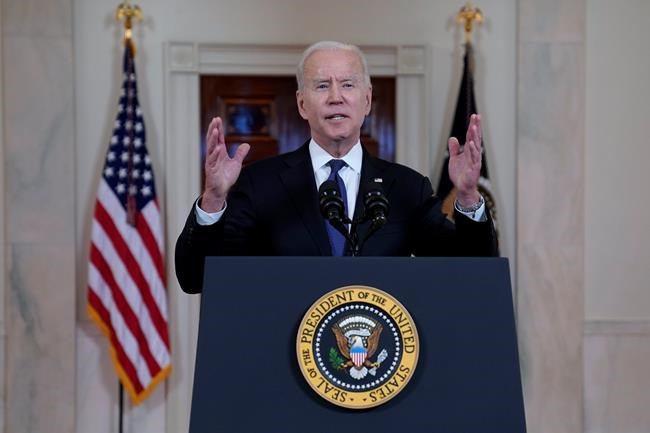
The president went before cameras in the Cross Hall of the White House to describe “intensive high-level discussions, hour by hour, literally” by the United States that involved Egypt, the Palestinian Authority and other Middle Eastern countries.
All of it, he said, came “with an aim of avoiding the sort of prolonged conflict we’ve seen in previous years when the hostilities have broken out.”
The calls between Biden and Netanyahu were a small sample of the furious diplomacy that the White House conducted. The president and senior aides had over 80 engagements, by phone or in person, in search of an endgame to the fighting, according to the White House.
Biden’s speech celebrating the cease-fire lasted just 31/2 minutes and was delivered in time for evening news broadcasts. He reiterated his belief that Israel has a right to defend itself, expressed condolences for Palestinian civilians who died in the Israeli bombardment and promised that humanitarian aid to Gaza Strip was on its way.
It was an enigmatic, and perhaps fitting, bookend to the sort of messy Mideast crisis he had hoped to avoid, particularly early in a presidency already oversubscribed with managing the public health and economic tumult caused by the coronavirus pandemic.
The conflict had also exposed a rift between Biden and members of his own party. The president who over nearly 50 years in national politics has burnished a reputation for unwavering support of Israel leads a Democratic Party that has trended toward a far more divided outlook on the proper path to peace between Israel and the Palestinians. Republicans were all too eager to try to make political use of the situation.
Biden had studiously avoided extensive public comment about the Israeli military strikes. But he faced increasing pressure from Democrats to speak out against the Israelis as the death toll climbed in Gaza and as tens of thousands of Palestinians were displaced by the aerial bombardment.
Democratic Sen. Chris Murphy of Connecticut expressed relief at the cease-fire and commended Biden and his team for their work. But he also laid out ongoing worries, saying, “I am deeply concerned that without meaningful progress towards a two-state future, the conditions of despair will deepen, further fuel extremism and lead to a tragic renewal of the cycle of violence.”
The cease-fire announcement came after Biden on Wednesday stepped up his pressure on Netanyahu, telling the prime minister that he expected “significant de-escalation” of the fighting by day’s end, according to the White House. But Netanyahu came right back with a public declaration that he was “determined to continue” the Gaza operation “until its objective is achieved.”
Biden’s advisers were not overly concerned that Netanyahu’s comments seemed to reject the president’s public call to ease off, said the official, who was not authorized to publicly discuss private discussions and spoke on condition of anonymity.
In fact, soon after Wednesday’s conversation between the leaders, the Israelis signaled to the White House that they were prepared to propose a time for a cease-fire, according to officials.
Netanyahu, who saw daily polling that showed the vast majority of Israelis opposed a cease-fire, was looking for assurances that if such an offer was extended it would, in fact, be accepted. And he wanted the Biden administration’s help.
Biden on Thursday morning called Egyptian President Abdel Fattah el-Sissi and asked him if he could guarantee that Hamas and other militant groups in Gaza would abide by a cease-fire if Israel agreed to a deal.
El-Sissi told Biden that he was confident the answer was yes. And the White House quickly relayed that to the Israelis.
Hours later, Netanyahu sat down with his Cabinet. For the roughly 2-1/2 hour meeting, White House officials — who had been in nearly continuous contact for days from the Israelis — heard nothing from Tel Aviv.
When it ended, Netanyahu called Biden and told the president that the Cabinet had approved the cease-fire. The Israelis wanted it to take effect quickly in hopes of mitigating chances that Hamas would attempt to rain rockets on Tel Aviv in the final moments of the war.
Still, Netanyahu conveyed some trepidation that the deal could fall apart. About 40 minutes later, as Biden was preparing for his remarks, Netanyahu called again and told the president he was confident the cease-fire would stick.
While Biden and aides were deep in the backchannel efforts, domestic pressure was building on the president.
On Tuesday, while in Michigan to visit a Ford facility, Democratic Rep. Rashida Tlaib confronted Biden at the airport and called on him to speak out forcefully against the Israeli strikes. Also this week, Sen. Bernie Sanders of Vermont and Rep. Alexandria Ocasio-Cortez of New York introduced resolutions to block the sale of $735 million in military weaponry to Israel that had already been approved by the Biden administration.
“Let us hope that the ceasefire in Gaza holds,” Sanders tweeted Thursday evening. “But that’s not enough. Our job now is to support desperately needed humanitarian and reconstruction aid to Gaza’s people, and find a way to finally bring peace to the region.”
Biden advisers had concluded in the first days of the crisis, as Hamas fired hundreds of rockets on Israel, that a call from the president for Israeli restraint would have fallen flat. At the same time, early in the crisis, there was deep worry inside the White House that the fighting could escalate into something that would take months to tamp down.

As the outside calls for Biden to speak out more forcefully grew, the president and top aides privately made the case to Israeli officials that time wasn’t on their side.
Biden and Netanyahu have known each other for more than 30 years and have frequently butted heads. Their conversations throughout the crisis probed one another as they tried to game out a path forward, according to officials.
Netanyahu insisted that his half-dozen conversations with Biden during the fighting were “warm and friendly.” Biden in the calls referred to Netanyahu by his nickname, “Bibi,” while the prime minster addressed the president as “Joe.”
“I told him that any country coming under fire from thousands of rockets on its cities would not sit with folded hands, and I told him that we will halt the fighting once we achieve the objectives of the campaign,” Netanyahu said. “The president understood this and this is exactly what we did.“
Biden ended his own brief remarks about the cease-fire on a hopeful note: “I believe we have a genuine opportunity to make progress, and I’m committed to working for it.”
Related Articles
Canada welcomes ceasefire in Gaza, Israel
Advertisement Advertise With Us
Advertisement Advertise With Us