US mandates vaccines or tests for big companies by Jan. 4
Advertisement
Read this article for free:
or
Already have an account? Log in here »
To continue reading, please subscribe:
Digital Subscription
One year of digital access for only $1.44 a week*
- Enjoy unlimited reading on winnipegfreepress.com
- Read the E-Edition, our digital replica newspaper
- Access News Break, our award-winning app
- Play interactive puzzles
*Billed as $5.77 plus GST every four weeks. After 52 weeks, price increases to the regular rate of $19.95 plus GST every four weeks. Offer available to new and qualified returning subscribers only. Cancel any time.
To continue reading, please subscribe:
Add Free Press access to your Brandon Sun subscription for only an additional
$1 for the first 4 weeks*
- Enjoy unlimited reading on winnipegfreepress.com
- Read the E-Edition, our digital replica newspaper
- Access News Break, our award-winning app
- Play interactive puzzles
*Your next Brandon Sun subscription payment will increase by $1.00 and you will be charged $17.95 plus GST for four weeks. After four weeks, your payment will increase to $24.95 plus GST every four weeks.
Read unlimited articles for free today:
or
Already have an account? Log in here »
Hey there, time traveller!
This article was published 04/11/2021 (1814 days ago), so information in it may no longer be current.
Tens of millions of Americans who work at companies with 100 or more employees will need to be fully vaccinated against COVID-19 by Jan. 4 or get tested for the virus weekly under government rules issued Thursday.
The new requirements are the Biden administration’s boldest move yet to persuade reluctant Americans to finally get a vaccine that has been widely available for months — or face financial consequences. If successful, administration officials believe it will go a long way toward ending a pandemic that has killed more than 750,000 Americans.
First previewed by President Joe Biden in September, the requirements will apply to about 84 million workers at medium and large businesses, although it is not clear how many of those employees are unvaccinated.
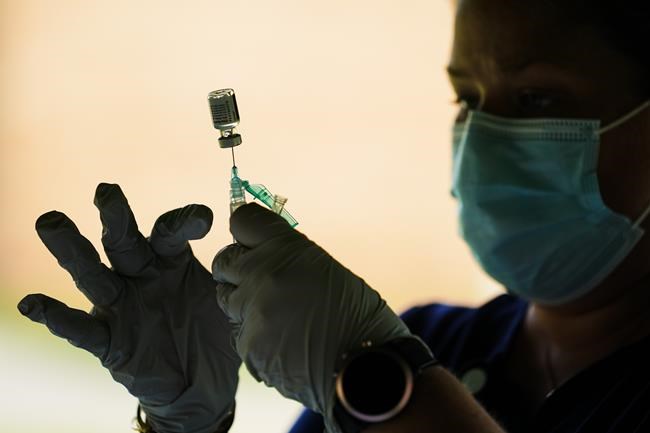
The Occupational Safety and Health Administration regulations will force the companies to require that unvaccinated workers test negative for COVID-19 at least once a week and wear a mask while in the workplace.
OSHA left open the possibility of expanding the requirement to smaller businesses. It asked for public comment on whether employers with fewer than 100 employees could handle vaccination or testing programs.
Tougher rules will apply to another 17 million people working in nursing homes, hospitals and other facilities that receive money from Medicare and Medicaid. Those workers will not have an option for testing — they will need to be vaccinated.
Workers will be able to ask for exemptions on medical or religious grounds.
The requirements will not apply to people who work at home or outdoors.
Biden framed the issue as a simple choice between getting more people vaccinated or prolonging the pandemic.
“While I would have much preferred that requirements not become necessary, too many people remain unvaccinated for us to get out of this pandemic for good,” he said Thursday in a statement.
Biden said his encouragement for businesses to impose mandates and his own previous requirements for the military and federal contractors have helped reduce the number of unvaccinated Americans over 12 from 100 million in late July to about 60 million now.
Those measures, he said, have not led to mass firings or worker shortages, adding that vaccines have been required before to fight other diseases.
OSHA said companies that fail to comply with the regulations could face penalties of nearly $14,000 per violation.
The agency will face enforcement challenges. Even counting help from states, OSHA has only 1,850 inspectors to oversee 130 million workers at 8 million workplaces. An administration official said the agency will respond to whistleblower complaints and make limited spot checks.
The release of the rules followed weeks of regulatory review and meetings with business groups, labor unions and others.
OSHA drafted the rules under emergency authority meant to protect workers from an imminent health hazard. The agency estimated that the vaccine mandate will save more than 6,500 worker lives and prevent more than 250,000 hospitalizations over the next six months.
The rules set up potential legal battles along partisan lines between states and the federal government. Several states and Republican governors threatened to sue, contending that the administration lacks the power to make such sweeping mandates under emergency authority.
OSHA’s parent agency, the Labor Department, says it is on sound legal footing. The department’s top legal official, Seema Nanda, said OSHA rules preempt conflicting state laws or orders, including those that bar employers from requiring vaccinations, testing or face masks.
Senate Republicans immediately launched a petition to force a vote to overturn the vaccine mandate, but with Democrats controlling the chamber, the effort is nearly certain to fail.
The rules will require workers to receive either two doses of the Pfizer or Moderna vaccines or one dose of the Johnson & Johnson vaccine by Jan. 4 or be tested weekly. Employees testing positive must be removed from the workplace.
Companies won’t be required to provide or pay for tests for unvaccinated workers, but they must give paid time off for employees to get the shots and sick leave to recover from side effects that prevent them from working. Requirements for masks and paid time off for shots take effect Dec. 5.
Employers covered by the requirements must verify their workers’ vaccination status by checking documents such as CDC vaccination cards, records from doctors or pharmacies, or even an employee’s own signed declaration.
The Centers for Medicare & Medicaid Services issued a separate rule requiring vaccination for workers in 76,000 health facilities and home health care providers that get funding from the government health programs. A senior administration official said several large private health care organizations imposed their own mandates and achieved high vaccination rates — 96% or higher — without widespread resignations.
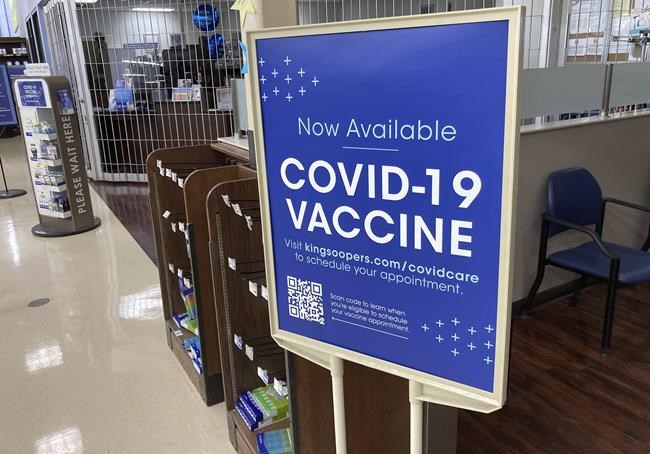
A previously announced requirement for federal contractors to make sure workers are vaccinated was scheduled to take effect Dec. 8, but the administration delayed that measure until Jan. 4 to match the requirements on other large employers and health care providers. Already, more than a dozen states have sued to block the mandate on contractors.
For weeks, Biden has encouraged businesses not to wait for OSHA to act. He has touted businesses that announced their own vaccine requirements and urged others to follow their lead.
Administration officials say those efforts are paying off, with about 70% of adults fully vaccinated.
Workplace vaccine mandates have become more common recently, with hospitals, state and local governments and some major corporations requiring COVID-19 shots for employees. The mandates have led to overwhelming compliance — in some cases 99% of workers — although a small but vocal number have faced dismissal, filed lawsuits or sought exemptions.
United Airlines required 67,000 U.S. employees to get vaccinated or face termination. Only a couple hundred refused to do so, although about 2,000 are seeking exemptions.
In August, Tyson Foods told its 120,000 U.S. workers that they must be vaccinated by Nov. 1. On Thursday, the company said more than 96% of its workforce was vaccinated, including 60,500 people who got their shots after the August announcement.
Walmart, the nation’s largest private employer, said in late July it was requiring all workers at its headquarters in Bentonville, Arkansas, and managers who travel within the United States to be vaccinated by Oct. 4. The retailer stopped short of requiring shots for front-line workers, however.
However, some companies have expressed fear that some vaccine-hesitant workers might quit, leaving their workforces even thinner in an already-tight labor market.
Several corporate groups, including the Business Roundtable, endorsed the mandate. However, retail groups worried that the requirement could disrupt their operations during the critical Christmas shopping period. Retailers and others also said it could worsen supply chain disruptions.
The National Retail Federation suggested the new rules are not needed because the rolling average number of new daily cases in the U.S. has fallen by more than half since September.
“Nevertheless, the Biden administration has chosen to declare an ‘emergency’ and impose burdensome new requirements on retailers during the crucial holiday shopping season,” said David French, a senior vice president for the trade group.
The number of new infections in the U.S. is still falling from a summer surge caused by the highly contagious delta variant, but the rate of decline has slowed in recent weeks. The 7-day moving average is down 6% from two weeks ago, at more than 76,000 new cases and 1,200 deaths per day.
Cole Stevenson, a 34-year-old autoworker at the Ford Rouge truck plant in Dearborn, Michigan, said he remains uncomfortable with a vaccine that was developed just a year ago.
He intends to get weekly COVID-19 tests and says he won’t reconsider getting the vaccine even if the tests are a financial or logistical burden.
“It’s getting pretty disgusting how much the government thinks they can be involved in people’s lives,” he said. “If the whole thing is sort of cooling down and cases are lowering, then buzz off — don’t force it on people.”
___
Associated Press writers Paul Wiseman and Hope Yen in Washington, Tom Krisher and Dee-Ann Durbin in Detroit, Stacey Plaisance-Jenkins in Picayune, Mississippi, and Matt OBrien in Providence, Rhode Island, contributed.