World Economic Forum warns cyber risks add to climate threat
Advertisement
Read this article for free:
or
Already have an account? Log in here »
To continue reading, please subscribe:

Digital Subscription
One year of digital access for only $205*
- Enjoy unlimited reading on winnipegfreepress.com
- Read the E-Edition, our digital replica newspaper
- Access News Break, our award-winning app
- Play interactive puzzles
*First annual payment billed as $205.00 + GST for one year. This annual subscription will automatically renew at $233.00 + GST every 52 weeks (10% off the regular annual price of $259.35). Offer available to new and qualified returning subscribers only. Cancel any time.
To continue reading, please subscribe:
Add Free Press access to your Brandon Sun subscription for only an additional
$1 for the first 4 weeks*
- Enjoy unlimited reading on winnipegfreepress.com
- Read the E-Edition, our digital replica newspaper
- Access News Break, our award-winning app
- Play interactive puzzles
*Your next Brandon Sun subscription payment will increase by $1.00 and you will be charged $17.95 plus GST for four weeks. After four weeks, your payment will increase to $24.95 plus GST every four weeks.
Read unlimited articles for free today:
or
Already have an account? Log in here »
Hey there, time traveller!
This article was published 11/01/2022 (1734 days ago), so information in it may no longer be current.
LONDON (AP) — Cyberthreats and the growing space race are emerging risks to the global economy, adding to existing challenges posed by climate change and the coronavirus pandemic, the World Economic Forum said in a report Tuesday.
The Global Risks Report is usually released ahead of the annual elite winter gathering of CEOs and world leaders in the Swiss ski resort of Davos, but the event has been postponed for a second year in a row because of COVID-19. The World Economic Forum still plans some virtual sessions next week.
Here’s a rundown of the report, which is based on a survey of about 1,000 experts and leaders:
WORLD OUTLOOK
As 2022 begins, the pandemic and its economic and societal impact still pose a “critical threat” to the world, the report said. Big differences between rich and poor nations’ access to vaccines mean their economies are recovering at uneven rates, which could widen social divisions and heighten geopolitical tensions.
By 2024, the global economy is forecast to be 2.3% smaller than it would have been without the pandemic. But that masks the different rates of growth between developing nations, whose economies are forecast to be 5.5% smaller than before the pandemic, and rich countries, which are expected to expand 0.9%.
DIGITAL DANGERS
The pandemic forced a huge shift — requiring many people to work or attend class from home and giving rise to an exploding number of online platforms and devices to aid a transformation that has dramatically increased security risks, the report said.
“We’re at the point now where cyberthreats are growing faster than our ability to effectively prevent and manage them,” said Carolina Klint, a risk management leader at Marsh, whose parent company Marsh McLennan co-authored the report with Zurich Insurance Group and SK Group.
Cyberattacks are becoming more aggressive and widespread, as criminals use tougher tactics to go after more vulnerable targets, the report said. Malware and ransomware attacks have boomed, while the rise of cryptocurrencies makes it easy for online criminals to hide payments they have collected.
While those responding to the survey cited cybersecurity threats as a short- and medium-term risk, Klint said the report’s authors were concerned that the issue wasn’t ranked higher, suggesting it’s a “blind spot” for companies and governments.
SPACE RACE
Space is the final frontier — for risk.
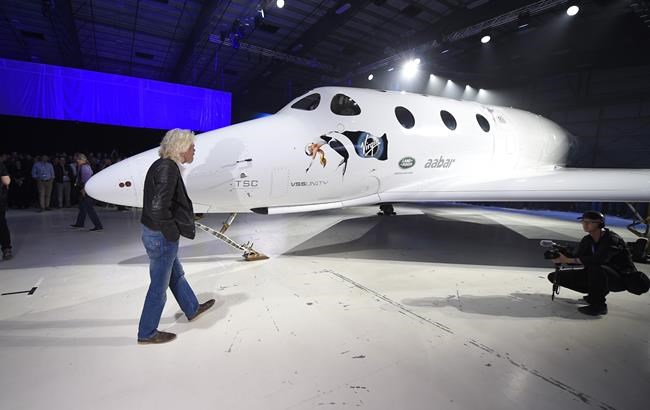
Falling costs for launch technology has led to a new space race between companies and governments. Last year, Amazon founder Jeff Bezos’ space tourism venture Blue Origin and Virgin Galactic’s Richard Branson took off, while Elon Musk’s Space X business made big gains in launching astronauts and satellites.
Meanwhile, a host of countries are beefing up their space programs as they chase geopolitical and military power or scientific and commercial gains, the report said.
But all these programs raise the risk of frictions in orbit.
“Increased exploitation of these orbits carries the risk of congestion, an increase in debris and the possibility of collisions in a realm with few governance structures to mitigate new threats,” the report said.
Space exploitation is one of the areas that respondents thought had among the least amount of international collaboration to deal with the challenges.
Experts and leaders responding to the survey “don’t believe that much is being done in the best possible way moving forward,” World Economic Forum’s managing director, Saadia Zahidi, said at a virtual press briefing from Geneva.
Other areas include artificial intelligence, cyberattacks and migration and refugees, she said.
CLIMATE CRISIS
The environment remains the biggest long-term worry.

The planet’s health over the next decade is the dominant concern, according to survey respondents, who cited failure to act on climate change, extreme weather, and loss of biodiversity as the top three risks.
The report noted that different countries are taking different approaches, with some moving faster to adopt a zero-carbon model than others. Both approaches come with downsides. While moving slowly could radicalize more people who think the government isn’t acting urgently, a faster shift away from carbon intense industries could spark economic turmoil and throw millions out of work.
“Adopting hasty environmental policies could also have unintended consequences for nature,” the report added. “There are still many unknown risks from deploying untested biotechnical and geoengineering technologies.”
___
Follow Kelvin Chan on Twitter.