Wastewater monkeypox testing underway across Canada

Advertisement

Advertise with us

Wastewater testing to detect the monkeypox virus has begun in Winnipeg and 12 other Canadian cities as scientists work to determine how accurate the tests are.

Read this article for free:

or

Already have an account? Log in here »

To continue reading, please subscribe:

Subscribe and receive a limited-edition Free Press branded hat or tote.

Digital Subscription

One year of digital access for only $205*

  • Enjoy unlimited reading on winnipegfreepress.com
  • Read the E-Edition, our digital replica newspaper
  • Access News Break, our award-winning app
  • Play interactive puzzles

*First annual payment billed as $205.00 + GST for one year. This annual subscription will automatically renew at $233.00 + GST every 52 weeks (10% off the regular annual price of $259.35). Offer available to new and qualified returning subscribers only. Cancel any time.

To continue reading, please subscribe:

Add Free Press access to your Brandon Sun subscription for only an additional

$1 for the first 4 weeks*

  • Enjoy unlimited reading on winnipegfreepress.com
  • Read the E-Edition, our digital replica newspaper
  • Access News Break, our award-winning app
  • Play interactive puzzles
Start now

*Your next Brandon Sun subscription payment will increase by $1.00 and you will be charged $17.95 plus GST for four weeks. After four weeks, your payment will increase to $24.95 plus GST every four weeks.

Hey there, time traveller!
This article was published 15/08/2022 (1447 days ago), so information in it may no longer be current.

Wastewater testing to detect the monkeypox virus has begun in Winnipeg and 12 other Canadian cities as scientists work to determine how accurate the tests are.

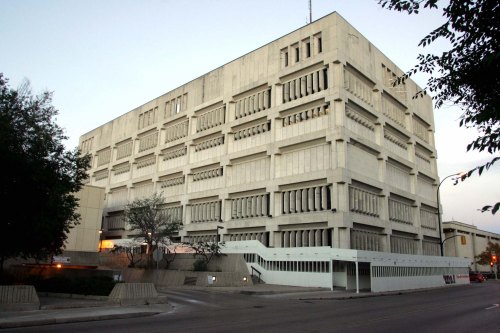
Three types of tests, including one developed in Winnipeg at the National Microbiology Lab, are now being used to measure rates of monkeypox in municipal wastewater, the Public Health Agency of Canada confirmed. The Canadian-developed test could make genomic sequencing easier, meaning if the test is accurate, it would make it much simpler to detect the monkeypox virus in sewage.

The evaluation of the test is nearly complete, a PHAC spokesperson stated.

MIKE DEAL / FREE PRESS FILES
                                Three types of tests, including one developed in Winnipeg at the National Microbiology Lab, are now being used to measure rates of monkeypox in municipal wastewater, the Public Health Agency of Canada confirmed.

MIKE DEAL / FREE PRESS FILES

Three types of tests, including one developed in Winnipeg at the National Microbiology Lab, are now being used to measure rates of monkeypox in municipal wastewater, the Public Health Agency of Canada confirmed.

“It is unique because it allows for easy genomic sequence confirmation. This means that it may be easier to verify if the monkeypox virus is present in a community,” the statement reads.

“Since the NML test is new, more information will be available once scientists have confirmed its accuracy. However, early data demonstrates that the NML test (as well as the externally developed tests) are generating positive results in the wastewater of communities where there are known monkeypox cases. NML scientists are also taking the previously confirmed tests and comparing them against a family of orthopoxvirus (the group of viruses to which monkeypox belongs to). At this time, the previously confirmed tests are successfully demonstrating they can detect the monkeypox virus.”

Using wastewater to monitor levels of monkeypox is new, and scientists around the world are still working on setting standards for this kind of analysis. The surveillance of COVID-19 levels in wastewater paved the way for monitoring other viruses. A global outbreak of monkeypox, which causes rash and flu-like symptoms, is ongoing. No cases have been detected in Manitoba.

The public-health agency has also recently announced plans to use wastewater surveillance to track levels of polio in Canada, as is being done in the U.K. and in the U.S., even though it’s been nearly 20 years since a case of polio was recorded in Canada. Canada’s chief public health officer, Dr. Theresa Tam, said on Aug. 12 that the public health agency has been looking into using wastewater to track antimicrobial resistant organisms and monitor the growth of bacteria that don’t respond to antibiotics.

“That is a key area of exploration as well, going forwards,” Tam said.

katie.may@winnipegfreepress.com

Katie May

Katie May
Multimedia producer

Katie May is a multimedia producer for the Free Press.

Our newsroom depends on a growing audience of readers to power our journalism. If you are not a paid reader, please consider becoming a subscriber.

Our newsroom depends on its audience of readers to power our journalism. Thank you for your support.

Report Error Submit a Tip

More Stories

Crop storage headaches loom on horizon

Laura Rance-Unger 5 minute read Preview

Crop storage headaches loom on horizon

Laura Rance-Unger 5 minute read 2:01 AM CDT

A sense of calm descends over Prairie fields this time of year — at least on the surface.

Activities become more limited in the weeks leading up to harvest. There’s not much farmers can do now to support this year’s crop, other than monitor and protect it from diseases such as sclerotinia in canola and leaf stripe and fusarium head blight in wheat and barley.

July is when you might see farmers wading into a thick stand of canola, conducting a so-called “wet pants test” to get a low-tech read on how much disease-inducing moisture is lurking in the canopy.

Disease pressure is high in a humid, hot summer like this one and it’s kept aerial applicators busy applying fungicides. Sclerotinia spores live on plant residues in the soil and blossom into a mould that destroys the canola stem, starving the maturing pods.

Read
2:01 AM CDT

Giant Tiger to close downtown, area residents bemoan dwindling grocery options

Nicole Buffie 4 minute read Preview

Giant Tiger to close downtown, area residents bemoan dwindling grocery options

Nicole Buffie 4 minute read Thursday, Jul. 30, 2026

One of the only remaining grocery-store options for people living downtown and in the Exchange District is closing its doors.

Red notices on the windows at Giant Tiger’s Donald Street and Ellice Avenue location advised passersby the store will close on Nov. 7.

Chain spokesperson Jessica Charbonneau said in an email the decision to shutter stores is “not taken lightly and is made with careful consideration and thorough analysis.”

The store was busy Thursday afternoon.

Read
Thursday, Jul. 30, 2026

On eve of Folklorama, Ghana pavilion scrambles to replace stolen outfits

Chris Kitching 4 minute read Preview

On eve of Folklorama, Ghana pavilion scrambles to replace stolen outfits

Chris Kitching 4 minute read Updated: Yesterday at 4:46 PM CDT

Volunteers from Folklorama’s Ghana pavilion scrambled to replace cultural costumes for about 40 young dancers after the outfits were stolen in Winnipeg days before the annual festival begins.

Two plastic storage bins containing the costumes, to be worn by children and teenagers, were taken from the trunk of a parked car on Banning Street, near Notre Dame Avenue in the West End, likely late Wednesday or early Thursday.

“I felt sad that this has happened. I felt completely devastated for the mother who had them in her car,” said pavilion co-ordinator Abigail Larson. “The initial feeling of sadness changed to, ‘OK, how do we make this a positive?’”

The costumes belong to the Ghana Union of Manitoba Dancers, whose members have rehearsed for months for Folklorama, which begins Sunday.

Read
Updated: Yesterday at 4:46 PM CDT

Culture minister’s pledge sends officials on hunt for money to fix Islamic centre after apparent hate crime

Carol Sanders 5 minute read Preview

Culture minister’s pledge sends officials on hunt for money to fix Islamic centre after apparent hate crime

Carol Sanders 5 minute read Yesterday at 7:07 PM CDT

Government officials were left scrambling Friday to explain why the province is paying for repairs at a mosque recently targeted in a potential hate crime after a $1 million security enhancement fund was fully allocated in June.

Read
Yesterday at 7:07 PM CDT

Rollins becomes fifth councillor to bow out of fall election

Malak Abas 5 minute read Preview

Rollins becomes fifth councillor to bow out of fall election

Malak Abas 5 minute read Updated: Yesterday at 5:24 PM CDT

Sherri Rollins says she’s withdrawing her bid to keep her city hall seat after eight years, citing her concerns about the “gradual erosion of the role played by council” and the struggle to work co-operatively with the mayor’s office.

Read
Updated: Yesterday at 5:24 PM CDT

As wildfire season rages, new book explores the frontlines of battling Canadian blazes

Reviewed by GC Cabana-Coldwell 4 minute read Preview

As wildfire season rages, new book explores the frontlines of battling Canadian blazes

Reviewed by GC Cabana-Coldwell 4 minute read 2:02 AM CDT

Mother Nature’s talking but we haven’t been listening, according to Jesse Winter, author of Wild Fire: Dispatches from a Country Ablaze, a book, released earlier this summer detailing Canada’s wildfire woes.

Currently, almost 1,000 wildfires across Northwestern Ontario, British Columbia, the Prairies, Northwest Territories and eastern provinces are burning in Canada. Forest fires also continue to wreak havoc in France, Spain and other European countries, and in the U.S. states of Oregon, California, Florida and Texas. While 2023 still rates as the world’s worst wildfire season, 2026 is hot on its heels.

Winter, a Vancouver-based, award-winning climate disaster photojournalist, spent more than two years on Wild Fire, his first book. In-depth research included working with firefighting crews and environmentalists as well as talking to researchers, politicians and evacuees. He says we need to rethink our views on wildfires or be prepared to watch more land go up in flames.

Canada, Winter writes, is “a country almost perfectly designed to burn.” At least 70 per cent of boreal forests, which cover one-third of the country, are stuffed with highly flammable spruce, fir, pine and tamarack trees as well as aspen, poplar and birch. With a wealth of available fuel, it’s no surprise, he writes, that an area twice the size of Vancouver Island burns every summer in Canada.

Read
2:02 AM CDT